Trieste sits where the Adriatic widens and Europe’s inland plains meet the sea. For centuries it was prized not for its size but for its position: the nearest deep-water outlet for Central Europe. That geography turned the city into an imperial concession long before national maps settled into place. Under Habsburg rule it was promoted as the monarchy’s gateway to the Mediterranean, its quays filling with goods, migrants and bureaucrats who spoke half a dozen languages in a single morning.
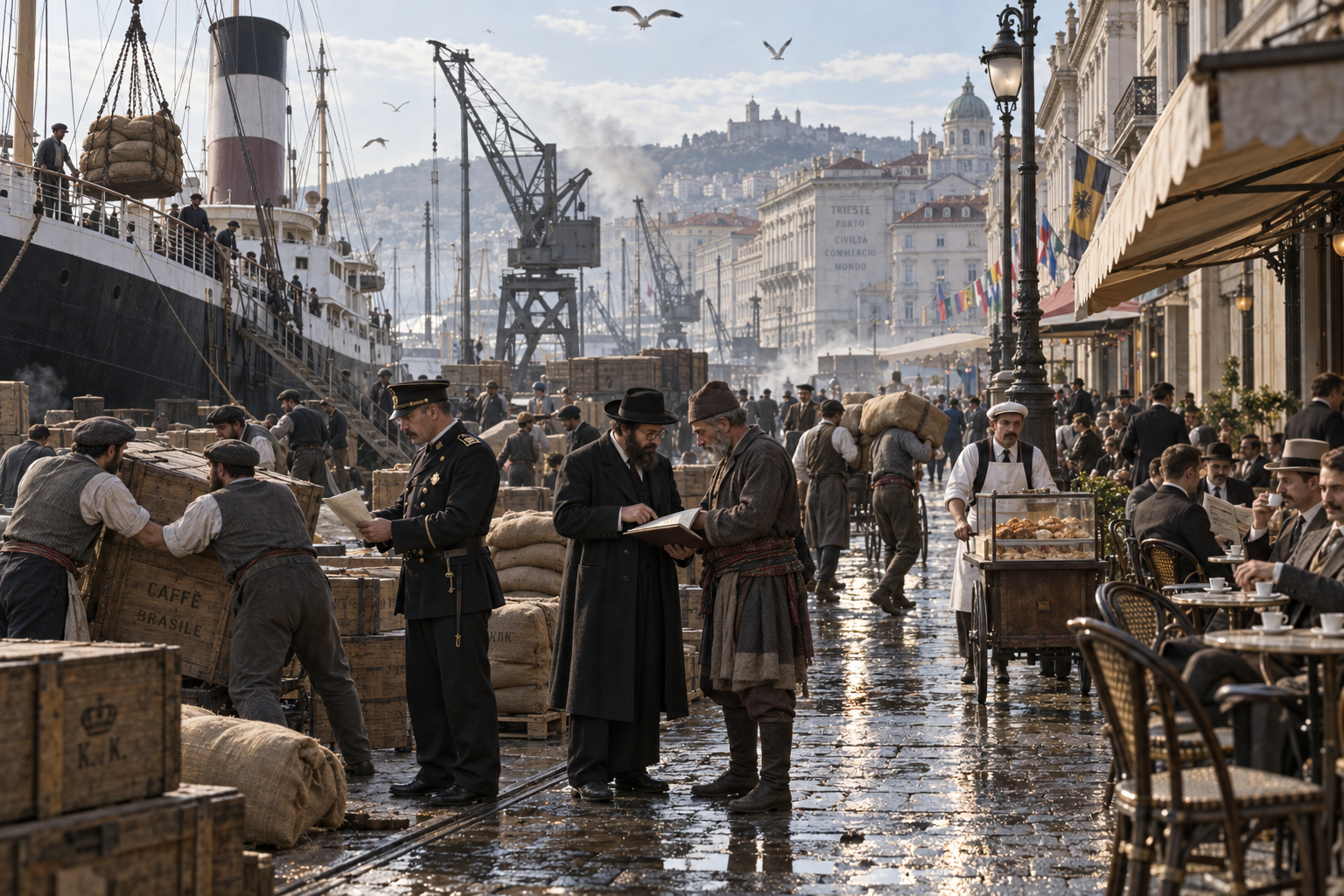
The imperial investment reshaped the shoreline. Warehouses, shipyards and an ambitious waterfront square created a working harbor that handled salt, grain, timber and coffee. Trieste’s prosperity drew merchants from the Balkans, the Levant and western Europe, and its customs and docks became a daily rehearsal in negotiating different laws, currencies and identities.
A patchwork of tongues, cafés and papers
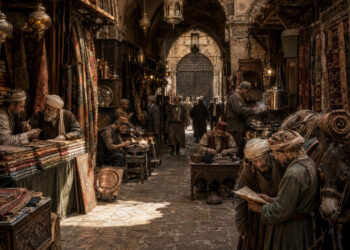
Walk down to the waterfront and the city’s cosmopolitan past lingers in unexpected places: a brick-lined shipyard, a pastry with Austro-Slavic roots, the cadence of Slovenian in a shop window beside Italian. Coffeehouses, once crowded with clerks, sailors and writers, became a social laboratory. Conversations about trade contracts, philosophy and literature circulated over small cups of strong espresso long before the city belonged firmly to any single nation.
That mix produced famous literary figures and less famous but equally telling everyday networks: brokers arranging cargoes for inland railways, seamstresses stitching sailors’ shirts, and Jewish merchants who linked Trieste to Mediterranean and Central European markets. The city’s identity was not a single story but a daily negotiation among business, family ties and language.
Borders reshaped, memories hardened
Twentieth-century turmoil forced those negotiations into politics. Wars and treaties pulled Trieste between competing claims, and the city endured periods of exclusion, migration and administrative experiments that tried to manage its mixed population. After the world wars, new borders left neighborhoods split between different states, and some families found themselves divided by fresh frontiers overnight.
Those ruptures altered public memory: monuments, bilingual signs, and contested school curricula all became battlegrounds for which past to honor. Yet the port’s older rhythms—ship horns, markets and multilingual cafés—still anchor everyday life, reminding residents and visitors that Trieste grew by meeting many worlds at once.
Conclusion
Trieste is a useful reminder that regions are forged by utility as much as by blood. Where routes converge and commerce flows, identities get layered rather than replaced. The city’s present is neither nostalgia nor a single national narrative; it’s a living palimpsest written in stone, salt and the conversational jumble of its streets.