
Introduction
Understanding regional history requires more than dates and events; it demands attention to the physical and cultural landscapes that frame human activity. Local geographies, including rivers, hills, and trade routes, shape settlement patterns and economic development. Over time these features influence social relations, memory, and identity within a region. Attending to landscape dynamics also helps recover marginalized voices that are tied to particular places. This article explores how landscape factors interact with human choices to produce the distinctive narratives of regions.
Historical Drivers
Natural resources and transportation corridors have long dictated where communities form and how they connect with neighbors. Political boundaries can codify or erase local practices, turning contiguous landscapes into separate historical trajectories. Cultural traditions respond to and reinterpret physical settings, embedding meaning in particular sites. Economic shifts and technological change can amplify or reduce the influence of particular landscape features. These drivers combine to produce layered histories that vary across even small distances.
Recognizing these drivers helps historians avoid broad generalizations that obscure local variation. It also opens pathways for comparative regional study.
Methods for Research
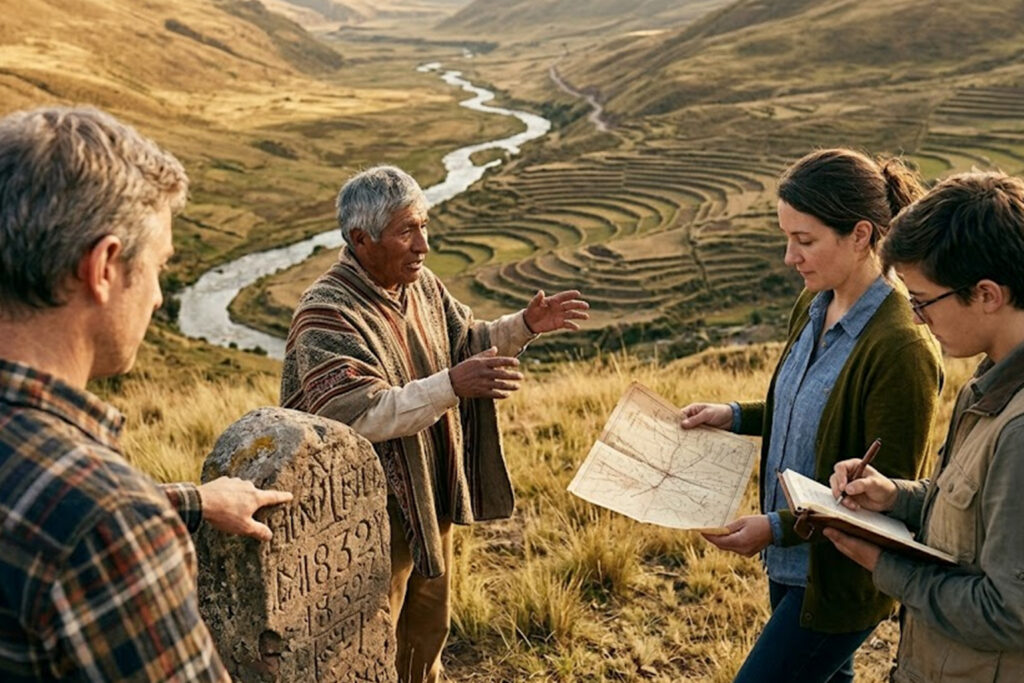
Researchers use a mix of archival work, oral histories, and spatial analysis to trace how landscapes shape narratives. Maps and GIS reveal patterns of settlement and land use that written sources alone cannot show. Oral testimony captures how communities remember and value particular places, often revealing competing narratives. Digitized sources and community archives are making it easier to connect local stories to broader patterns. Combining methods offers a fuller picture of how environmental and human factors interact over time.
- Archival records and land deeds that map ownership and change.
- Oral histories and geospatial mapping that link memory to place.
These techniques encourage interdisciplinary collaboration and produce more nuanced regional histories. They also help publics engage with the past through place-based interpretation.
Regional Impacts
Place-based histories affect present-day policy and identity by highlighting local strengths and conflicts. They inform heritage preservation, tourism strategies, and community planning by grounding decisions in historical continuity. Conflicting interpretations can also surface, prompting dialogue about which stories are highlighted and why. Engaging residents through place-based education fosters stewardship and deeper civic participation. Ultimately, attention to landscape-linked narratives supports more inclusive and context-sensitive understandings.
Policy and education that reflect these insights can foster stronger regional cohesion. They encourage residents to see their local environment as a living archive.
Conclusion
Emphasizing landscape in regional history reveals the material roots of cultural narratives.
It invites scholars and communities to collaborate on telling richer, place-based stories.
This approach strengthens local identity while informing thoughtful stewardship of shared spaces.