
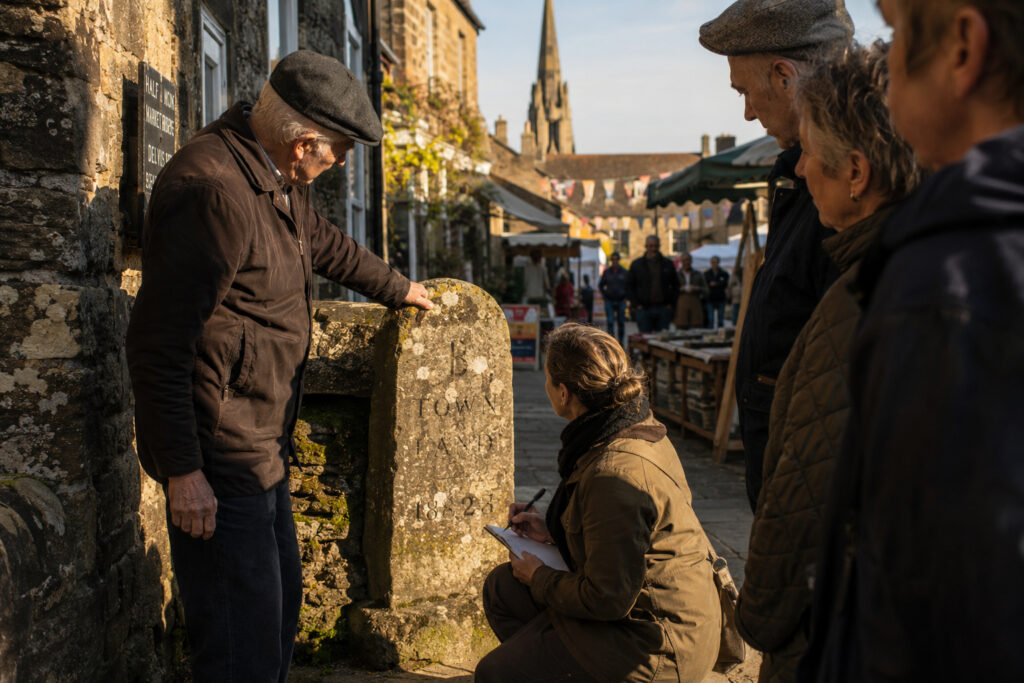
Regions are not fixed outlines on a map but living assemblages formed through everyday actions and memories.
Local routines, rituals, and material networks give places a distinct temporal texture and social logic.
Understanding regional history means attending to small-scale practices as much as to formal institutions.
This piece outlines productive ways to read those layers and connect micro-histories to broader regional narratives.
Reading Regional Layers
Regional histories emerge from overlapping temporal strata where land use, migration, and economic shifts interact.
A field boundary, a market lane, or a religious calendar can reveal long-term continuities and abrupt change.
Reading these layers requires combining material evidence, oral testimony, and archival fragments to reconstruct trajectories.
Such an approach reframes borders as porous and regionhood as negotiated among many actors.
Attentive mapping of everyday places helps historians see how practices accumulate meaning over generations.
It also highlights the unevenness of memory and the selective nature of preservation.
Everyday Practices and Place
Daily routines—work rhythms, seasonal gatherings, and patterns of exchange—create durable social landscapes.
These practices produce infrastructure, language, and norms that orient residents and outsiders differently.
Counting such routines foregrounds the ordinary labor that sustains regional cohesion without invoking grand narratives.
It also reveals how communities adapt traditions in response to economic and environmental pressures.
Focusing on practice encourages research that values testimony and living knowledge alongside documents.
This opens space for more inclusive regional narrations grounded in lived experience.
Infrastructure, Movement, and Memory
Roads, ports, and communication lines are physical traces of past choices that shape mobility and memory.
They mediate flows of goods, people, and ideas and thereby shape patterns of settlement and identity formation.
Infrastructure also anchors memory in place, making certain stories easier to tell than others over time.
Examining these material networks helps explain why some localities become regional centers while others recede.
- Transportation routes that follow older paths often preserve older social ties.
- Markets and meeting places act as hubs for cultural exchange and continuity.
Attending to these elements shows how movement and stasis work together in shaping regional life.
It reveals how practical necessities leave cultural imprints that persist across generations.
Archives, Voices, and Material Traces
Combining written records with oral accounts and material culture broadens the evidentiary base for regional history.
Objects, buildings, and landscape features can corroborate or complicate textual narratives in productive ways.
Including marginalized voices often requires creative sourcing and sensitivity to what counts as evidence.
A plural archive helps produce richer, more contested, and ultimately more accurate regional stories.
Scholars should treat discrepancies as openings for inquiry rather than problems to be smoothed over.
This method encourages ongoing dialogue between community knowledge and scholarly interpretation.
Approaches for Regional Study
Practical strategies include microhistorical fieldwork, comparative mapping, and collaborative oral history projects.
Digital tools can visualize changing land use and networks, but field engagement remains essential to interpretation.
Interdisciplinary methods connect environmental, economic, and cultural histories in ways single disciplines often miss.
Researchers should prioritize archival humility and local partnerships to ensure interpretations remain accountable.
Such approaches create histories that are both analytically robust and socially resonant.
They invite publics to participate in narrating the places they inhabit.
Conclusion
Regional identity forms through sustained local practices, material networks, and contested memories.
Listening to everyday landscapes and inclusive archives yields more nuanced, enduring historical narratives.
This perspective makes regions legible as dynamic, lived formations rather than static administrative units.