
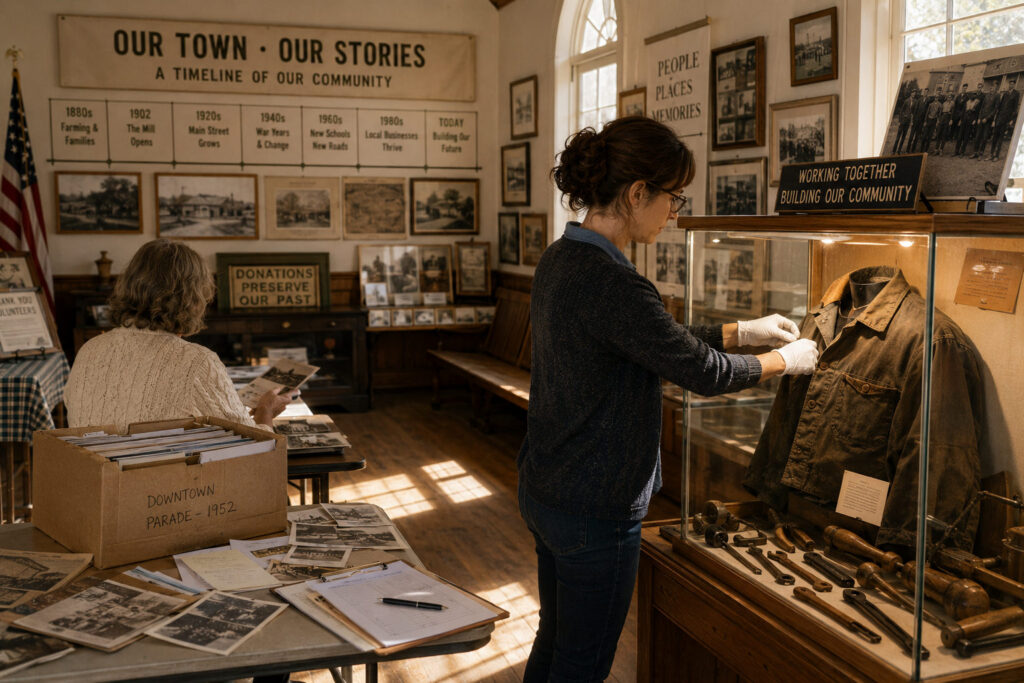
Small institutions—schools, libraries, parish halls, and local societies—play an outsized role in shaping how people remember and narrate regional history. They curate everyday practices and decide which events are preserved, taught, or commemorated. By focusing on routine acts of collection, exhibition, and teaching, these organizations stitch individual memories into collective narratives. Understanding their methods helps explain why certain regional stories persist while others fade.
Local Institutions as Memory Gatekeepers
Local institutions function as gatekeepers by determining what enters the archive and what is left in oral or private memory. Their collecting policies and display choices reflect available resources, expertise, and prevailing values among members and donors. These decisions shape public access to historical materials and influence which generations inherit particular interpretations. Over time, repeated displays and programs normalize certain narratives and marginalize alternative voices.
Institutions also mediate between professional historians and community members, translating scholarship into accessible formats. This intermediary role often reinforces regional identity through curated stories and landmark exhibits.
Everyday Practices That Build Shared Narratives
Routine activities—school lessons, local festivals, guided tours, and commemorative rituals—embed history into daily life and reinforce shared meanings. These practices mobilize symbols, anniversaries, and objects to create a temporal rhythm that links past and present. Participation in recurring events fosters belonging and transmits tacit knowledge about what matters to the community. As patterns repeat, they solidify into expectations about regional character and values.
Because these practices are lived rather than only written, they often have a durable emotional power that formal records lack. That emotional resonance helps sustain regional narratives across generations.
Material Culture and Small Collections
Material objects housed in modest collections—tools, garments, household items, and local industry artifacts—provide tangible anchors for abstract stories. Small institutions tend to hold idiosyncratic assortments shaped by donations and local industries, which can reveal everyday life that larger archives overlook. Exhibiting these items within accessible spaces makes history tactile, allowing visitors to imagine ordinary pasts in concrete terms. The selection and interpretation of objects thereby guide how communities understand change, continuity, and identity.
Preservation choices, labeling, and contextual narratives around objects all influence the historical lessons drawn by visitors. Careful display strategies can broaden or narrow public understanding of regional complexity.
Conclusion
Small institutions quietly shape regional historical consciousness through collection, practice, and display. Their everyday work determines which memories are amplified and how communities imagine their pasts. Paying attention to these actors helps explain the contours of local historical identity.