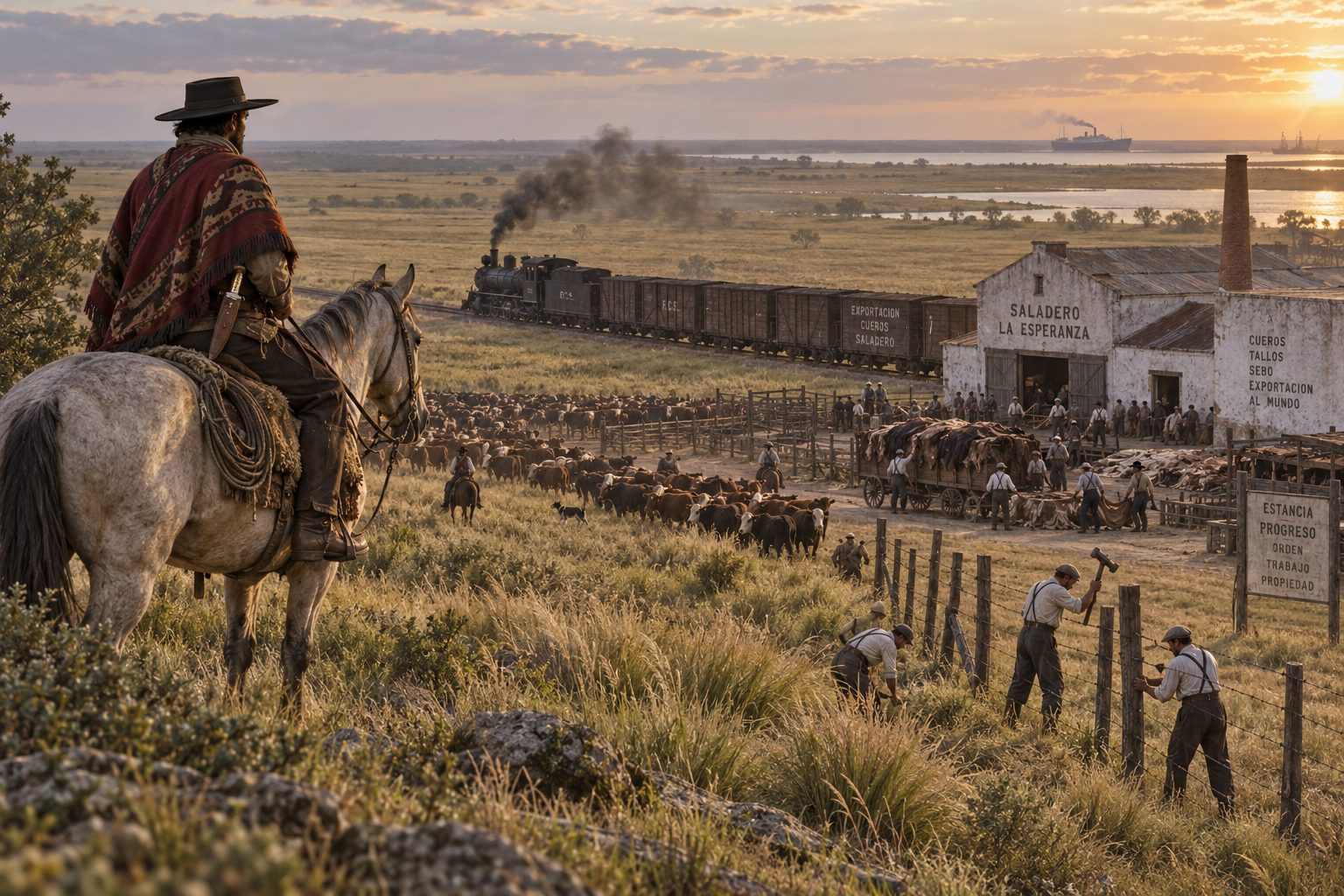
The Pampas are not simply flat plains; they are a particular ecology of tall grasses and deep soils that made large-scale cattle rearing both easy and profitable. From the colonial period onward, horses and cattle ran wild across these stretches, and a distinct figure emerged to manage them: the gaucho. Mounted, resourceful, and expert at handling stock, gauchos developed a toolkit—poncho, facón (knife), bolas—and a reputation for independence that later became a national symbol.
Early industry in the region wasn’t about chilled steaks but about salt. Saladeros, or meat‑salting establishments, processed hides and salted beef (charqui) for export across the Atlantic and to markets in the Americas. Those operations tied the Pampas into regional trade long before the age of refrigerated meat.
Railways, Refrigeration, and the Export Revolution
The real economic turn came in the later 19th century when two technologies—railways and refrigeration—connected pasture to plate. Rail lines pushed out from Buenos Aires into the interior, shrinking distances and bringing estancias into a national market. Refrigerated shipping, meanwhile, made it commercially viable to send fresh beef to European consumers. Suddenly, the Pampas supplied not just hides and salted meat but high‑value cuts to Britain and beyond.
The consequences were sudden and dramatic. Some family ranches grew into vast, export‑oriented estates. Capital flowed in: foreign investors bought land and built abattoirs, packing plants, and new ports. Towns that had been waystations along cattle trails grew into rail hubs and processing centers.
Fences, Immigrants, and a Changing Landscape
The open range began to close. Barbed wire and deliberate enclosure converted communal grazing into fenced estancias. Land that had once been a commons became parcelled property, a change that altered daily life and displaced many traditional grazing practices.
At the same time, waves of European immigrants—Italians, Spaniards, Germans—arrived to work the farms, build railways, and staff the expanding urban economy. They brought new crops, new labor habits, and new customs that mixed with gaucho traditions. That mixture shows up in Argentina’s food, music, and literature; the gaucho finds as much echo in the immigrant neighborhoods of Buenos Aires as on isolated ranches. The epic poem Martín Fierro captured that moment: a romanticized gaucho confronting a modernizing world.
Conclusion
The Pampas were shaped by grass and weather, but more decisively by markets, machines, and movement. From saladeros and horsemen to refrigerated ships and rail lines, a global appetite for beef transformed a landscape and its people. Today’s Argentina—the estancias, the asado, the myth of the gaucho—owes its contours to that long, uneven encounter between nature and commerce on the plain.