
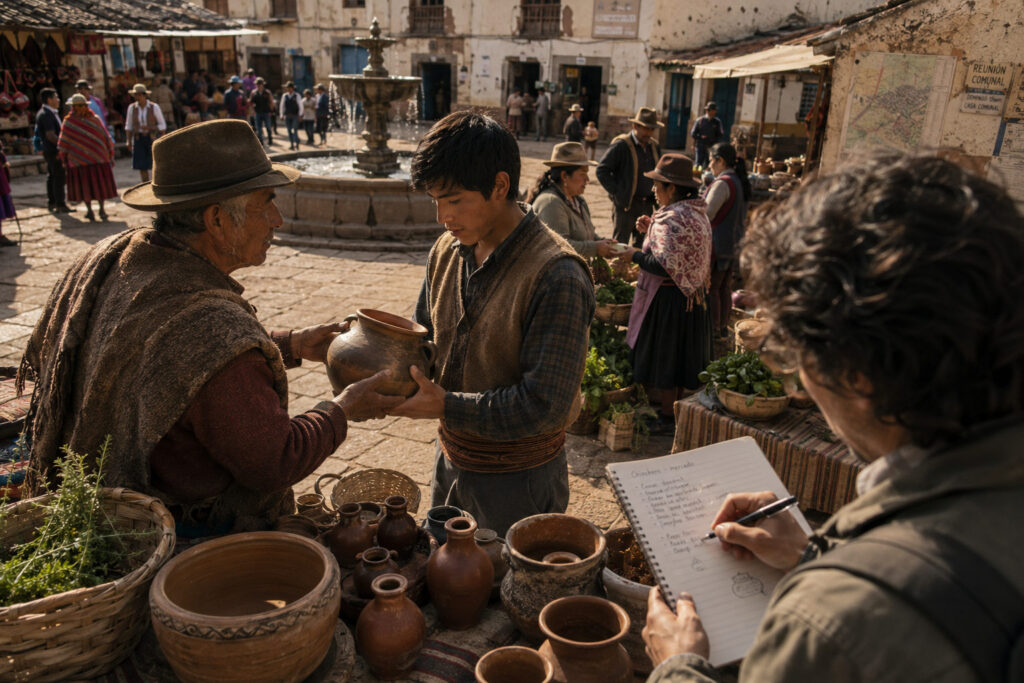
Public spaces and daily practices are central to how regions build and sustain cultural memory. Markets, squares, meeting houses, and pathways host routines that encode shared values and reveal long-term change. Paying attention to both material settings and habitual acts helps historians trace how communities remember and belong. This article outlines how physical places and ordinary interactions shape regional identity over time.
Public Spaces as Anchors
Public spaces act as visible anchors for collective memory, concentrating events, rituals, and exchanges that communities reference. Built features such as bridges, markets, and communal buildings carry layered meanings that accrue through repeated use and commemoration. These sites often become shorthand for belonging, where stories are told and contested in everyday encounters. Scholars can read changes in design, ownership, or use to understand shifting power relations and social priorities.
- Markets reflect economic ties and social hierarchies across generations.
- Squares and meeting places host both ritual continuity and political renegotiation.
Interpreting public spaces thus requires attention to both their physical traces and the assemblage of activities that animate them. The resilience or reinvention of such spaces signals broader regional continuities and ruptures.
Everyday Practices and Networked Life
Routine actions—commuting routes, seasonal fairs, neighborhood gatherings—create patterns that stitch disparate locales into recognizable regions. Networks of kinship, trade, apprenticeship, and ritual circulate practices that make places legible to insiders and outsiders alike. Mapping these flows reveals how identity is performed, transmitted, and adapted without relying solely on formal institutions. Close study of daily rhythms illuminates the mundane processes by which regions are reproduced across generations.
- Work patterns often tie villages and towns into enduring economic zones.
- Religious and civic rituals embed shared calendars and collective memory.
Recognizing these routines shifts focus from exceptional events to the habits that sustain regional coherence. It also highlights how change often originates in altered practices rather than dramatic transformations.
Sources, Methods, and Interdisciplinary Tools
Reconstructing regional cultural memory benefits from a mix of sources: maps, property records, oral histories, visual materials, and material culture. Ethnographic observation, GIS mapping, and comparative archival work help link places and practices across time. Oral testimonies and family archives are especially valuable for capturing everyday meanings that formal records omit. Combining qualitative and spatial methods produces richer accounts of how communities remember and rework their pasts.
Researchers should remain attentive to silences and contestation within sources, acknowledging whose memories are preserved and whose are marginalized. This reflexive approach yields more nuanced regional histories grounded in lived experience.
Conclusion
Public places and ordinary practices together forge durable regional cultural memory through repetition and adaptation. Attending to both material settings and everyday networks reveals how communities narrate their pasts and negotiate belonging. Integrative, source-rich methods offer a pathway to understand these layered processes.