
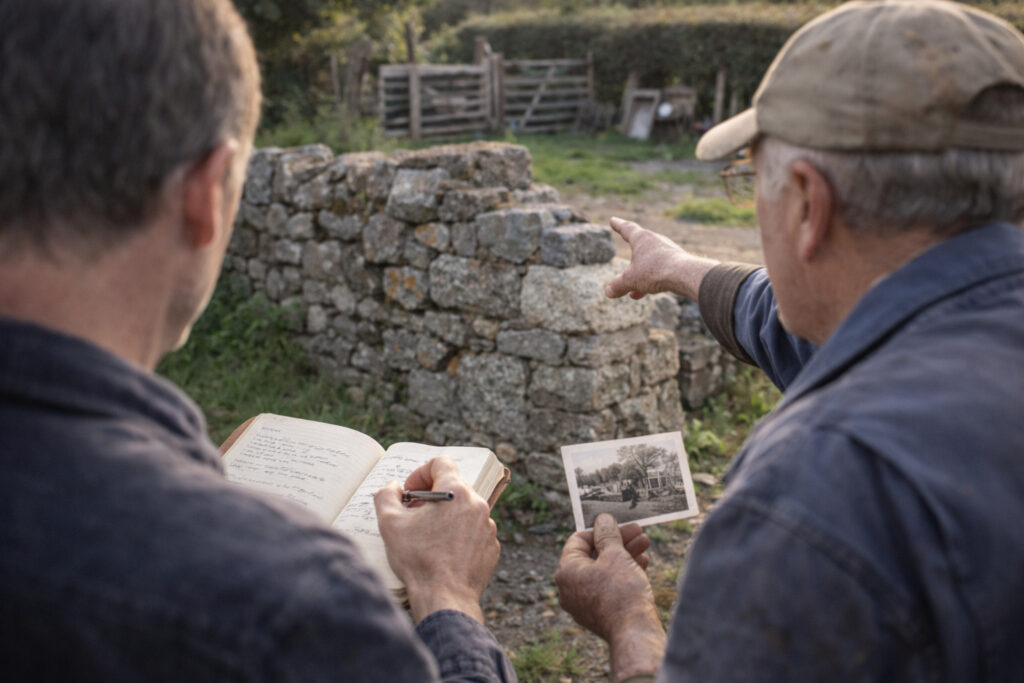
Understanding a region requires attention to ordinary places and repeated actions. Historians who read landscapes and daily routines find layers of meaning that formal records often miss. By following practices, material traces, and stories, we can trace how communities produce and remember place. This article outlines ways to approach regional history through the everyday.
Material Landscapes and Local Knowledge
Places are inscribed with work, repair, and modification that reveal long-term connections between people and environment. Field boundaries, workshops, and street patterns all hold clues about labor organization, resource use, and shifting economic ties. Built features accumulate informal meanings: a reused wall, a turned foundation, or a pattern of small fixes can tell a story about scarcity, innovation, and continuity. Paying attention to these tangible traces helps historians reconstruct lived routines beyond archival summaries.
Reading material landscapes requires combining close observation with comparative sources. Maps, photographs, and oral testimony each illuminate different aspects of how a place was made and remade.
Routinely Performed Practices
Everyday practices — how people harvest, cook, trade, or celebrate — shape regional rhythms and identities. Rituals of work and leisure create seasonal calendars and social obligations that persist even when institutions change. Small-scale exchanges and local techniques can spread ideas and goods across borders more effectively than formal policies. Documenting routine actions therefore reveals networks and values that standard political narratives often overlook.
To capture these patterns, historians should collect micro-histories and attend to the repetition and variation in practices. Such attention shows how communities adapt and maintain coherence over generations.
Archives, Stories, and Public Memory
Official archives are essential but partial; oral histories, place names, and memory sites fill in important gaps. Public commemorations and local museums select certain episodes to emphasize, while everyday recollections preserve alternative or private meanings. Listening to different narrators and comparing material evidence with memory practices creates a fuller account of regional change. This plural approach helps balance institutional records with lived experience.
Interpreting these sources demands sensitivity to power and silence, and an aim to represent multiple voices. Doing so enriches our understanding of how regions are narrated and who controls those narratives.
Conclusion
Studying regional history through everyday acts re-centers the ordinary as a source of insight. It reveals continuities and adaptations that formal documents can miss. Such an approach opens pathways for more inclusive and grounded historical narratives.