
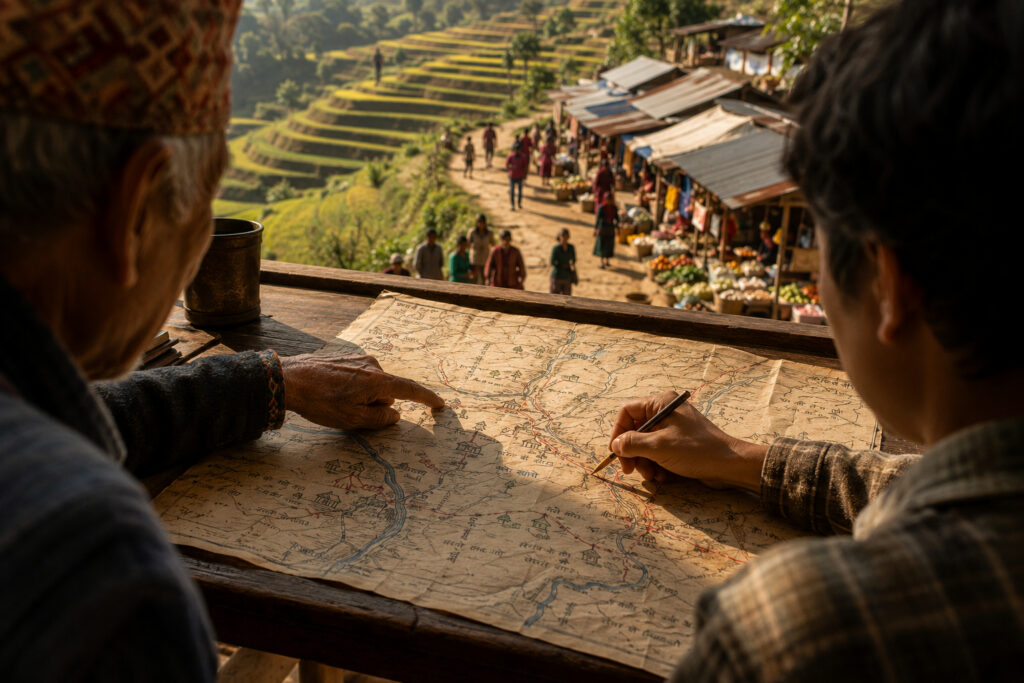
Regions emerge not only from official boundaries but from repeated everyday practices that structure social life.
The routines of markets, footpaths, work schedules, and neighborhood institutions accumulate into durable patterns over time.
These mundane activities leave physical and mnemonic traces on landscape, memory, and communal identity.
To understand regional formation historians must attend closely to small acts as much as to major events.
Everyday Infrastructure and Local Memory
Physical infrastructures—roads, wells, market stalls, chapels, and meeting halls—shape how people move, meet, and organize across a territory. Their siting, maintenance, and shifting uses encode priorities, power relations, and patterns of inclusion that can persist for generations. When communities repair, reroute, or repurpose these structures they also reaffirm and reinterpret collective memories tied to particular places. Paying attention to these material networks reveals the slow accumulation of regional habit and meaning.
Examining infrastructure highlights connections between mundane decisions and long-term order in a region. It encourages a focus on continuity that complements event-centered narratives of change.
Markets, Networks, and Habit
Markets and exchange networks function as daily laboratories where social norms are negotiated and habits form through repetition. Trade routes, seasonal fairs, and the circulatory patterns of goods and labor create recurrent rhythms that extend well beyond administrative borders. Over time, craft techniques, food preferences, and ritualized bargaining become common reference points that help people recognize one another across place. These embedded habits often outlast political or administrative upheavals precisely because they are practiced every day.
- Market days as social and economic anchors for dispersed communities.
- The circulation of goods and skills that produces shared regional tastes and techniques.
Analyzing networks thus illuminates both continuity and transformation in local economies. It shows how quotidian interaction knits together broader regional identities.
Landscapes as Living Archives
Fields, hedgerows, terraces, and settlement patterns carry layered evidence of past land uses and social relationships that official records often overlook. Reading these features as archives requires combining oral testimony, material traces, and comparative mapping across time. Local stories and place-names frequently point to practices and events absent from formal documentation but central to communal self-understanding. Treating landscapes as living archives restores the temporal depth of everyday life and the ecological rhythms that sustain regions.
This landscape-focused perspective balances cultural memory with material evidence. It enables richer reconstructions of how communities have inhabited and reshaped place.
Methods for Recovering Everyday Histories
Recovering the histories of ordinary practice calls for mixed methods: careful reading of court, market, and parish records; structured oral history; archaeological survey; and attention to material culture. Ethnographic observation and participatory mapping can reveal how present habits reflect long-standing patterns, while interdisciplinary comparison helps distinguish local innovation from wider diffusion. Digital tools for mapping and network analysis increasingly allow researchers to visualize recurring interactions across time and space. Combining methods permits a layered narrative that highlights persistence, adaptation, and the local meanings of change.
Methodological plurality helps historians trace the subtle processes that produce regional identity. It also invites collaboration with communities whose memories and practices are central to the story.
Conclusion
Focusing on everyday practices reveals the slow, collective work of regional formation.
Small routines, shared spaces, and local networks accumulate into durable regional identities.
Valuing these ordinary histories enriches our understanding of place and belonging.