
A sea that was always at the edge of the Netherlands
The Zuiderzee once threaded into the Dutch interior like a restless finger of the North Sea: shallow, storm-prone, full of salt and the clatter of wooden boats. For centuries its shoreline was dotted with fishing villages and seafaring trades — herring and eel nets, boatyards, and markets where the smell of brine mixed with smoked fish. But the same water that supported livelihoods also threatened them. Storm surges and shifting shoals repeatedly inundated low-lying fields and towns. By the late 19th and early 20th centuries engineers and politicians began to imagine a different future: tame the sea, gain land, and protect the hinterland.
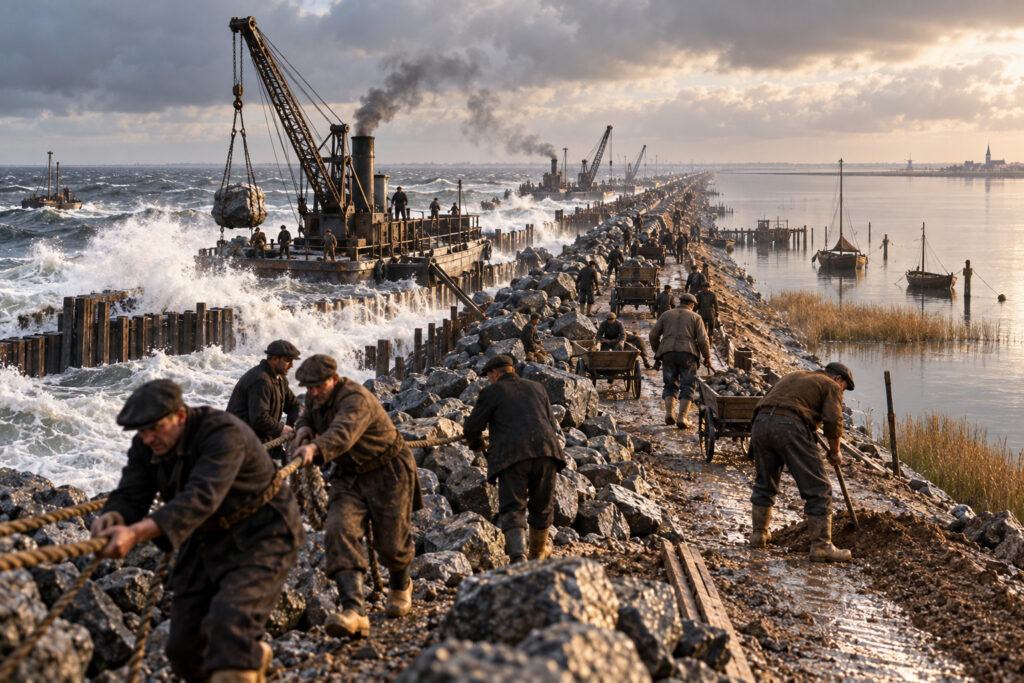
The dam and the making of fresh water
The turning point was a vast engineering project that closed off the Zuiderzee from the North Sea, creating what is now the IJsselmeer. A massive causeway and sluice system sealed the inlet and allowed the waters to become fresh over time. That single transformation rearranged nature’s rules. Saltwater marshes and tidal currents gave way to calmer freshwater shores. Fisheries that had once followed salt-loving species declined or adapted; fishermen faced the choice of moving, switching to freshwater catches, or changing occupations.
Land, labor, and new towns
Farmland arrived where waves had once fed the gulls. Reclaimed polders—pieces of new Netherlands—were drained and parceled into fields and villages. Places like Wieringermeer, the Noordoostpolder, and the provinces of Flevoland emerged as planned landscapes of canals, dikes, and gridlike farms. The work required thousands of laborers, modern pumps, and political will; it also demanded that entire coastal communities reinvent themselves. Some former fishing ports, cut off from the sea, became sleepy harbors or reinvented their economies by turning toward tourism and crafts. Others kept a maritime identity in new forms: boatbuilding shifted to pleasure craft, local festivals preserved sea-born songs and stories.
Conclusion
The Zuiderzee’s conversion into the IJsselmeer is one of those regional changes that rewrites both land and life. It secured towns against the worst of the storms, created productive farmland, and forced cultural reinvention where saltwater habits once held sway. Today the IJsselmeer reads as a human-made inland sea: a place of fishing boats and farms, of museums that remember a seafaring past, and of landscapes that remind you how engineering choices can redraw a region’s economy, ecology, and identity.