
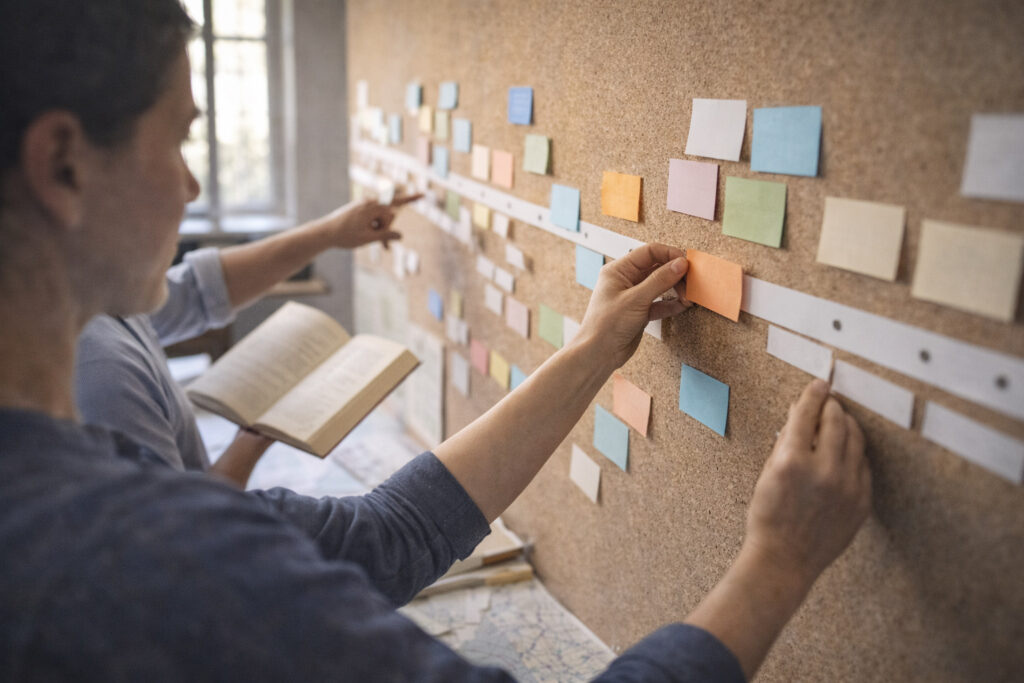
Timelines are powerful tools that transform complex historical sequences into accessible narratives. They help researchers, students, and curious readers spot patterns, causal links, and periods of rapid change. A well-constructed timeline balances chronological precision with interpretive clarity to support further study and public engagement. This article outlines practical steps to build timelines that are both accurate and useful.
Defining Scope and Purpose
Begin by clarifying the timeline’s scope: the time span, thematic focus, and intended audience. Narrowing scope prevents overload and keeps entries relevant to the central story you want to tell. Decide whether the timeline will emphasize political events, social changes, technological advances, or a combination. Clear objectives guide selection criteria and presentation choices throughout the project.
Establishing purpose early also influences scale and format decisions. For instance, timelines for classrooms differ in detail and complexity from ones meant for scholarly research. Knowing the audience streamlines both research and design.
Organizing Events Chronologically
Collect primary and secondary sources and record dates with precision, noting uncertainties where they exist. Where exact dates are unavailable, use estimated ranges and indicate them clearly to avoid misleading precision. Group related events into clusters or phases to reveal longer-term trends and turning points. Chronological order should be logical but flexible enough to accommodate overlapping developments and parallel stories.
Use consistent date formats and annotations to make the timeline navigable. Clear labeling and brief contextual notes help users understand why each entry matters.
Design and Readability
Visual clarity is essential: choose a layout that supports the timeline’s scale and complexity without overwhelming readers. Use spacing, color contrasts, and typographic hierarchy to distinguish eras, themes, and event types. Interactive timelines benefit from tooltips and filters that let users explore specific threads without losing the overall sequence. Keep labels concise and prioritize information that advances the narrative or interpretation.
Accessibility matters—ensure color contrast, font sizes, and keyboard navigation are considered in digital timelines. A clean design encourages engagement and improves comprehension.
Sources and Verification
Document sources for every entry and provide links or citations when possible to enable verification and further reading. Cross-check dates and facts against multiple reputable references to reduce errors and account for historiographical debates. When presenting contested interpretations, note differing viewpoints rather than asserting a single definitive reading. Transparency about sources and limits strengthens the timeline’s credibility.
Maintain a bibliography or source log and update entries as new evidence emerges. Regular revision keeps the timeline current and reliable.
Conclusion
Constructing accurate historical timelines requires clear purpose, careful sourcing, and thoughtful design choices. When executed well, timelines illuminate connections and make complex histories accessible to diverse audiences. Invest in verification and usability to create a resource that informs and endures.