Uncover History’s Secrets with Daily Updates!
Daily News Entertainment
  • Home
  • History
  • Biographies
  • Eras
  • Regions
  • Timeline
No Result
View All Result
History Ours
  • Home
  • History
  • Biographies
  • Eras
  • Regions
  • Timeline
No Result
View All Result
History Ours
No Result
View All Result
Home Timeline

Crafting Effective Timelines for History Projects

in Timeline
Crafting Effective Timelines for History Projects

Introduction

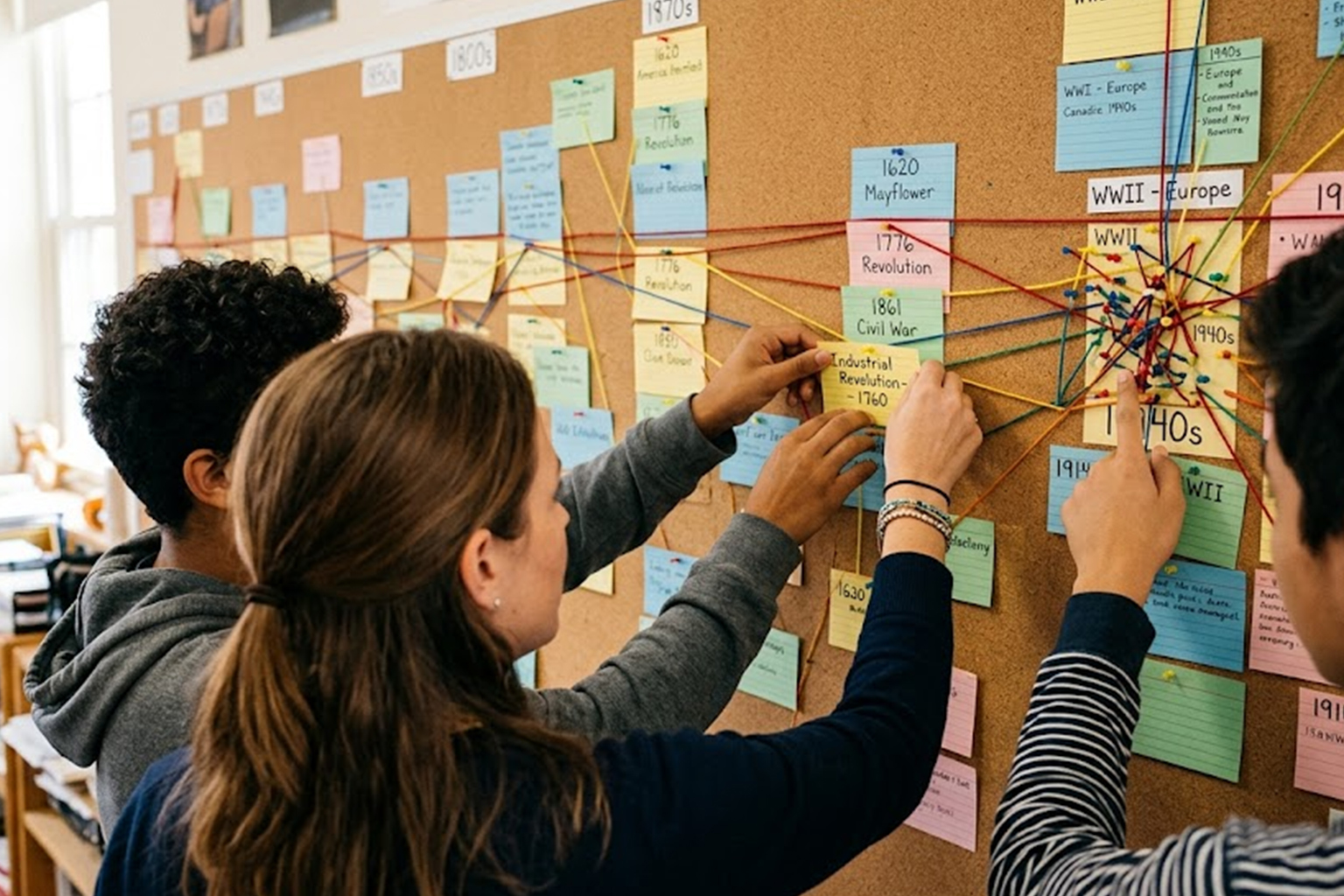
Timelines help readers see cause and effect across periods and movements. Effective timelines balance clarity with context to guide interpretation. They are tools for teaching, presenting research, and structuring narratives about change. This article outlines a practical approach to planning and designing timelines for projects of any scale.

Plan with purpose and audience in mind

Begin by defining the timeline’s purpose and the audience you intend to reach. A classroom timeline differs in scope and detail from a public exhibition or a research appendix. Decide whether the focus is thematic, chronological, or centered on a specific figure or event cluster. Establishing scope early prevents clutter and keeps the narrative coherent across entries.

Clarifying purpose also guides decisions about length, granularity, and visual emphasis. It helps prioritize events that serve the story you want to tell.

Select events and determine appropriate scale

Choose events that advance the timeline’s central argument or illustrate meaningful connections between developments. Avoid listing every date; instead, highlight turning points and representative moments that help readers trace trends. Consider scale carefully — decades, years, or days — and maintain consistency unless intentional zooms are used. Footnotes or expandable details can accommodate additional context without overwhelming the main line.

  • Prioritize impact over completeness.
  • Use supplemental notes for depth.

Balancing breadth and depth ensures the timeline remains accessible while retaining analytical value. Thoughtful selection fosters engagement and promotes deeper inquiry.

Design clearly and make it accessible

Visual hierarchy and legible typography are essential for guiding the reader through complex sequences. Use spacing, color contrast, and consistent symbols to differentiate event types and relationships. Ensure that color choices meet accessibility standards and that text alternatives are available for screen readers. Interactive timelines should allow keyboard navigation and scalable content for different devices.

Clear design choices support comprehension and invite exploration. Accessibility considerations broaden the timeline’s reach and credibility.

Choose tools and add interactive features

Select tools that match your project’s technical resources and the intended level of interactivity. Static graphics are ideal for print and basic web posts, while specialized timeline platforms enable filtering, zooming, and multimedia embeds. Interactive features such as search, filters, and linked primary sources help users explore without losing the main narrative thread. Test prototypes with target users to identify confusing elements and refine controls for clarity and performance.

Choosing the right tools reduces technical friction and enhances learning outcomes. Iterative testing ensures features add value rather than distraction.

Conclusion

Timelines succeed when they combine thoughtful selection with clear design to communicate meaning. By planning purposefully, choosing events with care, and prioritizing accessibility, creators can craft tools that illuminate historical processes. Applying these principles yields timelines that inform, engage, and encourage further learning.

Previous Post

Designing Clear and Engaging Historical Timelines

Next Post

Senses and Movement on Historic Market Streets

Related Posts

Designing Clear and Engaging Historical Timelines
Timeline

Designing Clear and Engaging Historical Timelines

August 9, 2026
Strategic Timeline Design for Connected Historical Narratives
Timeline

Strategic Timeline Design for Connected Historical Narratives

August 4, 2026
Curating Time: Selecting Threads and Scales for Exhibits
Timeline

Curating Time: Selecting Threads and Scales for Exhibits

August 4, 2026
Building Accessible Historical Timelines for Public Audiences
Timeline

Building Accessible Historical Timelines for Public Audiences

July 30, 2026
Next Post
Senses and Movement on Historic Market Streets

Senses and Movement on Historic Market Streets

Search..

No Result
View All Result

Recent Articles

How Market Fronts Directed Everyday Social Interaction

How Market Fronts Directed Everyday Social Interaction

August 10, 2026
Senses and Movement on Historic Market Streets

Senses and Movement on Historic Market Streets

August 10, 2026
Crafting Effective Timelines for History Projects

Crafting Effective Timelines for History Projects

August 9, 2026
Designing Clear and Engaging Historical Timelines

Designing Clear and Engaging Historical Timelines

August 9, 2026
How Local Landscapes Shape Regional Historical Narratives

How Local Landscapes Shape Regional Historical Narratives

August 8, 2026

Subscribe Us

By clicking submit, I authorize History Ours and its affiliated companies to: (1) use, sell, and share my information for marketing purposes, including cross-context behavioral advertising, as described in our Terms of Service and Privacy Policy, (2) supplement the information that I provide with additional information lawfully obtained from other sources, like demographic data from public sources, interests inferred from web page views, or other data relevant to what might interest me, like past purchase or location data, (3) contact me or enable others to contact me by email with offers for goods and services from any category at the email address provided, and (4) retain my information while I am engaging with marketing messages that I receive and for a reasonable amount of time thereafter. I understand I can opt out at any time through an email that I receive, or by clicking here

Subscribe To Our Newsletter

By clicking submit, I authorize History Ours and its affiliated companies to: (1) use, sell, and share my information for marketing purposes, including cross-context behavioral advertising, as described in our Terms of Service and Privacy Policy, (2) supplement the information that I provide with additional information lawfully obtained from other sources, like demographic data from public sources, interests inferred from web page views, or other data relevant to what might interest me, like past purchase or location data, (3) contact me or enable others to contact me by email with offers for goods and services from any category at the email address provided, and (4) retain my information while I am engaging with marketing messages that I receive and for a reasonable amount of time thereafter. I understand I can opt out at any time through an email that I receive, or by clicking here.

© 2026 History Ours | All Rights Reserved

  • Contact Us
  • Privacy Policy
  • Terms of Service
  • Unsubscribe
  • Privacy Choices
  • Contact Us
  • Privacy Policy
  • Terms of Service
  • Unsubscribe
  • Privacy Choices

© 2026 History Ours | All Rights Reserved

No Result
View All Result
  • Home
  • History
  • Biographies
  • Eras
  • Regions
  • Timeline

© 2026 History Ours | All Rights Reserved

Skip to content
Open toolbar Accessibility Tools

Accessibility Tools

  • Increase TextIncrease Text
  • Decrease TextDecrease Text
  • GrayscaleGrayscale
  • High ContrastHigh Contrast
  • Negative ContrastNegative Contrast
  • Light BackgroundLight Background
  • Links UnderlineLinks Underline
  • Readable FontReadable Font
  • Reset Reset