Uncover History’s Secrets with Daily Updates!
Daily News Entertainment
  • Home
  • History
  • Biographies
  • Eras
  • Regions
  • Timeline
No Result
View All Result
History Ours
  • Home
  • History
  • Biographies
  • Eras
  • Regions
  • Timeline
No Result
View All Result
History Ours
No Result
View All Result
Home Regions

How Local Landscapes Shape Regional Historical Narratives

in Regions
How Local Landscapes Shape Regional Historical Narratives

Introduction

Understanding regional history requires more than dates and events; it demands attention to the physical and cultural landscapes that frame human activity. Local geographies, including rivers, hills, and trade routes, shape settlement patterns and economic development. Over time these features influence social relations, memory, and identity within a region. Attending to landscape dynamics also helps recover marginalized voices that are tied to particular places. This article explores how landscape factors interact with human choices to produce the distinctive narratives of regions.

Historical Drivers

Natural resources and transportation corridors have long dictated where communities form and how they connect with neighbors. Political boundaries can codify or erase local practices, turning contiguous landscapes into separate historical trajectories. Cultural traditions respond to and reinterpret physical settings, embedding meaning in particular sites. Economic shifts and technological change can amplify or reduce the influence of particular landscape features. These drivers combine to produce layered histories that vary across even small distances.

Recognizing these drivers helps historians avoid broad generalizations that obscure local variation. It also opens pathways for comparative regional study.

Methods for Research

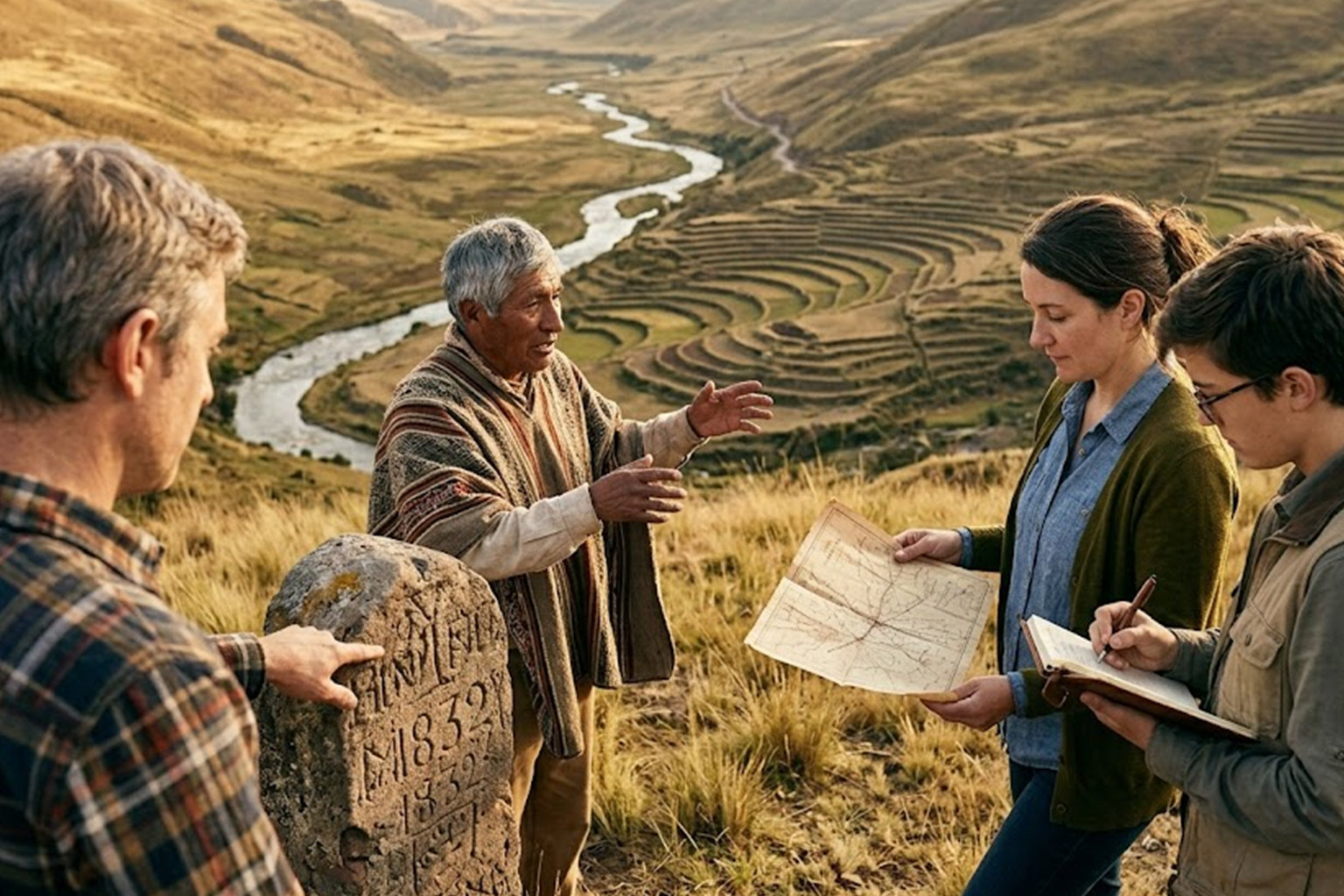
Researchers use a mix of archival work, oral histories, and spatial analysis to trace how landscapes shape narratives. Maps and GIS reveal patterns of settlement and land use that written sources alone cannot show. Oral testimony captures how communities remember and value particular places, often revealing competing narratives. Digitized sources and community archives are making it easier to connect local stories to broader patterns. Combining methods offers a fuller picture of how environmental and human factors interact over time.

  • Archival records and land deeds that map ownership and change.
  • Oral histories and geospatial mapping that link memory to place.

These techniques encourage interdisciplinary collaboration and produce more nuanced regional histories. They also help publics engage with the past through place-based interpretation.

Regional Impacts

Place-based histories affect present-day policy and identity by highlighting local strengths and conflicts. They inform heritage preservation, tourism strategies, and community planning by grounding decisions in historical continuity. Conflicting interpretations can also surface, prompting dialogue about which stories are highlighted and why. Engaging residents through place-based education fosters stewardship and deeper civic participation. Ultimately, attention to landscape-linked narratives supports more inclusive and context-sensitive understandings.

Policy and education that reflect these insights can foster stronger regional cohesion. They encourage residents to see their local environment as a living archive.

Conclusion

Emphasizing landscape in regional history reveals the material roots of cultural narratives.
It invites scholars and communities to collaborate on telling richer, place-based stories.
This approach strengthens local identity while informing thoughtful stewardship of shared spaces.
Previous Post

Mapping Regional Histories: Layers, Stories, and Identity

Next Post

Designing Clear and Engaging Historical Timelines

Related Posts

Levadas and the Making of Madeira’s Island Region
Regions

Levadas and the Making of Madeira’s Island Region

October 27, 2026
Black Hills: Paha Sapa, Gold Fever, and a Stolen Range
Regions

Black Hills: Paha Sapa, Gold Fever, and a Stolen Range

October 27, 2026
Aksum: The Ancient Ethiopian Empire That Linked Rome and India
Regions

Aksum: The Ancient Ethiopian Empire That Linked Rome and India

October 22, 2026
Timbuktu: How a Sahara Outpost Became a City of Books
Regions

Timbuktu: How a Sahara Outpost Became a City of Books

October 22, 2026
Next Post
Designing Clear and Engaging Historical Timelines

Designing Clear and Engaging Historical Timelines

Search..

No Result
View All Result

Recent Articles

Mary Seacole: The Jamaican Nurse Who Went to War

Mary Seacole: The Jamaican Nurse Who Went to War

October 30, 2026
Ada Lovelace: The Poet Who Helped Imagine Modern Computers

Ada Lovelace: The Poet Who Helped Imagine Modern Computers

October 30, 2026
John Snow, the Broad Street Pump, and Cholera’s Fall

John Snow, the Broad Street Pump, and Cholera’s Fall

October 29, 2026
The Vasa: Sweden’s Giant Ship That Couldn’t Sail

The Vasa: Sweden’s Giant Ship That Couldn’t Sail

October 29, 2026
How the Black Death Spread Across Europe, 1347–1351

How the Black Death Spread Across Europe, 1347–1351

October 28, 2026

Subscribe Us

By clicking submit, I authorize History Ours and its affiliated companies to: (1) use, sell, and share my information for marketing purposes, including cross-context behavioral advertising, as described in our Terms of Service and Privacy Policy, (2) supplement the information that I provide with additional information lawfully obtained from other sources, like demographic data from public sources, interests inferred from web page views, or other data relevant to what might interest me, like past purchase or location data, (3) contact me or enable others to contact me by email with offers for goods and services from any category at the email address provided, and (4) retain my information while I am engaging with marketing messages that I receive and for a reasonable amount of time thereafter. I understand I can opt out at any time through an email that I receive, or by clicking here

Subscribe To Our Newsletter

By clicking submit, I authorize History Ours and its affiliated companies to: (1) use, sell, and share my information for marketing purposes, including cross-context behavioral advertising, as described in our Terms of Service and Privacy Policy, (2) supplement the information that I provide with additional information lawfully obtained from other sources, like demographic data from public sources, interests inferred from web page views, or other data relevant to what might interest me, like past purchase or location data, (3) contact me or enable others to contact me by email with offers for goods and services from any category at the email address provided, and (4) retain my information while I am engaging with marketing messages that I receive and for a reasonable amount of time thereafter. I understand I can opt out at any time through an email that I receive, or by clicking here.

© 2026 History Ours | All Rights Reserved

  • Contact Us
  • Privacy Policy
  • Terms of Service
  • Unsubscribe
  • Privacy Choices
  • Contact Us
  • Privacy Policy
  • Terms of Service
  • Unsubscribe
  • Privacy Choices

© 2026 History Ours | All Rights Reserved

No Result
View All Result
  • Home
  • History
  • Biographies
  • Eras
  • Regions
  • Timeline

© 2026 History Ours | All Rights Reserved

Skip to content
Open toolbar Accessibility Tools

Accessibility Tools

  • Increase TextIncrease Text
  • Decrease TextDecrease Text
  • GrayscaleGrayscale
  • High ContrastHigh Contrast
  • Negative ContrastNegative Contrast
  • Light BackgroundLight Background
  • Links UnderlineLinks Underline
  • Readable FontReadable Font
  • Reset Reset