
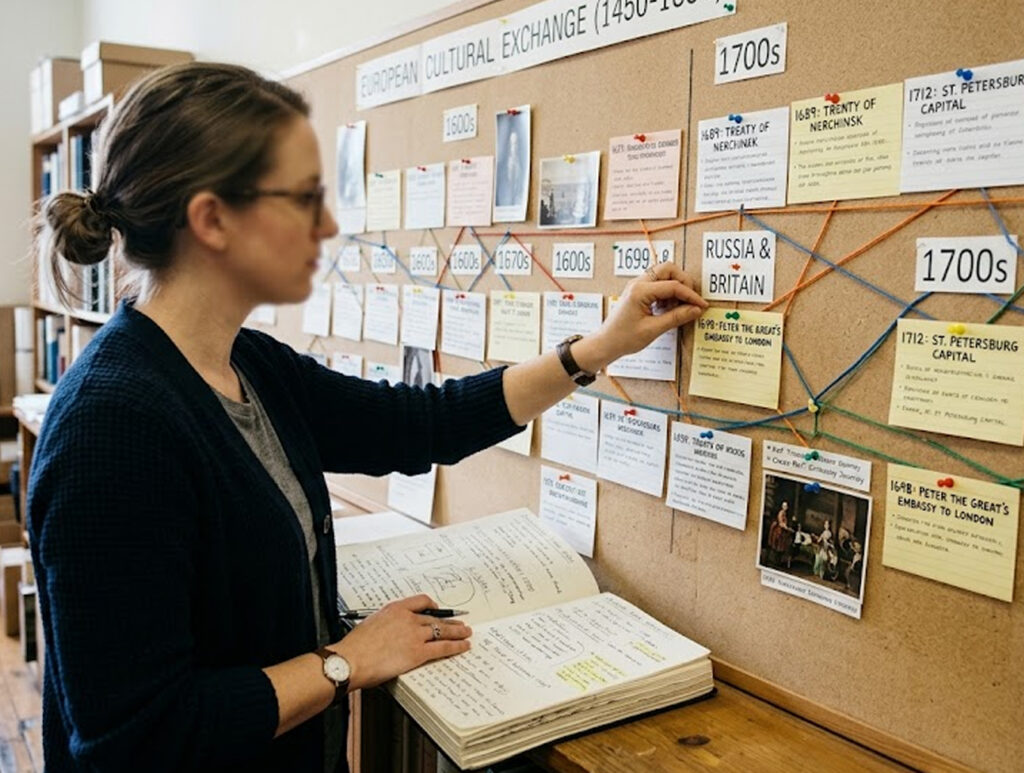
Timelines are powerful tools for organizing historical knowledge and spotting patterns over time. Whether you are outlining a single biography, a political movement, or a technological evolution, clarity starts with a solid plan. A good timeline balances dates, events, and concise context so readers can follow cause and effect. This guide explains practical steps to build timelines that communicate accuracy and meaning.
Define the project scope
Begin by deciding the temporal span and thematic focus of your timeline. Narrowing the scope prevents overload and helps determine which events are essential. Consider the audience: a general reader needs different detail levels than a specialist. Clearly stated scope will guide research and presentation choices.
A defined scope also aids in choosing visual scale and granularity. Keep it explicit at the timeline’s start so users understand the boundaries.
Gather and verify milestones
Collect candidate events from a mix of primary sources, reputable secondary works, and archival databases. Look for dates, locations, participants, and consequences to create concise entries. Verify conflicting dates by checking multiple independent sources and noting uncertainty when necessary. Good verification reduces later revisions and strengthens credibility.
Document your sources as you go to streamline citations. Use brief notes on provenance for complex or disputed events.
Organize and visualize events
Decide on a layout: linear, comparative parallel tracks, or layered thematic bands to convey relationships. Visual hierarchy—through spacing, typography, or color—helps prioritize major turning points over routine occurrences. Balance density and readability by grouping related events and using consistent date formats. Test early drafts with readers to ensure the sequence feels intuitive.
Tools range from simple spreadsheets to specialized timeline software, so choose what matches your skill level. Iteration improves clarity and removes accidental bias in ordering.
Provide context and clear annotation
Add short contextual blurbs that explain why events matter and how they connect. Include brief quotes, images, or links when they illuminate causes or consequences without overwhelming the layout. Where interpretations vary, present alternatives succinctly and flag uncertainties with transparent notes. Prioritize concise language to keep the timeline scannable.
A well-annotated timeline invites further exploration while remaining a standalone resource. Cite sources visibly to encourage trust and follow-up research.
Conclusion
A clear historical timeline combines thoughtful scope, reliable sourcing, deliberate organization, and precise context. By planning structure, verifying milestones, and refining visual choices you create a resource that communicates patterns across time. Maintain transparency about methods and limitations to keep the timeline useful for diverse readers.