
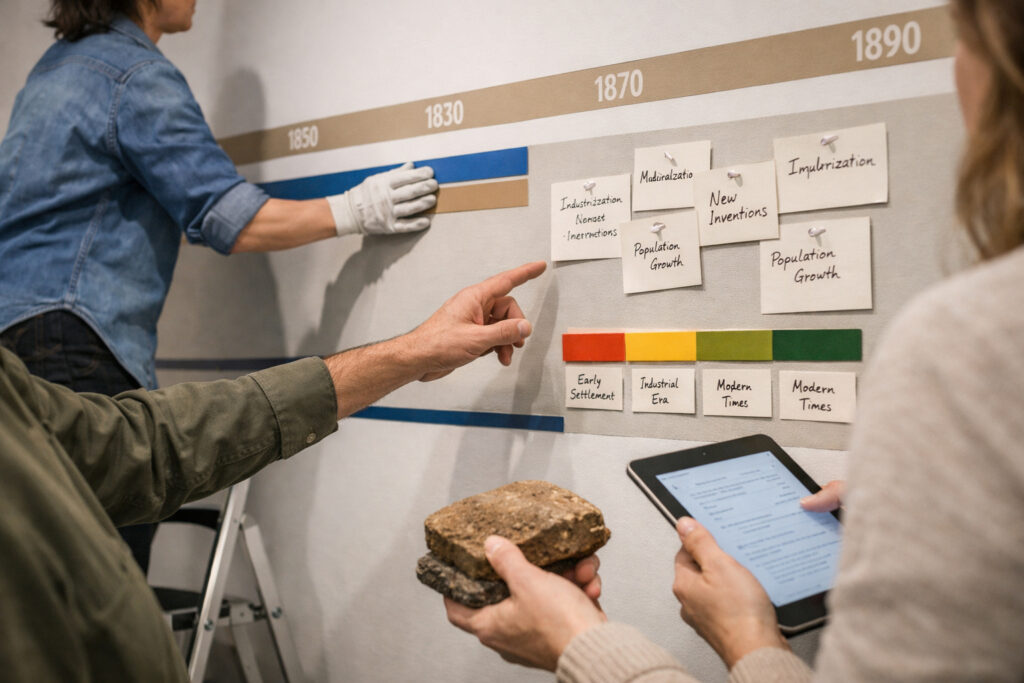
Public historical timelines translate detailed research into an approachable narrative that visitors can quickly read and remember. They serve as orientation points, interpretive devices, and invitations to deeper inquiry for audiences with varied prior knowledge. Designing one well means balancing precision, narrative flow, and legibility so that complexity does not become obscured. Below are practical practices that guide planning, structuring, and sustaining timelines for public-facing projects.
Clarify Purpose and Audience
Begin by defining the primary purpose of the timeline and the core audience you intend to serve. Is it a high-level survey for casual visitors, a thematic display that foregrounds a specific topic, or a research-oriented resource for active learners? Mapping goals against audience needs will determine choices about density, labeling, and interpretive framing. Early decisions about tone and scope make later design and content work more efficient and consistent.
Be explicit about what a successful visit looks like for different users and use those outcomes to set constraints. This focused approach prevents overloading the timeline with every relevant detail.
Structure to Show Scale and Connections
Organize content so readers can perceive both chronology and causation at a glance. Use clear time markers, consistent interval scales, and visual cues like grouping bands or parallel tracks to represent concurrent developments. Highlight pivotal events and turning points with succinct annotations and avoid long paragraphs that disrupt rapid scanning. Consider layered presentations that allow users to reveal more detail selectively, for example through supplemental panels or linked digital content.
A well-structured layout emphasizes relationships and patterns rather than an undifferentiated list of dates. This makes it easier for audiences to grasp continuum and change over time.
Design for Accessibility and Long-Term Maintenance
Choose typography, color contrast, and element spacing that support legibility for diverse visitors, including those with visual or cognitive differences. Provide alternative formats or companion materials such as tactile elements, audio descriptions, or online versions that are mobile-friendly and searchable. Establish a documentation workflow for sources, version history, and content updates so the timeline remains accurate as scholarship develops. Training staff or volunteers in basic editorial protocols prevents drift and preserves interpretive consistency.
Designing for accessibility and maintainability increases the timeline’s utility and lifespan while widening its audience. Practical investment in these areas pays off through improved engagement and trust.
Conclusion
Thoughtful timelines combine clear purpose, structured layout, and inclusive design to make history legible and meaningful. Prioritizing readability, connections, and upkeep creates durable public resources that invite return visits and deeper learning. Apply these practices to build timelines that communicate complexity without sacrificing clarity.