
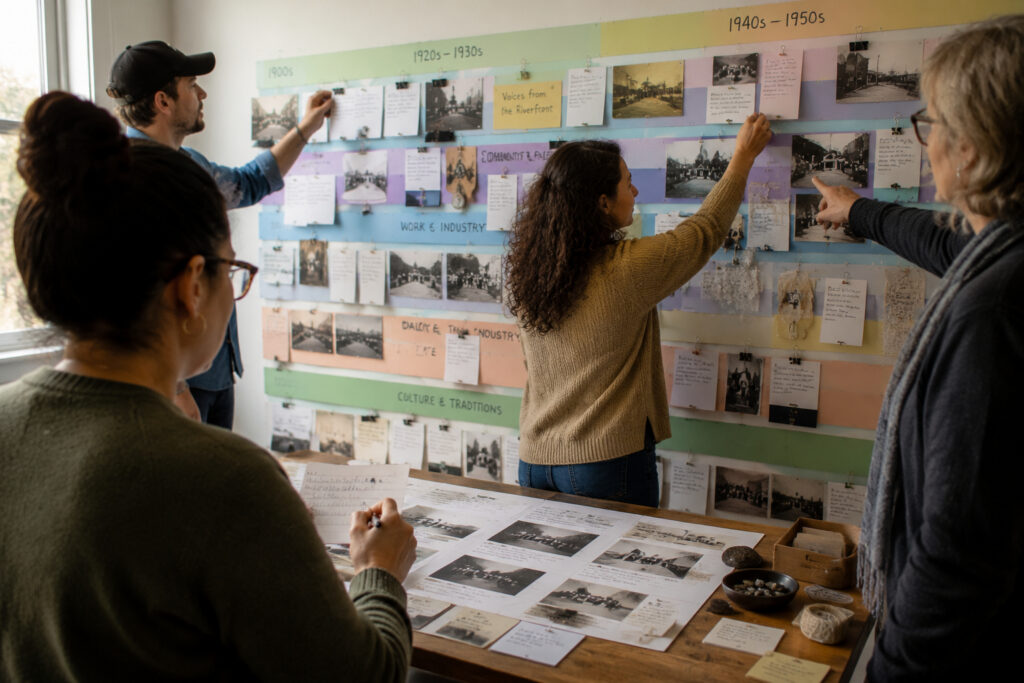
Timelines are powerful tools for making local history accessible and meaningful for diverse audiences. When a timeline layers personal stories, civic events, and material culture it helps viewers connect threads across time. Successful public timelines balance clarity with depth so visitors can follow a narrative without losing complexity. This article outlines practical steps to plan and build layered community histories that inform and invite further exploration.
Scoping Your Timeline
Begin by defining the temporal and thematic scope: decide whether the timeline covers decades, a single institution, or thematic threads such as migration or labor. Engage community stakeholders early to surface priorities and overlooked events; their input shapes which moments deserve prominence. Use a simple matrix to record dates, sources, significance, and potential media so you can evaluate what fits at different scales. Scoping prevents clutter and helps you allocate space for pivotal turning points.
- Date and source
- Significance and connections
- Suggested media or artifact
Keep the scope flexible during research and be ready to adjust when new sources emerge. Clear boundaries let visitors orient quickly while allowing room for deeper layers.
Layering Context and Perspectives
Effective layering presents multiple scales of context side by side: headline events, everyday life, and personal memories. Prioritize primary sources and short oral histories that illuminate ordinary experience alongside institutional records. Use visual hierarchy—type size, color bands, or nesting—to show what is central and what provides supportive context. Ensure that multiple perspectives are acknowledged so the timeline resists a single, reductive narrative.
- Macro events (laws, wars, economic shifts)
- Local practices and daily routines
- Personal testimonies and photographs
Label each layer clearly and provide prompts for further reading to encourage inquiry. Consider interpretive captions that explain why connections matter.
Practical Display and Digitization Tips
When displaying a timeline in public space or online, think about reading distance and pacing: physical installations need larger text and clearer segmentation, while digital timelines can offer zoom and filters. Optimize for accessibility with readable fonts, high contrast, and concise labels; supplement with transcripts of audio or video materials. For digitization, keep metadata consistent and exportable so future projects can reuse your research. Pilot the layout with community members and refine based on how people actually explore the timeline.
Test a printed mock-up or a clickable prototype before final production to catch pacing issues. Good documentation during the build ensures the timeline remains a living resource.
Conclusion
Layered timelines turn dates into relationships and lived experience. They ask users to move between scales and viewpoints. With clear scope, careful layering, and accessible display, timelines can deepen public engagement with community history.