

Uncover History’s Secrets with Daily Updates!
Daily News Entertainment
  • Home
  • History
  • Biographies
  • Eras
  • Regions
  • Timeline
No Result
View All Result
History Ours
  • Home
  • History
  • Biographies
  • Eras
  • Regions
  • Timeline
No Result
View All Result
History Ours
No Result
View All Result
Home Timeline

The Development of Medicine Through the Ages

in Timeline
The Development of Medicine Through the Ages

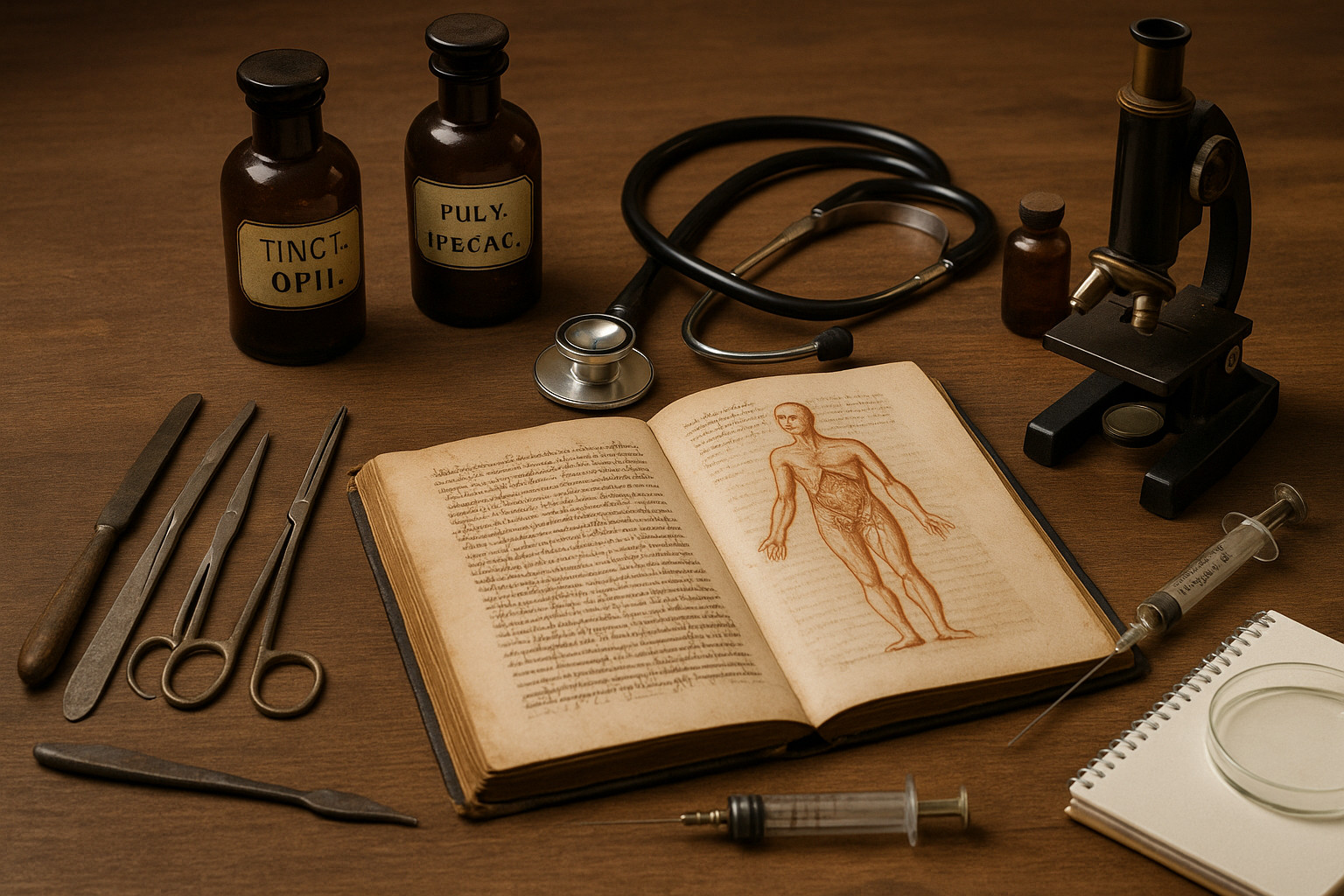
Medicine has always been at the heart of civilization’s progress. From ancient herbal remedies to modern surgical breakthroughs, the story of medicine is one of curiosity, courage, and compassion. Every era contributed a new layer of understanding, bringing humanity closer to the science of healing. What began as observation and intuition gradually evolved into evidence-based practice — a journey that continues to define how we care for life today.

Ancient Origins of Healing

The earliest medical practices emerged from necessity and nature. Ancient societies relied on plants, minerals, and ritual to treat illness, believing that balance between the body and the environment was key to health. Healers observed patterns — which herbs soothed pain, which wounds healed faster, and which foods restored strength. Over time, this practical wisdom laid the foundation for organized medicine, marking the beginning of humanity’s long relationship with healing.

Classical Advancements in Understanding

Civilizations of the classical world brought structure and theory to medicine. Thinkers and physicians studied anatomy, developed surgical tools, and documented diseases with increasing precision. The concept of diagnosis — identifying a specific cause for an illness — began to take shape. This was also when public health ideas first appeared, with efforts to maintain sanitation, clean water, and organized care. The principles formed during this period influenced medical study for centuries to come.

The Age of Discovery and Experimentation

As exploration expanded the world’s boundaries, so too did medical knowledge. The Renaissance revived scientific curiosity, emphasizing observation and evidence over superstition. Dissections revealed new insights into the human body, while the printing press allowed medical texts to spread widely. Advances in anatomy, pharmacology, and chemistry transformed healthcare from art into applied science. The era marked a turning point — where medicine began to rely on proof rather than tradition.

The Modern Revolution in Medicine

The 19th and 20th centuries ushered in an unprecedented age of medical innovation. The discovery of anesthesia, antiseptics, and antibiotics changed treatment forever. Germ theory redefined the understanding of disease, while vaccination campaigns saved millions of lives. Later, imaging technologies, genetics, and digital diagnostics revolutionized prevention and personalized care. Medicine had become global, data-driven, and deeply interconnected with technology.

The Human Side of Healing

Amid these scientific leaps, the core purpose of medicine — compassion — never faded. From ancient healers to modern clinicians, the desire to alleviate suffering remains constant. Today, medical ethics, accessibility, and empathy are as vital as research and innovation. The evolution of medicine is not just a story of progress but a reminder of the enduring bond between science and humanity.

Conclusion
The development of medicine through the ages is a testament to human resilience and discovery. Each era built on the lessons of the last, transforming healing from mystery into mastery. As we look to the future — with advances in artificial intelligence, biotechnology, and personalized medicine — we continue a journey that began thousands of years ago: the quest to understand life and preserve it with knowledge, care, and compassion.


Previous Post

The Rise and Fall of the Roman Empire

Next Post

From Scrolls to Screens: The History of Knowledge Sharing

Related Posts

How Haiti Broke Its Chains: A 1791–1804 Timeline
Timeline

How Haiti Broke Its Chains: A 1791–1804 Timeline

September 15, 2026
From Horses to Wires: How the Pony Express Met the Telegraph
Timeline

From Horses to Wires: How the Pony Express Met the Telegraph

September 15, 2026
From Swamps to Shortcut: A Timeline of the Panama Canal
Timeline

From Swamps to Shortcut: A Timeline of the Panama Canal

September 15, 2026
1815–1818: The Tambora Eruption and the Year Without a Summer
Timeline

1815–1818: The Tambora Eruption and the Year Without a Summer

September 15, 2026
Next Post
From Scrolls to Screens: The History of Knowledge Sharing

From Scrolls to Screens: The History of Knowledge Sharing

Search..

No Result
View All Result

Recent Articles

The Disguise That Broke Chains: Ellen and William Craft

The Disguise That Broke Chains: Ellen and William Craft

September 15, 2026
Bass Reeves: The Marshal Who Hunted Outlaws in Indian Territory

Bass Reeves: The Marshal Who Hunted Outlaws in Indian Territory

September 15, 2026
How the Crystal Palace Turned Glass and Iron into a Modern Stage

How the Crystal Palace Turned Glass and Iron into a Modern Stage

September 15, 2026
Anne Bonny: The Pirate Who Broke Rules and Expectations

Anne Bonny: The Pirate Who Broke Rules and Expectations

September 15, 2026
How Haiti Broke Its Chains: A 1791–1804 Timeline

How Haiti Broke Its Chains: A 1791–1804 Timeline

September 15, 2026

Subscribe Us

By clicking submit, I authorize History Ours and its affiliated companies to: (1) use, sell, and share my information for marketing purposes, including cross-context behavioral advertising, as described in our Terms of Service and Privacy Policy, (2) supplement the information that I provide with additional information lawfully obtained from other sources, like demographic data from public sources, interests inferred from web page views, or other data relevant to what might interest me, like past purchase or location data, (3) contact me or enable others to contact me by email with offers for goods and services from any category at the email address provided, and (4) retain my information while I am engaging with marketing messages that I receive and for a reasonable amount of time thereafter. I understand I can opt out at any time through an email that I receive, or by clicking here

Subscribe To Our Newsletter

By clicking submit, I authorize History Ours and its affiliated companies to: (1) use, sell, and share my information for marketing purposes, including cross-context behavioral advertising, as described in our Terms of Service and Privacy Policy, (2) supplement the information that I provide with additional information lawfully obtained from other sources, like demographic data from public sources, interests inferred from web page views, or other data relevant to what might interest me, like past purchase or location data, (3) contact me or enable others to contact me by email with offers for goods and services from any category at the email address provided, and (4) retain my information while I am engaging with marketing messages that I receive and for a reasonable amount of time thereafter. I understand I can opt out at any time through an email that I receive, or by clicking here.

© 2026 History Ours | All Rights Reserved

  • Contact Us
  • Privacy Policy
  • Terms of Service
  • Unsubscribe
  • Privacy Choices
  • Contact Us
  • Privacy Policy
  • Terms of Service
  • Unsubscribe
  • Privacy Choices

© 2026 History Ours | All Rights Reserved

No Result
View All Result
  • Home
  • History
  • Biographies
  • Eras
  • Regions
  • Timeline

© 2026 History Ours | All Rights Reserved

Skip to content
Open toolbar Accessibility Tools

Accessibility Tools

  • Increase TextIncrease Text
  • Decrease TextDecrease Text
  • GrayscaleGrayscale
  • High ContrastHigh Contrast
  • Negative ContrastNegative Contrast
  • Light BackgroundLight Background
  • Links UnderlineLinks Underline
  • Readable FontReadable Font
  • Reset Reset