
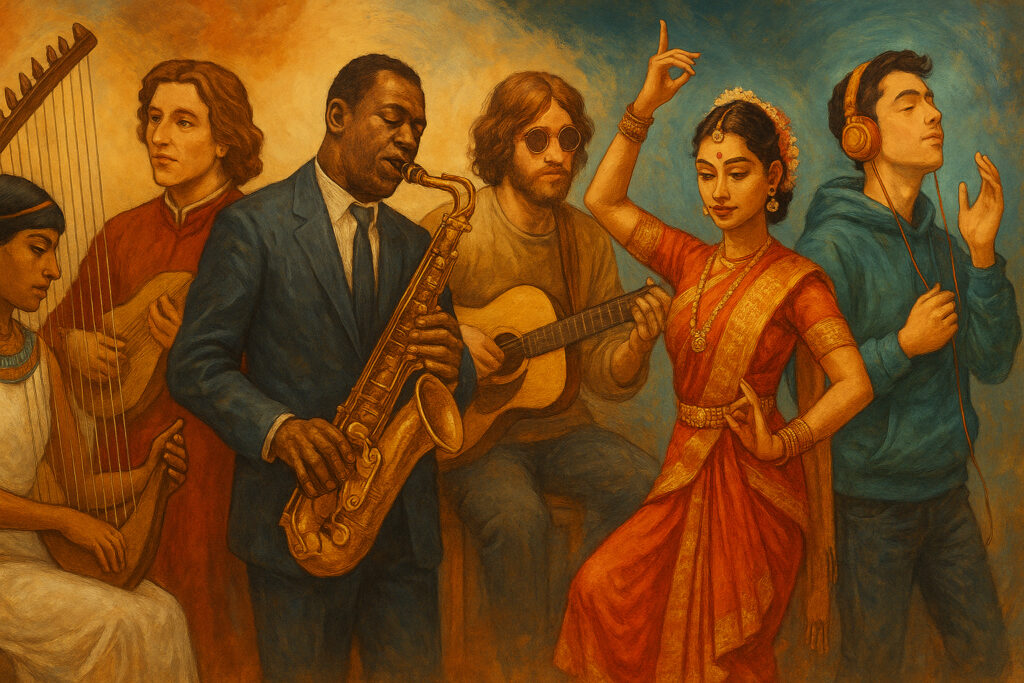
Music has always been more than sound—it is a living archive of human emotion, identity, and cultural transformation. Across generations, people have used music to express joy, resistance, belonging, and change. As societies evolve, so do the rhythms, instruments, and messages carried through their songs. Understanding this evolution helps us see how deeply music reflects who we are, where we come from, and how we continue to shape our world.
Music as a Mirror of Society
Throughout history, music has echoed the values, struggles, and dreams of its time. From ancient chants to modern digital beats, each era’s sound reveals how people lived and what they believed. Cultural moments—such as political movements, technological shifts, or social revolutions—leave lasting marks on the music that emerges. This connection makes music one of the most powerful windows into the human story.
How Innovation Transforms Sound
New technologies have consistently expanded the boundaries of musical expression. The invention of writing enabled musical notation; electricity introduced amplified sound; digital tools opened an entirely new world of production. Genres like electronic, hip-hop, and pop evolved directly from technological innovation. These advancements gave artists more control, more creativity, and more ways to reach global audiences.
Music as a Cultural Bridge
As cultures interact, music often becomes a powerful force for unity and exchange. Globalization has made it easier for styles from different communities to blend, creating hybrid genres that bring diverse voices together. From Latin rhythms influencing pop to African beats shaping jazz and blues, musical fusion demonstrates how cultures communicate, evolve, and inspire one another.
The Deep Connection Between Identity and Sound
Music remains a key part of how people express who they are. Whether through traditional folk songs, protest anthems, or contemporary streaming playlists, individuals and communities use music to reflect their beliefs, heritage, and aspirations. These expressions become cultural signatures that endure long after trends change.
Conclusion
The evolution of music reveals the evolution of humanity itself. As societies grow and new ideas emerge, music adapts, reshaping how we tell our stories and express our identities. By tracing these changes, we gain insight into the shared experiences that connect us across cultures and generations.