
From the moment early humans gazed at distant mountains or uncharted seas, exploration has been part of our collective DNA. The drive to venture into the unknown — to map, measure, and understand — has shaped civilizations, expanded empires, and rewritten the boundaries of the world. The history of exploration is not just a story of discovery; it’s a testament to curiosity, courage, and the unyielding human spirit that refuses to settle for what is already known.
The Dawn of Discovery
Long before maps and compasses, exploration began with survival. Ancient nomads followed stars, rivers, and animal migrations, uncovering new lands and routes. As societies developed agriculture and trade, exploration evolved from necessity into ambition. Egyptian traders sailed the Nile and the Red Sea, while Phoenician mariners mapped coastlines across the Mediterranean. Each journey added fragments to humanity’s understanding of the world — fragments that would later form the foundation of global geography.
The Age of Sail: Expanding Horizons
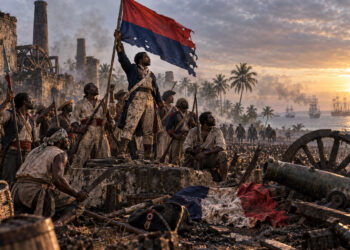
The 15th to 17th centuries marked the Age of Exploration, a time when daring voyages forever changed the map of the world. Driven by trade, faith, and the thirst for knowledge, explorers set out to find new routes and riches. Advances in navigation — like the compass, astrolabe, and improved ship design — made long ocean journeys possible. This era saw global connections emerge for the first time: new continents were charted, and sea routes linked Europe, Africa, Asia, and the Americas. Though it brought progress, it also reshaped societies through colonization and cultural exchange — often with lasting consequences that still echo today.
Mapping the Earth with Precision
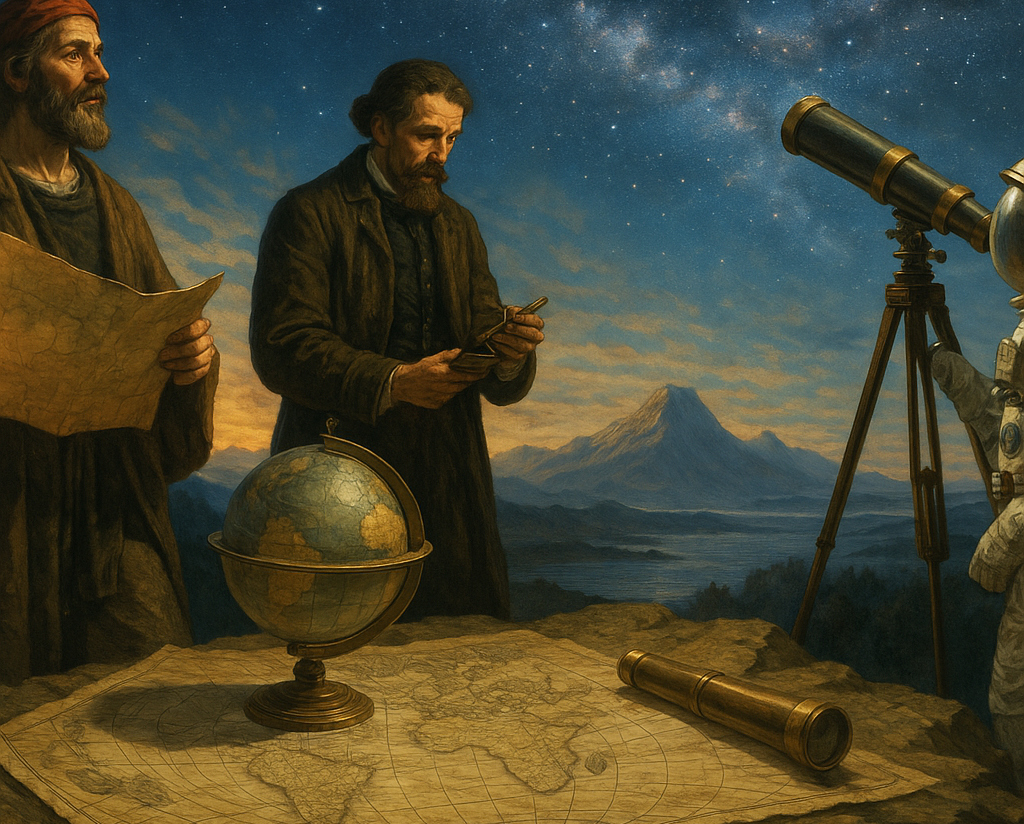
As exploration continued, so did the science of mapping. The 18th and 19th centuries saw cartographers, scientists, and adventurers working together to measure the planet with unprecedented accuracy. Expeditions to the Arctic, the Pacific, and the heart of Africa pushed the limits of endurance. Tools like the sextant, telescope, and chronometer revolutionized how distances and coordinates were calculated. Every mountain climbed and coastline mapped was another piece of the puzzle that transformed blank spaces on maps into known territories.
The Race for the Poles and the Skies
The early 20th century ushered in a new kind of exploration — one defined by extreme endurance and innovation. Explorers like Roald Amundsen, Ernest Shackleton, and Amelia Earhart became symbols of human determination. The polar expeditions tested physical and mental limits, while aviation opened a new dimension of exploration: the skies. As aircraft made the world smaller, explorers turned their gaze upward and beyond, laying the groundwork for the next great frontier — space.
From Outer Space to the Deep Sea
In the modern era, exploration has transcended Earth’s boundaries. The mid-20th century’s space race took humanity beyond the atmosphere, culminating in the moon landing — a defining moment in human history. Meanwhile, technology also unlocked the secrets of the deep sea, an environment as mysterious and challenging as outer space. Today, satellites, drones, and AI-driven rovers continue to explore what remains unmapped — from ocean trenches to distant planets — proving that the age of exploration is far from over.
Conclusion
The history of exploration is a story of endless horizons. From the first footprints across new lands to robotic missions on Mars, each generation has pushed further into the unknown. What drives explorers — ancient or modern — is not merely conquest, but curiosity: the desire to understand, to connect, and to expand what’s possible. Mapping the unknown is more than charting geography; it’s charting the human spirit — bold, restless, and forever seeking the next frontier.