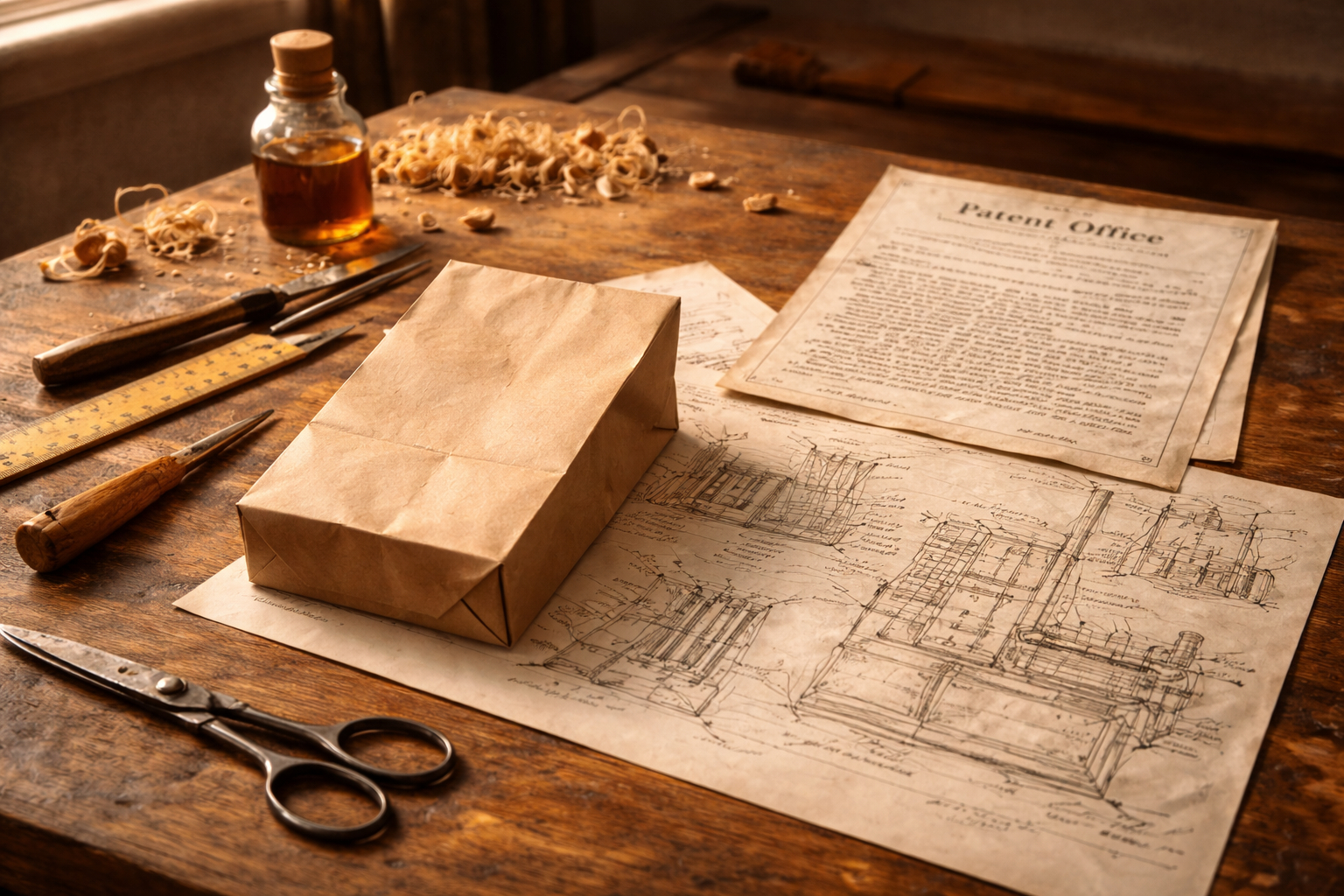
Margaret Knight is often remembered for a practical device that reshaped everyday commerce. Born into modest circumstances, she learned mechanical skills early and turned observation into innovation. Her design for a flat-bottomed paper bag solved a persistent industrial problem and sparked a notable patent battle. Knight’s career illustrates how hands-on knowledge, persistence, and practical design can have lasting cultural impact.
Early life and apprenticeship
Knight grew up near mills and factories, where machines and tools were part of daily life, and she developed mechanical aptitude by watching and helping workers. As a young woman she repaired and adapted equipment, earning a reputation for ingenuity that led to employment in several manufacturing shops. This formative experience taught her to identify repetitive problems and sketch solutions that could be made with available materials. Her approach combined close observation with practical drafting, a rare blend for women in workshops of the period.
The flat-bottomed paper bag and patent fight
The core innovation Knight produced was a machine that folded and glued paper to form a flat-bottomed bag strong enough for heavy loads, an advance over earlier side-gusset designs. Her prototype automated several steps, increasing speed and consistency while reducing labor. When she applied for a patent, a male inventor claimed her idea, prompting Knight to defend her work both technically and legally. She successfully established prior invention through detailed drawings and testimony, securing recognition for her machine and setting a precedent for women inventors.
– Created a mechanism for folding and compressing paper into stable square bases.
– Integrated cut, fold, and glue operations into a single pass to improve throughput.
– Focused on durability so bags could carry heavier retail goods without tearing.
Knight’s victory was more than personal; it demonstrated that meticulous documentation and practical prototypes could overcome social biases. The design quickly found use in shops and factories, influencing packaging standards for decades.
Legacy and later work
After the bag patent, Knight continued to design devices for looms, fire escapes, and other industrial uses, applying the same empirical methods to varied problems. Although not all her later inventions were patented or widely commercialized, they reveal a persistent commitment to improving workplace safety and efficiency. Her career also highlighted the structural barriers women faced when claiming intellectual property and professional recognition. Over time, historians and engineers have re-evaluated her contributions, noting how widespread adoption of flat-bottom bags transformed retail logistics and consumer habits.
Knight’s story resonates because it connects a simple, practical object to broader themes of gender, industry, and innovation. Her work reminds us that everyday technologies often have complex social and economic backstories.
Conclusion
Margaret Knight’s paper bag machine combined practical skill with inventive vision and reshaped retail packaging. Her successful patent defense underscored the importance of clear documentation and persistence in innovation. Today her legacy endures in an object used around the world every day.