Uncover History’s Secrets with Daily Updates!
Daily News Entertainment
  • Home
  • History
  • Biographies
  • Eras
  • Regions
  • Timeline
No Result
View All Result
History Ours
  • Home
  • History
  • Biographies
  • Eras
  • Regions
  • Timeline
No Result
View All Result
History Ours
No Result
View All Result
Home Biographies

Matthew Henson: The Black Explorer Who Climbed Toward the Pole

in Biographies
Matthew Henson: The Black Explorer Who Climbed Toward the Pole

Matthew Henson was born in 1866 in Nanjemoy, Maryland, and by his early teens he had already slipped the bounds of a painful childhood to make his way to the deck of merchant ships. A quick learner with a small, wiry frame, Henson found that the hard skills of seafaring suited him: knotwork, rigging, and the stamina for long watches. He arrived in New York as a young man and, around 1887, met Robert Peary, a Navy engineer who would become his expedition partner for the next two decades.

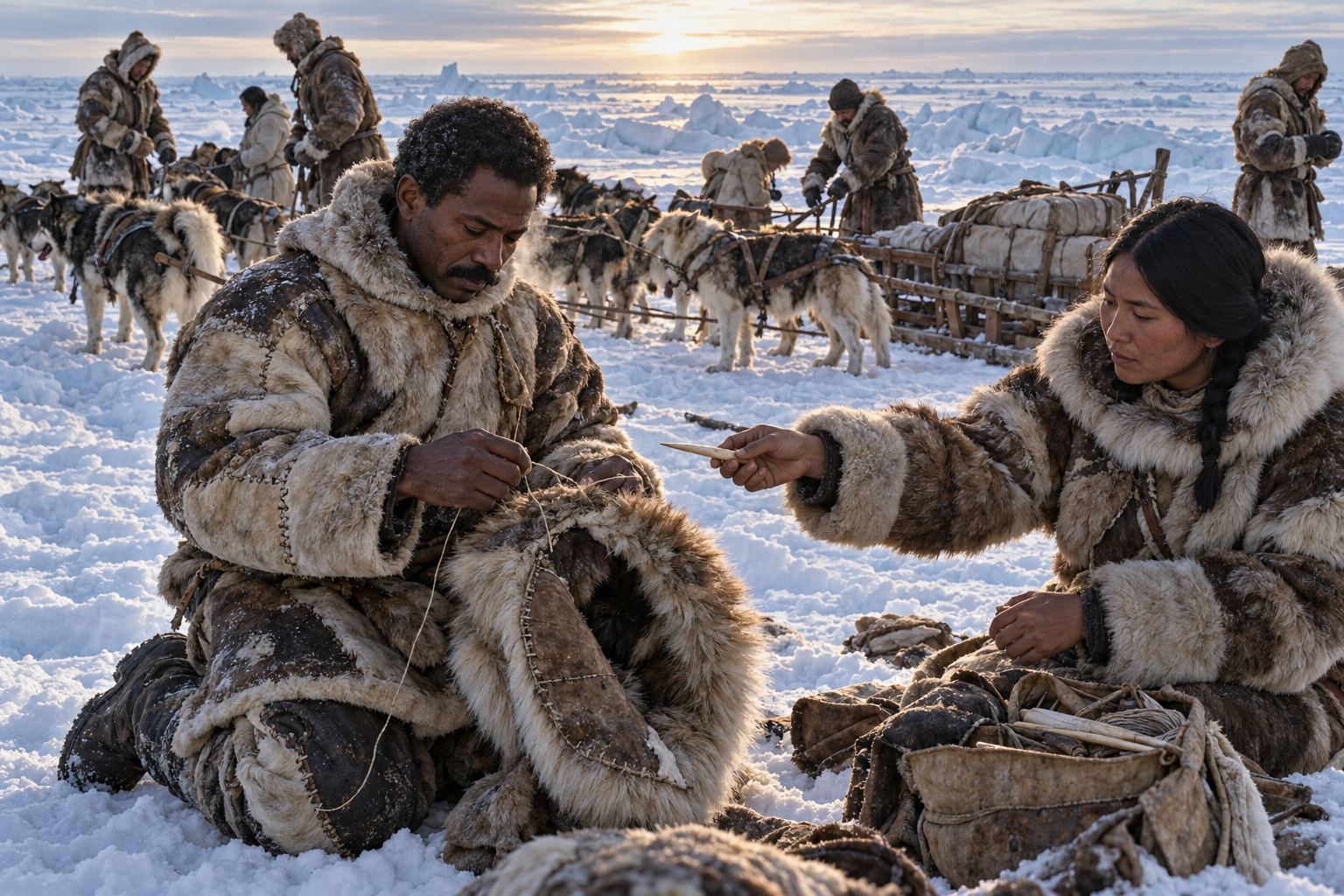
Henson was not a passive aide. He mastered Inuit languages and crafts, learned to drive dog teams, stitch furs, and fashion tools—practical expertise that Arctic science books rarely celebrated. Peary depended on Henson’s abilities as much as on maps and instruments. The relationship mixed mutual reliance with the era’s blunt inequalities: Henson’s contributions were crucial but often overlooked in public acclaim.

The 1909 March and a Complicated Claim

In April 1909 Peary announced that he and a small party, including Henson, had reached the North Pole. Contemporary newspapers hailed the feat; Henson’s presence in the photographs—dark-skinned, bundled in furs—struck some observers as remarkable. Within the party Henson carried heavy loads, scouted ahead, and served as an intermediary with the Inuit men and women who lent knowledge and labor essential to survival on the ice.

Historians have debated how close any party actually came to the precise geographic pole and whether navigational errors crept into the records. Whatever the technical disputes, Henson’s role is clear in practical terms: he was one of the small team that pushed farther into the polar wastes than most Western explorers had gone, and his Arctic skills made every mile possible.

Faced with Prejudice, Remembered Later

After 1909 Henson returned to Brooklyn and published a memoir, A Negro Explorer at the North Pole, in 1912. The book is a rare first-person account of life on Peary’s expeditions and of Henson’s work among Inuit communities. Despite that record, the first half of Henson’s life after the Arctic was marked by the limits of fame for a Black man in early 20th-century America: recognition was sporadic, and credit for the achievement tended to focus on Peary.

In the decades that followed, Henson’s story re-emerged in public memory. Scholars, journalists, and later generations of Arctic historians began to highlight his technical contributions and the racial blind spots that minimized them. He died in 1955, and in the years after his death his place in polar history came to be celebrated more fully.

Conclusion

Matthew Henson’s life reads like an odd, stubborn seam of history: a Black man born after the Civil War who taught himself the tools of exploration and stood on ice few Americans had seen. The exact compass reading for that April in 1909 will remain debated, but Henson’s practical genius—his language, his craft, his endurance—does not. He belongs among the handful of people whose labor changed how the world was mapped, even if recognition followed slowly.

Previous Post

When Boston Flooded with Molasses: The 1919 North End Disaster

Next Post

Rosalind Franklin and Photo 51: The X‑Ray That Changed Genetics

Related Posts

Rosalind Franklin and Photo 51: The X‑Ray That Changed Genetics
Biographies

Rosalind Franklin and Photo 51: The X‑Ray That Changed Genetics

November 4, 2026
Mary Seacole: The Jamaican Nurse Who Went to War
Biographies

Mary Seacole: The Jamaican Nurse Who Went to War

October 30, 2026
Ada Lovelace: The Poet Who Helped Imagine Modern Computers
Biographies

Ada Lovelace: The Poet Who Helped Imagine Modern Computers

October 30, 2026
Katherine Johnson: The Numbers Behind America’s First Orbits
Biographies

Katherine Johnson: The Numbers Behind America’s First Orbits

October 25, 2026
Next Post
Rosalind Franklin and Photo 51: The X‑Ray That Changed Genetics

Rosalind Franklin and Photo 51: The X‑Ray That Changed Genetics

Search..

No Result
View All Result

Recent Articles

Rosalind Franklin and Photo 51: The X‑Ray That Changed Genetics

Rosalind Franklin and Photo 51: The X‑Ray That Changed Genetics

November 4, 2026
Matthew Henson: The Black Explorer Who Climbed Toward the Pole

Matthew Henson: The Black Explorer Who Climbed Toward the Pole

November 4, 2026
When Boston Flooded with Molasses: The 1919 North End Disaster

When Boston Flooded with Molasses: The 1919 North End Disaster

November 3, 2026
The 1518 Dancing Plague: When Strasbourg Danced to Exhaustion

The 1518 Dancing Plague: When Strasbourg Danced to Exhaustion

November 3, 2026
1453: The Fall of Constantinople — A Brief Timeline

1453: The Fall of Constantinople — A Brief Timeline

November 2, 2026

Subscribe Us

By clicking submit, I authorize History Ours and its affiliated companies to: (1) use, sell, and share my information for marketing purposes, including cross-context behavioral advertising, as described in our Terms of Service and Privacy Policy, (2) supplement the information that I provide with additional information lawfully obtained from other sources, like demographic data from public sources, interests inferred from web page views, or other data relevant to what might interest me, like past purchase or location data, (3) contact me or enable others to contact me by email with offers for goods and services from any category at the email address provided, and (4) retain my information while I am engaging with marketing messages that I receive and for a reasonable amount of time thereafter. I understand I can opt out at any time through an email that I receive, or by clicking here

Subscribe To Our Newsletter

By clicking submit, I authorize History Ours and its affiliated companies to: (1) use, sell, and share my information for marketing purposes, including cross-context behavioral advertising, as described in our Terms of Service and Privacy Policy, (2) supplement the information that I provide with additional information lawfully obtained from other sources, like demographic data from public sources, interests inferred from web page views, or other data relevant to what might interest me, like past purchase or location data, (3) contact me or enable others to contact me by email with offers for goods and services from any category at the email address provided, and (4) retain my information while I am engaging with marketing messages that I receive and for a reasonable amount of time thereafter. I understand I can opt out at any time through an email that I receive, or by clicking here.

© 2026 History Ours | All Rights Reserved

  • Contact Us
  • Privacy Policy
  • Terms of Service
  • Unsubscribe
  • Privacy Choices
  • Contact Us
  • Privacy Policy
  • Terms of Service
  • Unsubscribe
  • Privacy Choices

© 2026 History Ours | All Rights Reserved

No Result
View All Result
  • Home
  • History
  • Biographies
  • Eras
  • Regions
  • Timeline

© 2026 History Ours | All Rights Reserved

Skip to content
Open toolbar Accessibility Tools

Accessibility Tools

  • Increase TextIncrease Text
  • Decrease TextDecrease Text
  • GrayscaleGrayscale
  • High ContrastHigh Contrast
  • Negative ContrastNegative Contrast
  • Light BackgroundLight Background
  • Links UnderlineLinks Underline
  • Readable FontReadable Font
  • Reset Reset