Uncover History’s Secrets with Daily Updates!
Daily News Entertainment
  • Home
  • History
  • Biographies
  • Eras
  • Regions
  • Timeline
No Result
View All Result
History Ours
  • Home
  • History
  • Biographies
  • Eras
  • Regions
  • Timeline
No Result
View All Result
History Ours
No Result
View All Result
Home History

The 1518 Dancing Plague: When Strasbourg Danced to Exhaustion

in History
The 1518 Dancing Plague: When Strasbourg Danced to Exhaustion

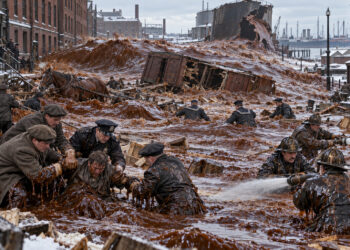
In July 1518 a woman in Strasbourg—then a city of the Holy Roman Empire—stepped into the street and began to dance. The woman, recorded in municipal chronicles as Frau Troffea, did not stop after an hour or a day. Within a week others had joined. Contemporary accounts and city records describe a swarm of dancers filling the alleys: not a festival, but a compulsion that would last for weeks.

How the city reacted

Authorities at first treated the outbreak like a medical curiosity. Some local leaders believed the dancing might be a kind of illness that needed to be encouraged out of the body; they rented a hall, built a wooden stage and hired musicians so the afflicted could dance more safely. That policy changed when reports grew that people were collapsing from exhaustion, and some chronicle entries mention fatalities. Eventually the city turned to more punitive and religious remedies—banishment, confinement, processions and prayers.

What might have caused it?

The dancing plague resists tidy explanation. One older hypothesis points to ergot, a fungus that can contaminate rye and produces convulsions and hallucinations; it was a plausible medical culprit in an era of poor grain storage. Modern scholars warn that ergotism would not easily explain why so many participants danced in rhythmic, organized ways or why the affliction hit particular social groups.

Another explanation is mass psychogenic illness: under extreme stress—poor harvests, disease, poverty, superstition—people in tightly knit communities sometimes develop shared somatic symptoms. The majority of the recorded dancers were women, many of them from lower social classes, which matches other historical incubators of collective behavior. Religious belief, extreme fasting, or local cultic practices might also have amplified a pre-existing tendency toward ecstatic movement.

Medical diagnoses such as epilepsy or neuromuscular disorders have been offered, and some scholars suggest an interaction of physiological and social triggers. Importantly, the surviving accounts are fragmentary and filtered through the concerns of clergy and city officials, who shaped what they recorded.

Conclusion

The 1518 dancing plague stands out because it was public, prolonged and documented by officials who struggled to make sense of it. It refuses a single explanation and so serves as a small, sharp example of how bodies, beliefs and stressors can collide in unpredictable ways. Two centuries later, historians and scientists still debate the episode: not because the facts are dramatic—people danced, authorities reacted—but because the event forces us to consider how communities respond when ordinary life turns inexplicably strange.

Previous Post

1453: The Fall of Constantinople — A Brief Timeline

Next Post

When Boston Flooded with Molasses: The 1919 North End Disaster

Related Posts

When Boston Flooded with Molasses: The 1919 North End Disaster
History

When Boston Flooded with Molasses: The 1919 North End Disaster

November 3, 2026
John Snow, the Broad Street Pump, and Cholera’s Fall
History

John Snow, the Broad Street Pump, and Cholera’s Fall

October 29, 2026
The Vasa: Sweden’s Giant Ship That Couldn’t Sail
History

The Vasa: Sweden’s Giant Ship That Couldn’t Sail

October 29, 2026
The Ghost Army: How Artists Fooled Hitler’s Front
History

The Ghost Army: How Artists Fooled Hitler’s Front

October 24, 2026
Next Post
When Boston Flooded with Molasses: The 1919 North End Disaster

When Boston Flooded with Molasses: The 1919 North End Disaster

Search..

No Result
View All Result

Recent Articles

When Boston Flooded with Molasses: The 1919 North End Disaster

When Boston Flooded with Molasses: The 1919 North End Disaster

November 3, 2026
The 1518 Dancing Plague: When Strasbourg Danced to Exhaustion

The 1518 Dancing Plague: When Strasbourg Danced to Exhaustion

November 3, 2026
1453: The Fall of Constantinople — A Brief Timeline

1453: The Fall of Constantinople — A Brief Timeline

November 2, 2026
How Penicillin Went from Petri Dish to Battlefield Medicine

How Penicillin Went from Petri Dish to Battlefield Medicine

November 2, 2026
How Carrara’s Marble Carved a Peculiar Mountain Region

How Carrara’s Marble Carved a Peculiar Mountain Region

November 1, 2026

Subscribe Us

By clicking submit, I authorize History Ours and its affiliated companies to: (1) use, sell, and share my information for marketing purposes, including cross-context behavioral advertising, as described in our Terms of Service and Privacy Policy, (2) supplement the information that I provide with additional information lawfully obtained from other sources, like demographic data from public sources, interests inferred from web page views, or other data relevant to what might interest me, like past purchase or location data, (3) contact me or enable others to contact me by email with offers for goods and services from any category at the email address provided, and (4) retain my information while I am engaging with marketing messages that I receive and for a reasonable amount of time thereafter. I understand I can opt out at any time through an email that I receive, or by clicking here

Subscribe To Our Newsletter

By clicking submit, I authorize History Ours and its affiliated companies to: (1) use, sell, and share my information for marketing purposes, including cross-context behavioral advertising, as described in our Terms of Service and Privacy Policy, (2) supplement the information that I provide with additional information lawfully obtained from other sources, like demographic data from public sources, interests inferred from web page views, or other data relevant to what might interest me, like past purchase or location data, (3) contact me or enable others to contact me by email with offers for goods and services from any category at the email address provided, and (4) retain my information while I am engaging with marketing messages that I receive and for a reasonable amount of time thereafter. I understand I can opt out at any time through an email that I receive, or by clicking here.

© 2026 History Ours | All Rights Reserved

  • Contact Us
  • Privacy Policy
  • Terms of Service
  • Unsubscribe
  • Privacy Choices
  • Contact Us
  • Privacy Policy
  • Terms of Service
  • Unsubscribe
  • Privacy Choices

© 2026 History Ours | All Rights Reserved

No Result
View All Result
  • Home
  • History
  • Biographies
  • Eras
  • Regions
  • Timeline

© 2026 History Ours | All Rights Reserved

Skip to content
Open toolbar Accessibility Tools

Accessibility Tools

  • Increase TextIncrease Text
  • Decrease TextDecrease Text
  • GrayscaleGrayscale
  • High ContrastHigh Contrast
  • Negative ContrastNegative Contrast
  • Light BackgroundLight Background
  • Links UnderlineLinks Underline
  • Readable FontReadable Font
  • Reset Reset