
Uncover History’s Secrets with Daily Updates!
Daily News Entertainment
  • Home
  • History
  • Biographies
  • Eras
  • Regions
  • Timeline
No Result
View All Result
History Ours
  • Home
  • History
  • Biographies
  • Eras
  • Regions
  • Timeline
No Result
View All Result
History Ours
No Result
View All Result
Home Biographies

Principles for Writing Responsible and Lively Biographies

in Biographies
Principles for Writing Responsible and Lively Biographies

Biographies connect readers to individual lives while illuminating broader human experiences. Good biographical work balances factual rigor with narrative clarity so that a life feels both accurate and vivid. For writers, establishing trustworthy sources and transparent interpretation is the foundation of credibility. This article outlines practical approaches to research, storytelling, and ethical judgment in biographical practice.

Effective biographies require attention to detail and an awareness of the subject’s context. They should invite readers to understand the subject without simplifying complexity. Clear annotation helps readers trace the writer’s choices and build confidence. Above all, responsible biographies respect the people whose lives they render.

Research Foundations

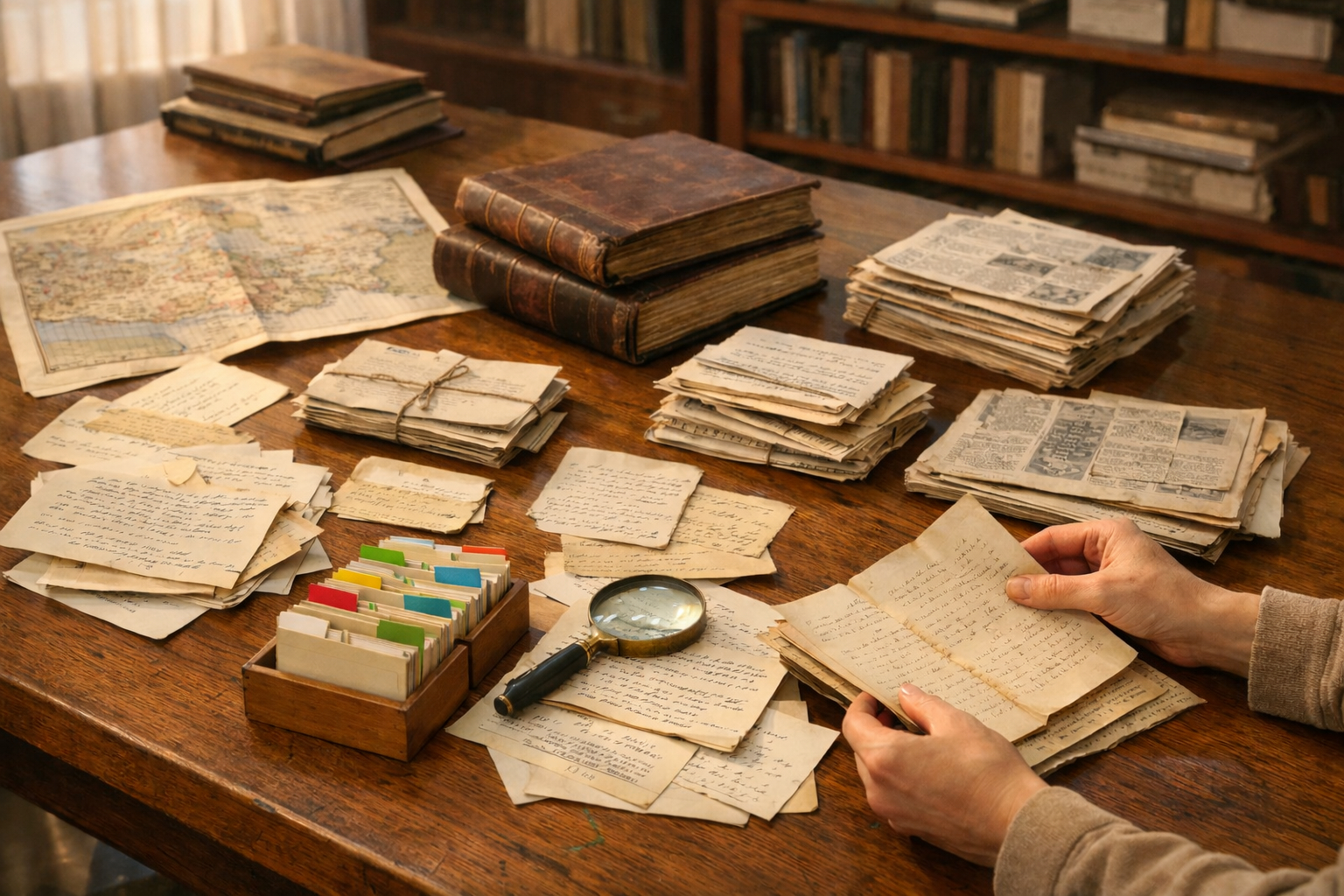
Strong biographies begin with a systematic approach to sources, combining primary documents, contemporaneous accounts, and later analysis. Prioritize letters, diaries, official records, and first-hand interviews where available, and corroborate claims across independent materials. Archival research often reveals small details that reshape interpretations, while newspapers and public records situate a life in its social and institutional setting. Organize findings chronologically and thematically to spot patterns and contradictions that will inform the narrative.

Keeping meticulous notes and citations lets writer revisit evidence during drafting and revision. Transparent sourcing also supports ethical choices when dealing with contested or sensitive material.

Weaving Narrative and Evidence

Balancing story and proof means using narrative techniques without sacrificing accuracy. Use scene, dialogue, and context to animate pivotal moments, but avoid inventing specifics where the record is thin; indicate conjecture and the basis for interpretation. Anchor evocative passages in documented facts and signal when reconstruction is speculative. Thoughtful pacing and selection help readers grasp significance without getting lost in minutiae.

Good narrative structure highlights causal connections and recurring themes in a life. Editors and peer readers can help test whether scenes advance understanding or merely dramatize.

Ethics and Sensitivity

Biographers encounter private matters, contested reputations, and vulnerable subjects; ethical reflection should guide choices about disclosure and emphasis. Consider potential impacts on living relatives and communities, and weigh public interest against unnecessary intrusion. Where appropriate, provide context that avoids moralizing and acknowledges complexity. When handling painful or stigmatized aspects, prioritize dignity and corroboration.

Applying ethical guidelines consistently builds trust with readers and communities. Openness about limitations and perspective strengthens the work’s integrity.

Practical Techniques

Practical methods speed progress and improve clarity in biographical writing and revision. Develop timelines, character sketches, and annotated bibliographies early to map the narrative terrain. Draft flexible outlines that allow for reordering as new evidence emerges and set regular revision cycles that alternate close source-checking with readability edits.

  • Create a searchable database of documents and transcripts.
  • Use timelines to resolve chronological ambiguities.
  • Maintain a reflections log to record interpretive decisions.

These techniques help sustain momentum while preserving accuracy. They also make collaboration and peer review more productive.

Conclusion

Writing responsible, lively biographies requires disciplined research, careful storytelling, and ethical judgment. Combining precise sourcing with humane narrative choices produces works that inform and engage readers. Thoughtful practice ensures that biographies illuminate individual lives and the wider contexts that shape them.
Previous Post

Contextualizing Lives: Strategies for Nuanced Biographical Writing

Next Post

How Periodization Shapes Our View of the Past

Related Posts

The Disguise That Broke Chains: Ellen and William Craft
Biographies

The Disguise That Broke Chains: Ellen and William Craft

September 15, 2026
Bass Reeves: The Marshal Who Hunted Outlaws in Indian Territory
Biographies

Bass Reeves: The Marshal Who Hunted Outlaws in Indian Territory

September 15, 2026
Ellen Craft: Passing as a Planter to Secure Freedom
Biographies

Ellen Craft: Passing as a Planter to Secure Freedom

September 15, 2026
Chien‑Shiung Wu: The Physicist Who Proved Parity’s Failure
Biographies

Chien‑Shiung Wu: The Physicist Who Proved Parity’s Failure

September 15, 2026
Next Post
Framing Time: How Eras Guide Historical Interpretation

How Periodization Shapes Our View of the Past

Search..

No Result
View All Result

Recent Articles

The Disguise That Broke Chains: Ellen and William Craft

The Disguise That Broke Chains: Ellen and William Craft

September 15, 2026
Bass Reeves: The Marshal Who Hunted Outlaws in Indian Territory

Bass Reeves: The Marshal Who Hunted Outlaws in Indian Territory

September 15, 2026
How the Crystal Palace Turned Glass and Iron into a Modern Stage

How the Crystal Palace Turned Glass and Iron into a Modern Stage

September 15, 2026
Anne Bonny: The Pirate Who Broke Rules and Expectations

Anne Bonny: The Pirate Who Broke Rules and Expectations

September 15, 2026
How Haiti Broke Its Chains: A 1791–1804 Timeline

How Haiti Broke Its Chains: A 1791–1804 Timeline

September 15, 2026

Subscribe Us

By clicking submit, I authorize History Ours and its affiliated companies to: (1) use, sell, and share my information for marketing purposes, including cross-context behavioral advertising, as described in our Terms of Service and Privacy Policy, (2) supplement the information that I provide with additional information lawfully obtained from other sources, like demographic data from public sources, interests inferred from web page views, or other data relevant to what might interest me, like past purchase or location data, (3) contact me or enable others to contact me by email with offers for goods and services from any category at the email address provided, and (4) retain my information while I am engaging with marketing messages that I receive and for a reasonable amount of time thereafter. I understand I can opt out at any time through an email that I receive, or by clicking here

Subscribe To Our Newsletter

By clicking submit, I authorize History Ours and its affiliated companies to: (1) use, sell, and share my information for marketing purposes, including cross-context behavioral advertising, as described in our Terms of Service and Privacy Policy, (2) supplement the information that I provide with additional information lawfully obtained from other sources, like demographic data from public sources, interests inferred from web page views, or other data relevant to what might interest me, like past purchase or location data, (3) contact me or enable others to contact me by email with offers for goods and services from any category at the email address provided, and (4) retain my information while I am engaging with marketing messages that I receive and for a reasonable amount of time thereafter. I understand I can opt out at any time through an email that I receive, or by clicking here.

© 2026 History Ours | All Rights Reserved

  • Contact Us
  • Privacy Policy
  • Terms of Service
  • Unsubscribe
  • Privacy Choices
  • Contact Us
  • Privacy Policy
  • Terms of Service
  • Unsubscribe
  • Privacy Choices

© 2026 History Ours | All Rights Reserved

No Result
View All Result
  • Home
  • History
  • Biographies
  • Eras
  • Regions
  • Timeline

© 2026 History Ours | All Rights Reserved

Skip to content
Open toolbar Accessibility Tools

Accessibility Tools

  • Increase TextIncrease Text
  • Decrease TextDecrease Text
  • GrayscaleGrayscale
  • High ContrastHigh Contrast
  • Negative ContrastNegative Contrast
  • Light BackgroundLight Background
  • Links UnderlineLinks Underline
  • Readable FontReadable Font
  • Reset Reset