
Shirley Anita St. Hill Chisholm arrived in Brooklyn the daughter of West Indian immigrants and carried both islanded confidence and streetwise resolve into American politics. She taught in public schools, earned a master’s degree in elementary education, and pushed into local community organizations before she ever sought elective office. Those early years — as an educator, a daycare advocate and a community activist — shaped her public practice: practical, impatient with polite compromise, and focused on issues that affected working families.
Breaking Congress’s color and gender ceiling
In 1968 Chisholm won a seat in the U.S. House of Representatives, becoming the first Black woman elected to Congress. She arrived in Washington with an undiplomatic slogan — “Unbought and Unbossed” — that announced independence from party machines and donors who expected obedience. On the House floor and in committee rooms she championed child care, school reform, and economic opportunity, and she joined colleagues to form the Congressional Black Caucus in 1971 to press a legislative agenda too often ignored by the majority.
The 1972 presidential campaign and its ripple effects
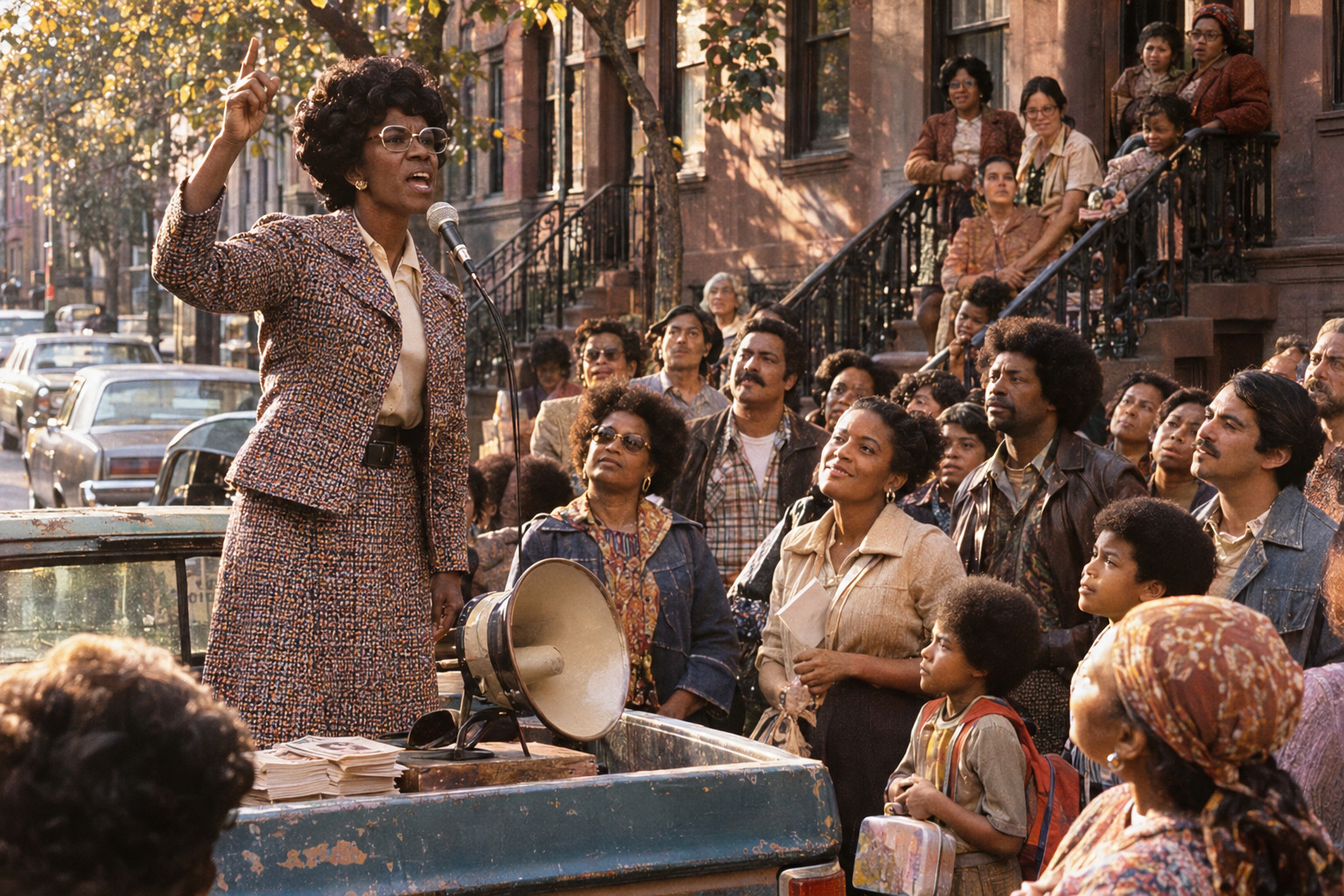
Two years after she published her memoir, also titled Unbought and Unbossed, Chisholm did something the political establishment called improbable: she ran for the Democratic presidential nomination in 1972. Her campaign never won enough delegates to secure the nomination, but it mattered in ways raw vote totals didn’t capture. She ran as a Black woman from Brooklyn who demanded to be counted. Her visibility widened the bounds of what Americans could imagine about leadership — inspiring younger activists and signaling to women and people of color that national office was not off-limits.
Conclusion
Shirley Chisholm served seven terms in Congress and left an unmistakable legacy: she reframed who belonged at the center of American politics. Her rhetoric could be blunt and her temper fierce, but she matched words with steady attention to schooling, poverty, and participation. Today her name still surfaces when candidates push against party orthodoxy or when organizers insist that politics must represent the lives it claims to serve. That stubborn streak — unbought, unbossed — is the part of her story that keeps arriving in American political imagination.