
Uncover History’s Secrets with Daily Updates!
Daily News Entertainment
  • Home
  • History
  • Biographies
  • Eras
  • Regions
  • Timeline
No Result
View All Result
History Ours
  • Home
  • History
  • Biographies
  • Eras
  • Regions
  • Timeline
No Result
View All Result
History Ours
No Result
View All Result
Home Regions

The Pale of Settlement: Borders That Shaped Jewish Life

in Regions
The Pale of Settlement: Borders That Shaped Jewish Life

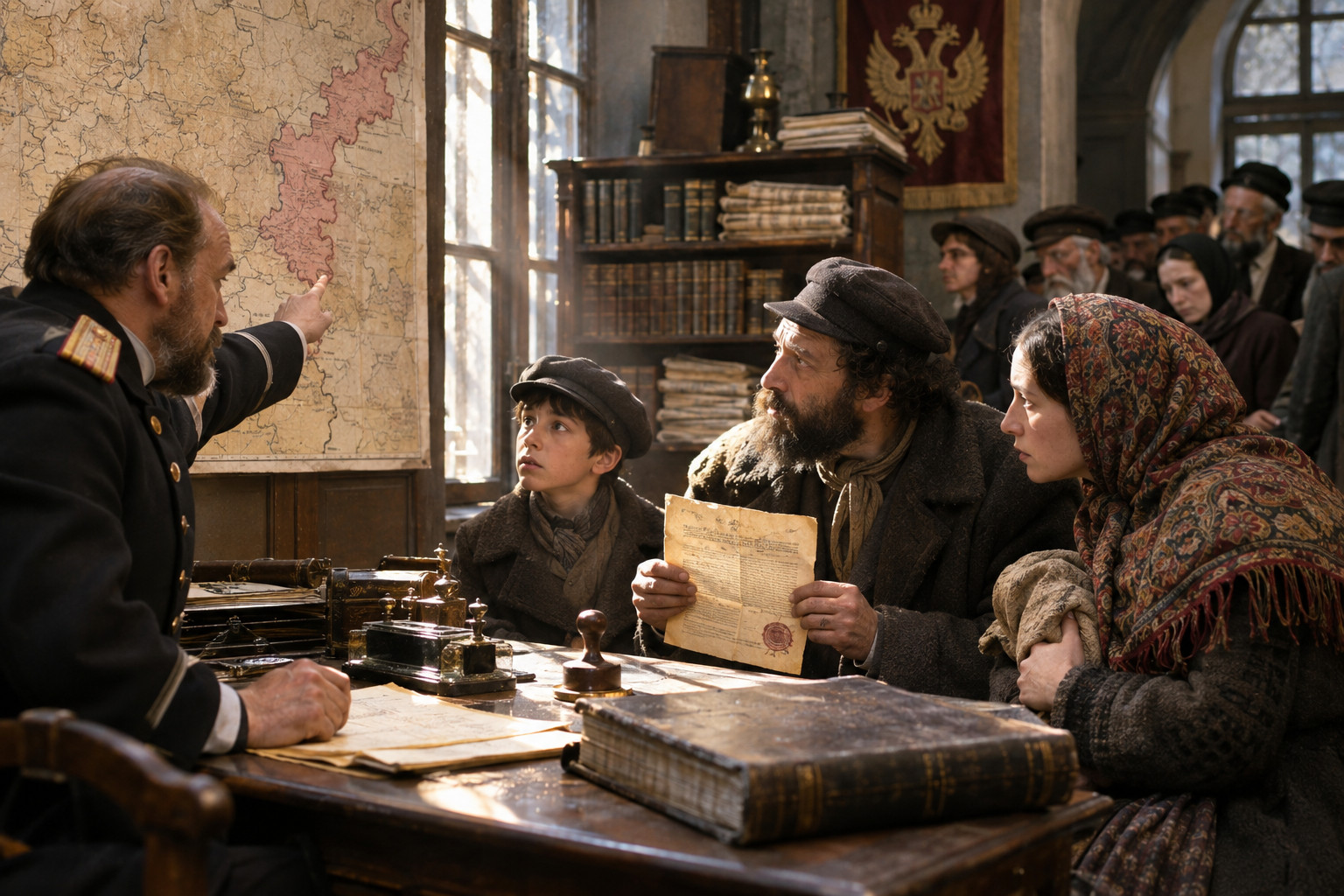
When the Russian Empire swallowed swathes of the old Polish–Lithuanian Commonwealth in the late 18th century, it inherited large Jewish communities. Rather than integrate those communities across the empire, tsarist authorities drew a zone where Jews were officially allowed to live: the Pale of Settlement. Its boundaries shifted over decades, but it generally included much of modern-day Poland, Lithuania, Belarus, Ukraine and parts of Moldova. Outside that belt, residence required special permission.

Everyday life inside the Pale

The Pale was not a single experience. In some cities—Vilna (Vilnius), Lviv, and Grodno—Jews formed vital urban cohorts: shopkeepers, artisans, lawyers and scholars. Elsewhere they clustered in shtetls—small market towns where Yiddish was the common language, synagogues marked the skyline, and the rhythm of the week and the holidays organized social life. Land ownership was rare; many Jews worked as traders, innkeepers, artisans, or leaseholders for nobility. A dense network of markets, credit arrangements and communal institutions kept these economies running.

Legal restrictions shaped cultural forms. Quotas and barriers in higher education and certain professions pushed energy into religious study, communal charity, the press and political organizing. Yiddish literature and theater blossomed in the Pale because the language was the region’s vernacular; so too did movements as varied as Hasidism and the Jewish Labour Bund, each answering local conditions in different ways.

Politics, pogroms, and migration

The Pale also concentrated vulnerability. After the assassination of Alexander II in 1881, waves of violent attacks on Jews—pogroms—rippleed through the Pale, and the 1882 May Laws tightened residence rules further. Restrictions barred Jews from buying land in rural areas and limited settlement in many towns, intensifying crowding and economic pressure in permitted zones. Those pressures, along with political repression and recurring violence, fed mass migration. Between the 1880s and the early 20th century, millions left the Pale for the United States, South America, Palestine and elsewhere.

At the same time, the Pale served as a cultural crucible. Its crowded towns produced a disproportionate share of Jewish writers, political activists, rabbis and entrepreneurs who would shape global Jewish life. The boundaries may have been drawn by imperial decree, but the networks inside them radiated far beyond.

Conclusion

The Pale of Settlement was more than an administrative line on a map. It concentrated populations, constrained mobility, and forced communities to improvise institutions and economies. Living within those limits made modern Jewish politics, culture, languages and diasporic routes more visible and more urgent. When the Russian revolutions of 1917 swept away legal residence restrictions, the legacy of the Pale remained: a shaped geography of memory, migration and creativity that continues to explain why so many Jewish stories begin in those towns and cities of eastern Europe.
Previous Post

When the Sky Exploded Over Siberia: The Tunguska Mystery

Next Post

Shirley Chisholm: Unbought, Unbossed, and Unstoppable

Related Posts

Freetown: How a Harbor Forged a Black Atlantic City
Regions

Freetown: How a Harbor Forged a Black Atlantic City

November 26, 2026
How the Sound Dues Shaped the Baltic’s Map of Power
Regions

How the Sound Dues Shaped the Baltic’s Map of Power

November 24, 2026
After the Quake: How 1755 Lisbon Reshaped an Empire
Regions

After the Quake: How 1755 Lisbon Reshaped an Empire

November 21, 2026
Baku: Oil, Ports, and the Birth of a Caspian Metropolis
Regions

Baku: Oil, Ports, and the Birth of a Caspian Metropolis

November 16, 2026
Next Post
Shirley Chisholm: Unbought, Unbossed, and Unstoppable

Shirley Chisholm: Unbought, Unbossed, and Unstoppable

Search..

No Result
View All Result

Recent Articles

Shirley Chisholm: Unbought, Unbossed, and Unstoppable

Shirley Chisholm: Unbought, Unbossed, and Unstoppable

November 29, 2026
The Pale of Settlement: Borders That Shaped Jewish Life

The Pale of Settlement: Borders That Shaped Jewish Life

November 29, 2026
When the Sky Exploded Over Siberia: The Tunguska Mystery

When the Sky Exploded Over Siberia: The Tunguska Mystery

November 28, 2026
The Bicycle Boom: How Two Wheels Rewrote Cities and Lives

The Bicycle Boom: How Two Wheels Rewrote Cities and Lives

November 28, 2026
Olaudah Equiano: The Life Behind an Atlantic Bestseller

Olaudah Equiano: The Life Behind an Atlantic Bestseller

November 27, 2026

Subscribe Us

By clicking submit, I authorize History Ours and its affiliated companies to: (1) use, sell, and share my information for marketing purposes, including cross-context behavioral advertising, as described in our Terms of Service and Privacy Policy, (2) supplement the information that I provide with additional information lawfully obtained from other sources, like demographic data from public sources, interests inferred from web page views, or other data relevant to what might interest me, like past purchase or location data, (3) contact me or enable others to contact me by email with offers for goods and services from any category at the email address provided, and (4) retain my information while I am engaging with marketing messages that I receive and for a reasonable amount of time thereafter. I understand I can opt out at any time through an email that I receive, or by clicking here

Subscribe To Our Newsletter

By clicking submit, I authorize History Ours and its affiliated companies to: (1) use, sell, and share my information for marketing purposes, including cross-context behavioral advertising, as described in our Terms of Service and Privacy Policy, (2) supplement the information that I provide with additional information lawfully obtained from other sources, like demographic data from public sources, interests inferred from web page views, or other data relevant to what might interest me, like past purchase or location data, (3) contact me or enable others to contact me by email with offers for goods and services from any category at the email address provided, and (4) retain my information while I am engaging with marketing messages that I receive and for a reasonable amount of time thereafter. I understand I can opt out at any time through an email that I receive, or by clicking here.

© 2026 History Ours | All Rights Reserved

  • Contact Us
  • Privacy Policy
  • Terms of Service
  • Unsubscribe
  • Privacy Choices
  • Contact Us
  • Privacy Policy
  • Terms of Service
  • Unsubscribe
  • Privacy Choices

© 2026 History Ours | All Rights Reserved

No Result
View All Result
  • Home
  • History
  • Biographies
  • Eras
  • Regions
  • Timeline

© 2026 History Ours | All Rights Reserved

Skip to content
Open toolbar Accessibility Tools

Accessibility Tools

  • Increase TextIncrease Text
  • Decrease TextDecrease Text
  • GrayscaleGrayscale
  • High ContrastHigh Contrast
  • Negative ContrastNegative Contrast
  • Light BackgroundLight Background
  • Links UnderlineLinks Underline
  • Readable FontReadable Font
  • Reset Reset