Uncover History’s Secrets with Daily Updates!
Daily News Entertainment
  • Home
  • History
  • Biographies
  • Eras
  • Regions
  • Timeline
No Result
View All Result
History Ours
  • Home
  • History
  • Biographies
  • Eras
  • Regions
  • Timeline
No Result
View All Result
History Ours
No Result
View All Result
Home Biographies

Techniques for Writing Fair, Nuanced Life Portraits

in Biographies
Techniques for Writing Fair, Nuanced Life Portraits

Good biographies balance evidence and interpretation to present a life that feels both accurate and human. Successful portraiture begins with meticulous research but also with a sensitivity to gaps, silences, and contradictions in the record. This piece outlines practical techniques for building balanced short biographies that respect sources and foreground individual context. It is aimed at historians, archivists, and writers seeking measured approaches to reconstructing lives, and to educators who communicate biography to wider publics.

Research Foundations

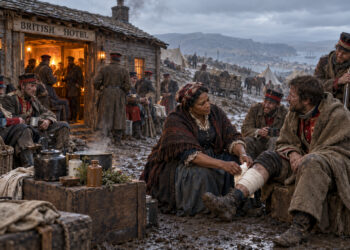
Start by mapping your sources: official records, letters, newspapers, and material culture often complement one another and expose different aspects of a life. Prioritize provenance and contemporaneous testimony, and note where later recollections may complicate certainty. When sources are sparse, look for indirect evidence—community records, occupational lists, and related biographies can reveal routines and relationships. Keep an evidence log that records both what you know and what remains speculative.

This disciplined groundwork narrows uncertainty and guides narrative choices. Clear citation habits also facilitate future corrections. Documenting uncertainties in footnotes or endnotes preserves methodological honesty and makes your limits explicit to readers.

Weaving Narrative

Translate facts into a readable arc without overstating what the sources permit. Focus scenes on moments where documentation converges: a letter, a court record, or a contemporary report can justify narrative detail. Resist filling gaps with invented psychology; instead, contextualize possibilities by explaining the broader social and economic conditions that shaped decisions. Use short, concrete episodes to suggest character while leaving interpretive room.

Narrative restraint builds credibility and invites readers to trust your interpretation. Let evidence set the limits of storytelling. Transparent framing of conjecture invites further inquiry rather than closing debate.

Ethical Considerations

Biographers handle reputations and sometimes vulnerable family histories. Explain biases in your sources and acknowledge when identities, motives, or outcomes cannot be established. Obtain permissions where living descendants are implicated, and be cautious about sensational claims that rest on thin evidence. Ethics also means crediting earlier researchers and being transparent about editorial choices.

  • Cross-check archival references and public records.
  • Flag speculative claims clearly for readers.
  • Prioritize respectful, nonjudgmental language when uncertain.

Ethical transparency strengthens public trust and scholarly value. It turns biography into a civic practice as well as an interpretive art. These habits also protect subjects and readers alike.

Conclusion

Balanced biographies combine careful research, modest narrative, and clear ethics. Each decision—from choosing which facts to foreground to how to explain gaps—matters for how a life is understood. Practicing these techniques helps writers produce portraits that are both compelling and credible.
Previous Post

Biographical Timelines: Building Lives Through Everyday Details

Next Post

Daily Life and Change During the Industrial Era

Related Posts

Mary Seacole: The Jamaican Nurse Who Went to War
Biographies

Mary Seacole: The Jamaican Nurse Who Went to War

October 30, 2026
Ada Lovelace: The Poet Who Helped Imagine Modern Computers
Biographies

Ada Lovelace: The Poet Who Helped Imagine Modern Computers

October 30, 2026
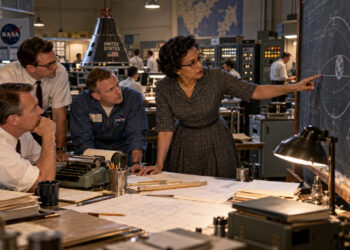
Katherine Johnson: The Numbers Behind America’s First Orbits
Biographies

Katherine Johnson: The Numbers Behind America’s First Orbits

October 25, 2026
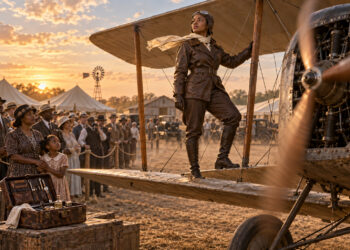
Bessie Coleman: How a Texan Manicurist Conquered the Skies
Biographies

Bessie Coleman: How a Texan Manicurist Conquered the Skies

October 25, 2026
Next Post
Daily Life and Change During the Industrial Era

Daily Life and Change During the Industrial Era

Search..

No Result
View All Result

Recent Articles

Mary Seacole: The Jamaican Nurse Who Went to War

Mary Seacole: The Jamaican Nurse Who Went to War

October 30, 2026
Ada Lovelace: The Poet Who Helped Imagine Modern Computers

Ada Lovelace: The Poet Who Helped Imagine Modern Computers

October 30, 2026
John Snow, the Broad Street Pump, and Cholera’s Fall

John Snow, the Broad Street Pump, and Cholera’s Fall

October 29, 2026
The Vasa: Sweden’s Giant Ship That Couldn’t Sail

The Vasa: Sweden’s Giant Ship That Couldn’t Sail

October 29, 2026
How the Black Death Spread Across Europe, 1347–1351

How the Black Death Spread Across Europe, 1347–1351

October 28, 2026

Subscribe Us

By clicking submit, I authorize History Ours and its affiliated companies to: (1) use, sell, and share my information for marketing purposes, including cross-context behavioral advertising, as described in our Terms of Service and Privacy Policy, (2) supplement the information that I provide with additional information lawfully obtained from other sources, like demographic data from public sources, interests inferred from web page views, or other data relevant to what might interest me, like past purchase or location data, (3) contact me or enable others to contact me by email with offers for goods and services from any category at the email address provided, and (4) retain my information while I am engaging with marketing messages that I receive and for a reasonable amount of time thereafter. I understand I can opt out at any time through an email that I receive, or by clicking here

Subscribe To Our Newsletter

By clicking submit, I authorize History Ours and its affiliated companies to: (1) use, sell, and share my information for marketing purposes, including cross-context behavioral advertising, as described in our Terms of Service and Privacy Policy, (2) supplement the information that I provide with additional information lawfully obtained from other sources, like demographic data from public sources, interests inferred from web page views, or other data relevant to what might interest me, like past purchase or location data, (3) contact me or enable others to contact me by email with offers for goods and services from any category at the email address provided, and (4) retain my information while I am engaging with marketing messages that I receive and for a reasonable amount of time thereafter. I understand I can opt out at any time through an email that I receive, or by clicking here.

© 2026 History Ours | All Rights Reserved

  • Contact Us
  • Privacy Policy
  • Terms of Service
  • Unsubscribe
  • Privacy Choices
  • Contact Us
  • Privacy Policy
  • Terms of Service
  • Unsubscribe
  • Privacy Choices

© 2026 History Ours | All Rights Reserved

No Result
View All Result
  • Home
  • History
  • Biographies
  • Eras
  • Regions
  • Timeline

© 2026 History Ours | All Rights Reserved

Skip to content
Open toolbar Accessibility Tools

Accessibility Tools

  • Increase TextIncrease Text
  • Decrease TextDecrease Text
  • GrayscaleGrayscale
  • High ContrastHigh Contrast
  • Negative ContrastNegative Contrast
  • Light BackgroundLight Background
  • Links UnderlineLinks Underline
  • Readable FontReadable Font
  • Reset Reset