Uncover History’s Secrets with Daily Updates!
Daily News Entertainment
  • Home
  • History
  • Biographies
  • Eras
  • Regions
  • Timeline
No Result
View All Result
History Ours
  • Home
  • History
  • Biographies
  • Eras
  • Regions
  • Timeline
No Result
View All Result
History Ours
No Result
View All Result
Home Eras

Daily Life and Change During the Industrial Era

in Eras
Daily Life and Change During the Industrial Era

The Industrial Era rewired everyday experience, shaping how people lived, worked, and imagined the future. Rapid urbanization, new industrial rhythms, and evolving social expectations altered routines from the factory floor to the household. While technological innovations increased production, they also produced crowded cities, new labor patterns, and contested meanings of progress. This article explores key aspects of daily life during that transformative period and traces the continuities that emerged.

Urban Growth and Work

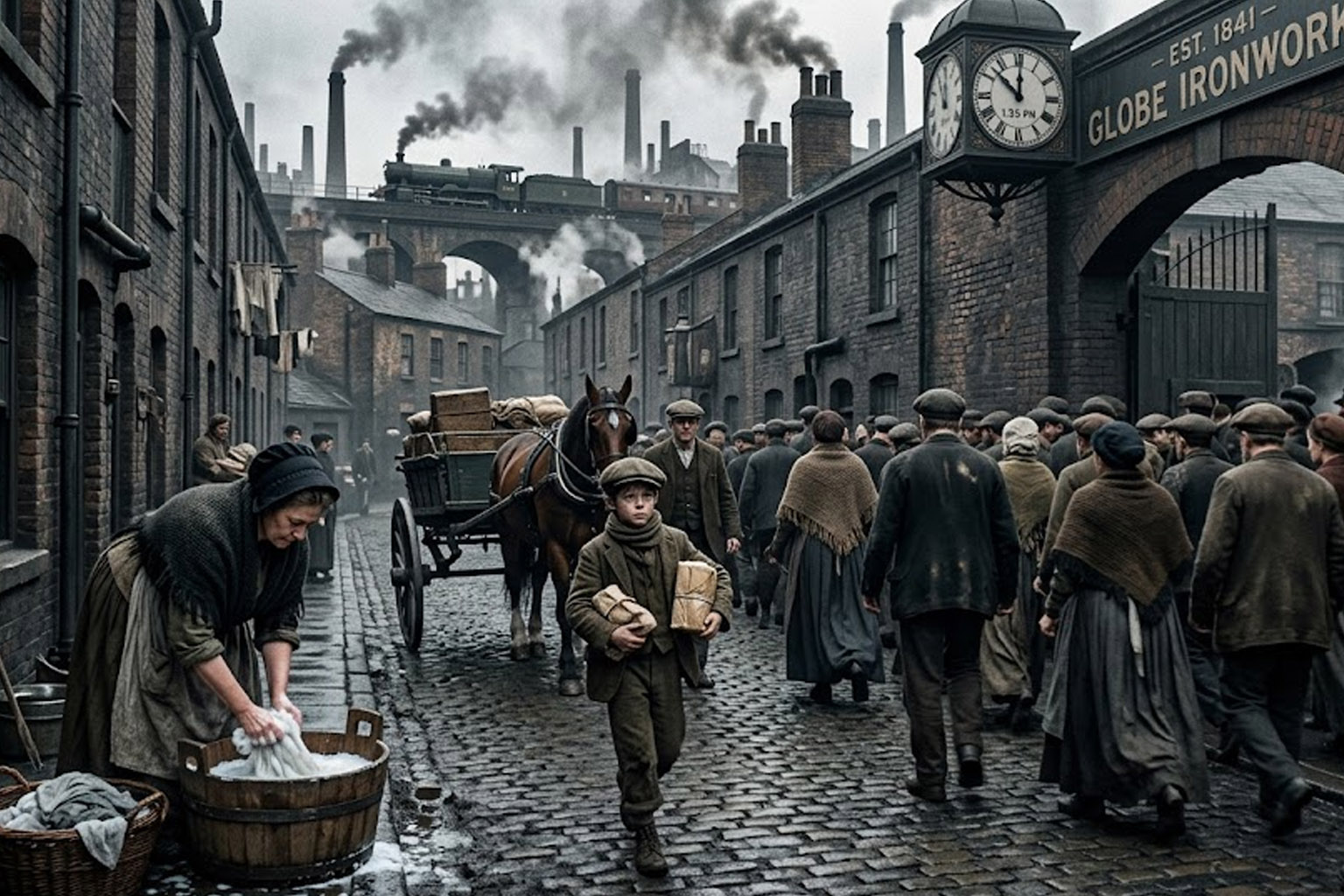
Mass migration from rural to urban areas concentrated populations near factories, rail hubs, and docks, creating dense neighborhoods with mixed living conditions. Work shifted from task-based cottage industries to regimented factory schedules governed by clocks and supervisors, changing how people measured time and valued productivity. Labor became more segmented, with specialized roles replacing multi-task household production and prompting new forms of workplace discipline. These shifts affected family incomes, social networks, and the visible rhythms of urban streets.

In response, communities adapted through informal support networks and emerging civic institutions. Municipal services, though often inadequate at first, slowly developed to meet public health and sanitation needs.

Family, Gender, and Social Roles

Household life was reshaped as members took on distinct economic functions: some labored in factories, others maintained the home, and children frequently contributed wage labor. Gender expectations hardened in many contexts, associating paid industrial work with masculinity and domestic responsibilities with femininity, even as many women and girls worked outside the home. Child labor was common where economic necessity outweighed newly developing norms about childhood and education. At the same time, reform movements and labor organizations began to challenge exploitative practices and advocate for schooling and better working conditions.

These contested roles created both friction and new solidarities, as families negotiated survival alongside emerging ideas about rights and responsibilities.

Culture, Leisure, and Technology

Technological advances transformed not only production but also how people experienced leisure and information. Cheap print, illustrated periodicals, and improved transportation expanded access to news, entertainment, and consumer goods for wider audiences. Public spaces such as parks, museums, theatres, and organized sports offered new venues for collective life and helped redefine civic identities. Innovations in household goods slowly altered domestic labor, although many conveniences arrived unevenly across social classes.

As a result, daily routines incorporated new rhythms of consumption and recreation, reflecting broader social and economic changes.

Conclusion

The Industrial Era remade ordinary life through urbanization, changing labor, and shifting cultural patterns. Everyday experiences reveal how technological and social transformations interacted to produce modern norms. Understanding these changes helps explain enduring features of contemporary life and the roots of ongoing social debates.
Previous Post

Techniques for Writing Fair, Nuanced Life Portraits

Next Post

Everyday Experience in Medieval Market Towns

Related Posts

Everyday Experience in Medieval Market Towns
Eras

Everyday Experience in Medieval Market Towns

August 28, 2026
How to Define Useful Periods in Historical Study
Eras

How to Define Useful Periods in Historical Study

August 28, 2026
Building Transparent Eras to Illuminate Past Change
Eras

Building Transparent Eras to Illuminate Past Change

August 28, 2026
Making Time Explain: Strategies for Defining Historical Eras
Eras

Making Time Explain: Strategies for Defining Historical Eras

August 17, 2026
Next Post
Everyday Experience in Medieval Market Towns

Everyday Experience in Medieval Market Towns

Search..

No Result
View All Result

Recent Articles

How the Rosetta Stone Broke Egypt’s Silent Code

How the Rosetta Stone Broke Egypt’s Silent Code

August 29, 2026
How the First Transatlantic Telegraph Shrunk the World

How the First Transatlantic Telegraph Shrunk the World

August 29, 2026
How Oysters Shaped the Chesapeake’s Past and Present

How Oysters Shaped the Chesapeake’s Past and Present

August 28, 2026
Corsica’s Rocky Turn: Genoese Towers, Paoli, and an Island’s Identity

Corsica’s Rocky Turn: Genoese Towers, Paoli, and an Island’s Identity

August 28, 2026
Mapping Cultural Layers Across Distinct Regional Landscapes

Mapping Cultural Layers Across Distinct Regional Landscapes

August 28, 2026

Subscribe Us

By clicking submit, I authorize History Ours and its affiliated companies to: (1) use, sell, and share my information for marketing purposes, including cross-context behavioral advertising, as described in our Terms of Service and Privacy Policy, (2) supplement the information that I provide with additional information lawfully obtained from other sources, like demographic data from public sources, interests inferred from web page views, or other data relevant to what might interest me, like past purchase or location data, (3) contact me or enable others to contact me by email with offers for goods and services from any category at the email address provided, and (4) retain my information while I am engaging with marketing messages that I receive and for a reasonable amount of time thereafter. I understand I can opt out at any time through an email that I receive, or by clicking here

Subscribe To Our Newsletter

By clicking submit, I authorize History Ours and its affiliated companies to: (1) use, sell, and share my information for marketing purposes, including cross-context behavioral advertising, as described in our Terms of Service and Privacy Policy, (2) supplement the information that I provide with additional information lawfully obtained from other sources, like demographic data from public sources, interests inferred from web page views, or other data relevant to what might interest me, like past purchase or location data, (3) contact me or enable others to contact me by email with offers for goods and services from any category at the email address provided, and (4) retain my information while I am engaging with marketing messages that I receive and for a reasonable amount of time thereafter. I understand I can opt out at any time through an email that I receive, or by clicking here.

© 2026 History Ours | All Rights Reserved

  • Contact Us
  • Privacy Policy
  • Terms of Service
  • Unsubscribe
  • Privacy Choices
  • Contact Us
  • Privacy Policy
  • Terms of Service
  • Unsubscribe
  • Privacy Choices

© 2026 History Ours | All Rights Reserved

No Result
View All Result
  • Home
  • History
  • Biographies
  • Eras
  • Regions
  • Timeline

© 2026 History Ours | All Rights Reserved

Skip to content
Open toolbar Accessibility Tools

Accessibility Tools

  • Increase TextIncrease Text
  • Decrease TextDecrease Text
  • GrayscaleGrayscale
  • High ContrastHigh Contrast
  • Negative ContrastNegative Contrast
  • Light BackgroundLight Background
  • Links UnderlineLinks Underline
  • Readable FontReadable Font
  • Reset Reset