
Uncover History’s Secrets with Daily Updates!
Daily News Entertainment
  • Home
  • History
  • Biographies
  • Eras
  • Regions
  • Timeline
No Result
View All Result
History Ours
  • Home
  • History
  • Biographies
  • Eras
  • Regions
  • Timeline
No Result
View All Result
History Ours
No Result
View All Result
Home Biographies

Writing Focused Biographies: Techniques for Sympathetic Precision

in Biographies
Writing Focused Biographies: Techniques for Sympathetic Precision

Short biographies must balance compression with depth to give readers a sense of a life without oversimplifying.
Good portraits rely on careful sourcing, contextual framing, and selective narrative choices.
This approach is especially important when records are sparse or contested.
The following practical outline helps writers produce concise, ethical, and engaging life sketches.

Research Foundations

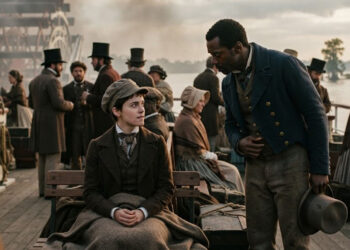
Begin by mapping available sources and noting gaps: official records, letters, newspapers, oral histories and material traces each contribute different perspectives.
Assess reliability and provenance rather than treating every mention as equal, and record uncertainties for later transparency.
Place facts within a broader social and temporal framework so anecdotes illuminate patterns rather than floating as isolated details.
Use chronology as a scaffold, but allow thematic threads to guide emphasis and pacing.

Good foundation work reduces the risk of distortion and helps prioritize which details to include.
Explicitly noting limits fosters trust with readers.

Weaving Narrative

Compact biographies benefit from a clear throughline—a tension, goal, or recurring challenge that organizes material and gives the sketch momentum.
Select vivid episodes that exemplify habits, choices or constraints, and craft transitions that show cause and effect without inventing motivation.
Maintain proportionality: emphasize turning points but avoid granting decisive weight to trivial events.
Keep voice measured and avoid melodrama while still using active scenes when available.

Balancing summary and illustrative moments keeps a short portrait lively and informative.
Readers remember specific actions more than abstract judgments.

Ethical Considerations

Respect for subjects and their communities should shape interpretive choices, especially when dealing with marginalized or silenced people.
Avoid speculative psychology; where inference is necessary, flag it clearly and explain the reasoning or evidence behind it.
Consider the consequences of naming or omitting associations that might affect living descendants or institutional reputations.
Strive for proportional critique: faults should be contextualized rather than sensationalized.

Transparency about sources and limits is an ethical imperative.
Annotations or brief source notices support accountability.

Practical Techniques

Edit ruthlessly: every sentence in a short biography should either advance understanding or illuminate character.
Use concrete details—speech, occupation, habitual gestures—to create texture without excess.
Employ templates for consistency across portraits, but allow flexibility for unusual careers or interruptions.
Allocate word space consciously: opening hook, development, turning point, and concise coda.

Templates streamline production while preserving nuance when used thoughtfully.
Final checks for balance, sourcing, and tone salvage many drafts.

Conclusion

Short biographies demand choices that reflect both evidence and ethical judgment.
When done well they bring neglected lives into view with clarity and respect.
A careful routine of sourcing, selection, and honest framing will make compact portraits resonate.
Previous Post

Daily Networks: Social Fabric of Historic Market Communities

Next Post

Weaving Context Around Fragmented Historical Lives

Related Posts

The Disguise That Broke Chains: Ellen and William Craft
Biographies

The Disguise That Broke Chains: Ellen and William Craft

September 15, 2026
Bass Reeves: The Marshal Who Hunted Outlaws in Indian Territory
Biographies

Bass Reeves: The Marshal Who Hunted Outlaws in Indian Territory

September 15, 2026
Ellen Craft: Passing as a Planter to Secure Freedom
Biographies

Ellen Craft: Passing as a Planter to Secure Freedom

September 15, 2026
Chien‑Shiung Wu: The Physicist Who Proved Parity’s Failure
Biographies

Chien‑Shiung Wu: The Physicist Who Proved Parity’s Failure

September 15, 2026
Next Post
Weaving Context Around Fragmented Historical Lives

Weaving Context Around Fragmented Historical Lives

Search..

No Result
View All Result

Recent Articles

The Disguise That Broke Chains: Ellen and William Craft

The Disguise That Broke Chains: Ellen and William Craft

September 15, 2026
Bass Reeves: The Marshal Who Hunted Outlaws in Indian Territory

Bass Reeves: The Marshal Who Hunted Outlaws in Indian Territory

September 15, 2026
How the Crystal Palace Turned Glass and Iron into a Modern Stage

How the Crystal Palace Turned Glass and Iron into a Modern Stage

September 15, 2026
Anne Bonny: The Pirate Who Broke Rules and Expectations

Anne Bonny: The Pirate Who Broke Rules and Expectations

September 15, 2026
How Haiti Broke Its Chains: A 1791–1804 Timeline

How Haiti Broke Its Chains: A 1791–1804 Timeline

September 15, 2026

Subscribe Us

By clicking submit, I authorize History Ours and its affiliated companies to: (1) use, sell, and share my information for marketing purposes, including cross-context behavioral advertising, as described in our Terms of Service and Privacy Policy, (2) supplement the information that I provide with additional information lawfully obtained from other sources, like demographic data from public sources, interests inferred from web page views, or other data relevant to what might interest me, like past purchase or location data, (3) contact me or enable others to contact me by email with offers for goods and services from any category at the email address provided, and (4) retain my information while I am engaging with marketing messages that I receive and for a reasonable amount of time thereafter. I understand I can opt out at any time through an email that I receive, or by clicking here

Subscribe To Our Newsletter

By clicking submit, I authorize History Ours and its affiliated companies to: (1) use, sell, and share my information for marketing purposes, including cross-context behavioral advertising, as described in our Terms of Service and Privacy Policy, (2) supplement the information that I provide with additional information lawfully obtained from other sources, like demographic data from public sources, interests inferred from web page views, or other data relevant to what might interest me, like past purchase or location data, (3) contact me or enable others to contact me by email with offers for goods and services from any category at the email address provided, and (4) retain my information while I am engaging with marketing messages that I receive and for a reasonable amount of time thereafter. I understand I can opt out at any time through an email that I receive, or by clicking here.

© 2026 History Ours | All Rights Reserved

  • Contact Us
  • Privacy Policy
  • Terms of Service
  • Unsubscribe
  • Privacy Choices
  • Contact Us
  • Privacy Policy
  • Terms of Service
  • Unsubscribe
  • Privacy Choices

© 2026 History Ours | All Rights Reserved

No Result
View All Result
  • Home
  • History
  • Biographies
  • Eras
  • Regions
  • Timeline

© 2026 History Ours | All Rights Reserved

Skip to content
Open toolbar Accessibility Tools

Accessibility Tools

  • Increase TextIncrease Text
  • Decrease TextDecrease Text
  • GrayscaleGrayscale
  • High ContrastHigh Contrast
  • Negative ContrastNegative Contrast
  • Light BackgroundLight Background
  • Links UnderlineLinks Underline
  • Readable FontReadable Font
  • Reset Reset