Uncover History’s Secrets with Daily Updates!
Daily News Entertainment
  • Home
  • History
  • Biographies
  • Eras
  • Regions
  • Timeline
No Result
View All Result
History Ours
  • Home
  • History
  • Biographies
  • Eras
  • Regions
  • Timeline
No Result
View All Result
History Ours
No Result
View All Result
Home Eras

How Rome Built an Empire One Road at a Time

in Eras
How Rome Built an Empire One Road at a Time

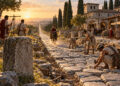
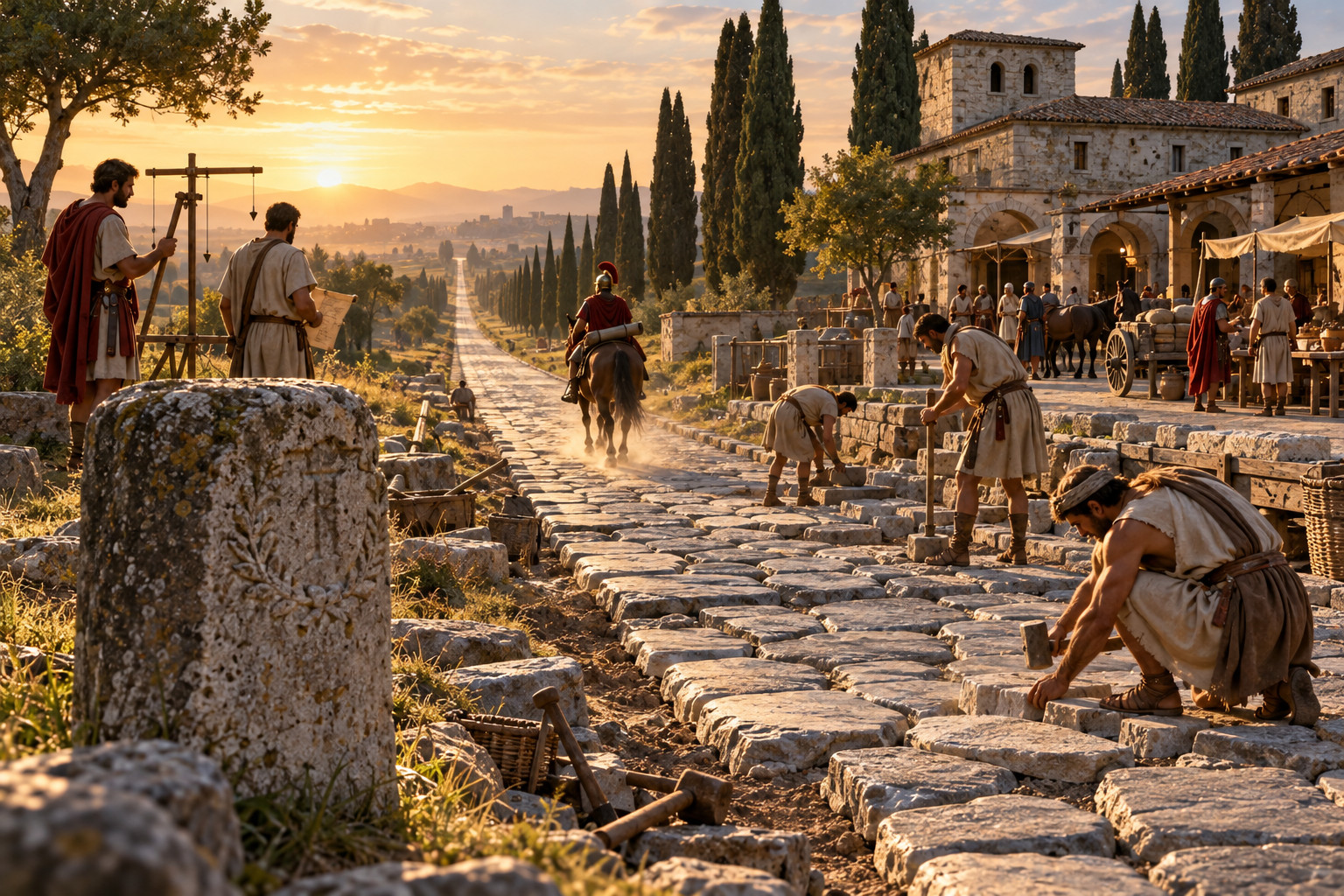
Walk a stretch of the old Appian Way and you feel why Romans boasted their roads conquered as surely as legions did. The Via Appia—started under Appius Claudius Caecus in the early third century BCE—was only the first of many straight arteries. Roads carried soldiers and supplies, but they did something quieter and more durable: they anchored power. A route that got troops to a trouble spot in days instead of weeks could turn a revolt into a footnote. That tactical advantage translated into political control. Stretch by stretch, Rome’s network made distant provinces administratively manageable and economically useful.

People, Places, and the Pulse of Movement

These were not empty highways. Inns, relay stations and small market towns sprang up where traffic was constant. The imperial courier service, the cursus publicus, moved dispatches and officials across provinces using a chain of stations—mutationes to change horses, mansiones for overnight rest. Merchants followed their own rhythms, hauling wine, olive oil, timber and taxes. Local economies reoriented toward the nearest paved road; a village a day’s detour from a highway could wither, while one on the route boomed. Travelers left graffiti, petitions and dedications on milestones and waystations, a fragmented social record that survives in stone and inscriptions.

Engineering That Outlasted Empires

Roman roads look simple because they followed plain logic: a leveled embankment (agger), layered foundations of stone and gravel, tightly fitted paving stones, and roadside ditches to shed rain. Surveyors used the groma to lay out the famously straight stretches. Milestones—literal mileposts—marked distances and sometimes recorded which official funded the repair. In Rome stood the Milliarium Aureum, the ‘‘Golden Milestone’’ from which distances were reckoned; it was a symbolic center for an empire measured in miles. Military engineers, often legions themselves, could build a durable road through marsh or mountain, and maintenance became a duty of provincial administrations and wealthy patrons.

Conclusion

More than infrastructure, Roman roads were connective tissue: fast lanes for power, commerce and ideas. They turned remote provinces into parts of a single political organism and left traces that still shape landscapes and place names. Where a paved trace survives, you can see not just where people walked, but how Rome reimagined distance itself—shrinking the map by building a path across it.
Previous Post

536: The Year the Sun Went Dim and the World Cooled

Next Post

Timbuktu: How a Sahara Outpost Became a City of Books

Related Posts

536: The Year the Sun Went Dim and the World Cooled
Eras

536: The Year the Sun Went Dim and the World Cooled

October 21, 2026
Inside Chang’an: Life in the Tang Dynasty Capital
Eras

Inside Chang’an: Life in the Tang Dynasty Capital

October 16, 2026
Edo Japan’s Floating World: Cities, Pleasure, and Paper
Eras

Edo Japan’s Floating World: Cities, Pleasure, and Paper

October 16, 2026
Mapping Time: Understanding How Eras Shape Histories
Eras

Mapping Time: Understanding How Eras Shape Histories

October 11, 2026
Next Post
Timbuktu: How a Sahara Outpost Became a City of Books

Timbuktu: How a Sahara Outpost Became a City of Books

Search..

No Result
View All Result

Recent Articles

A Timeline of the Dutch Golden Age and the VOC

A Timeline of the Dutch Golden Age and the VOC

October 23, 2026
The Printing Press: A Timeline from Gutenberg to Mass Media

The Printing Press: A Timeline from Gutenberg to Mass Media

October 23, 2026
Aksum: The Ancient Ethiopian Empire That Linked Rome and India

Aksum: The Ancient Ethiopian Empire That Linked Rome and India

October 22, 2026
Timbuktu: How a Sahara Outpost Became a City of Books

Timbuktu: How a Sahara Outpost Became a City of Books

October 22, 2026
How Rome Built an Empire One Road at a Time

How Rome Built an Empire One Road at a Time

October 21, 2026

Subscribe Us

By clicking submit, I authorize History Ours and its affiliated companies to: (1) use, sell, and share my information for marketing purposes, including cross-context behavioral advertising, as described in our Terms of Service and Privacy Policy, (2) supplement the information that I provide with additional information lawfully obtained from other sources, like demographic data from public sources, interests inferred from web page views, or other data relevant to what might interest me, like past purchase or location data, (3) contact me or enable others to contact me by email with offers for goods and services from any category at the email address provided, and (4) retain my information while I am engaging with marketing messages that I receive and for a reasonable amount of time thereafter. I understand I can opt out at any time through an email that I receive, or by clicking here

Subscribe To Our Newsletter

By clicking submit, I authorize History Ours and its affiliated companies to: (1) use, sell, and share my information for marketing purposes, including cross-context behavioral advertising, as described in our Terms of Service and Privacy Policy, (2) supplement the information that I provide with additional information lawfully obtained from other sources, like demographic data from public sources, interests inferred from web page views, or other data relevant to what might interest me, like past purchase or location data, (3) contact me or enable others to contact me by email with offers for goods and services from any category at the email address provided, and (4) retain my information while I am engaging with marketing messages that I receive and for a reasonable amount of time thereafter. I understand I can opt out at any time through an email that I receive, or by clicking here.

© 2026 History Ours | All Rights Reserved

  • Contact Us
  • Privacy Policy
  • Terms of Service
  • Unsubscribe
  • Privacy Choices
  • Contact Us
  • Privacy Policy
  • Terms of Service
  • Unsubscribe
  • Privacy Choices

© 2026 History Ours | All Rights Reserved

No Result
View All Result
  • Home
  • History
  • Biographies
  • Eras
  • Regions
  • Timeline

© 2026 History Ours | All Rights Reserved

Skip to content
Open toolbar Accessibility Tools

Accessibility Tools

  • Increase TextIncrease Text
  • Decrease TextDecrease Text
  • GrayscaleGrayscale
  • High ContrastHigh Contrast
  • Negative ContrastNegative Contrast
  • Light BackgroundLight Background
  • Links UnderlineLinks Underline
  • Readable FontReadable Font
  • Reset Reset