
A colder world, year by year
The phrase “Little Ice Age” covers centuries when average temperatures in parts of Europe dipped enough to reshape daily routines. It was not a single freeze but a long patchwork of colder winters and shortened growing seasons between roughly the 14th and 19th centuries. Those chillier decades arrived in fits and starts—bad harvests one year, brutal winters the next—and their effects were unmistakable in the streets, fields, and kitchens of ordinary people.
When crops failed, the consequences were immediate. Shorter summers meant later planting and earlier frosts; grain yields dropped, bread grew dearer, and communities that had once relied on predictable harvest cycles learned scarcity. The European famine of the early 14th century is one stark example of how vulnerable food supplies became when weather turned against them.
Winters that remade public life
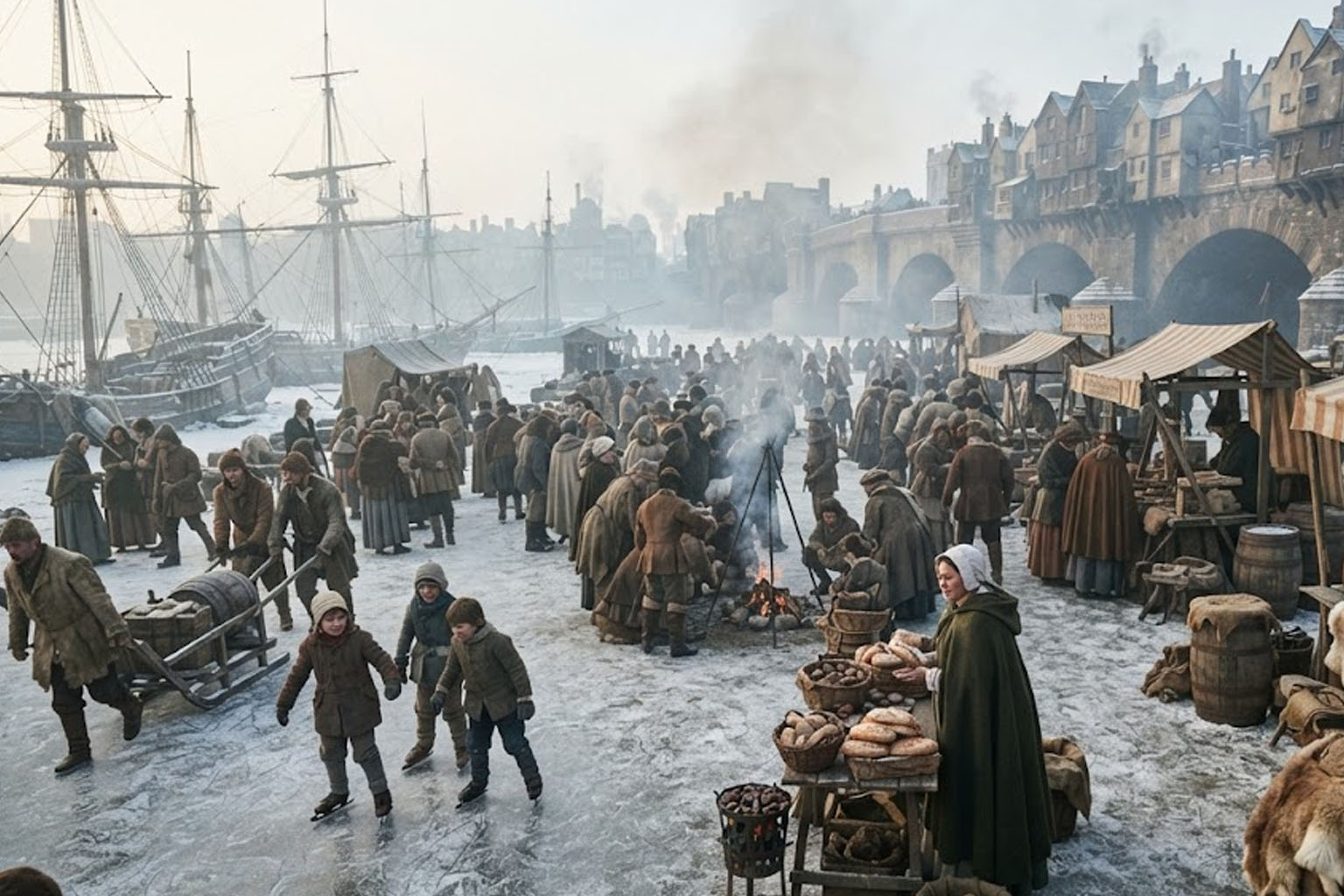
Cold winters altered how towns functioned. Rivers and canals that usually kept commerce moving froze over, turning trade routes into temporary roadways. London’s Thames, when reliably frozen, hosted frost fairs where people sold food, played games, and set up booths on the ice. In the countryside, frozen lakes and canals became thoroughfares for sledges and skaters. Daily routines shifted: clothing grew heavier and houses were adapted to keep heat longer; fuel—a scarce, expensive commodity in many places—became a political issue as well as a household concern.
Artists recorded the change. Northern European painters from the 16th and 17th centuries began portraying more frequent scenes of skating, sleighs, and snowbound villages. Those images aren’t just pretty; they are evidence that cold winters had slipped into common experience and imagination.
Migration, collapse, and longer echoes
Not every community coped. Remote settlements that depended on fragile trade or marginal farming suffered most. The Norse communities in Greenland, established a few centuries earlier, gradually disappeared in the later medieval period; scholars debate exactly how much climate, economics, and isolation each contributed, but colder conditions made Greenland’s marginal farms harder to sustain.
Colder weather also helped tip political and social stress into unrest. Where harvests repeatedly failed, food riots and migration to cities rose. Urbanization exchanged one form of hardship for another—crowding, disease, and competition for work—but it was also one route people took when rural life no longer fed them.
Conclusion
The Little Ice Age was not a single event but a prolonged squeeze on European life. Its mark can be read in frozen rivers turned into marketplaces, in paintings full of ice and sleighs, in abandoned farms at the edge of habitable land, and in the rhythms of scarcity that forced families and communities to change how they ate, dressed, and lived. Those adaptations remind us that climate has always been a quiet—yet decisive—actor in history.