Uncover History’s Secrets with Daily Updates!
Daily News Entertainment
  • Home
  • History
  • Biographies
  • Eras
  • Regions
  • Timeline
No Result
View All Result
History Ours
  • Home
  • History
  • Biographies
  • Eras
  • Regions
  • Timeline
No Result
View All Result
History Ours
No Result
View All Result
Home History

Everyday Lives in Early Industrial Towns Revealed

in History
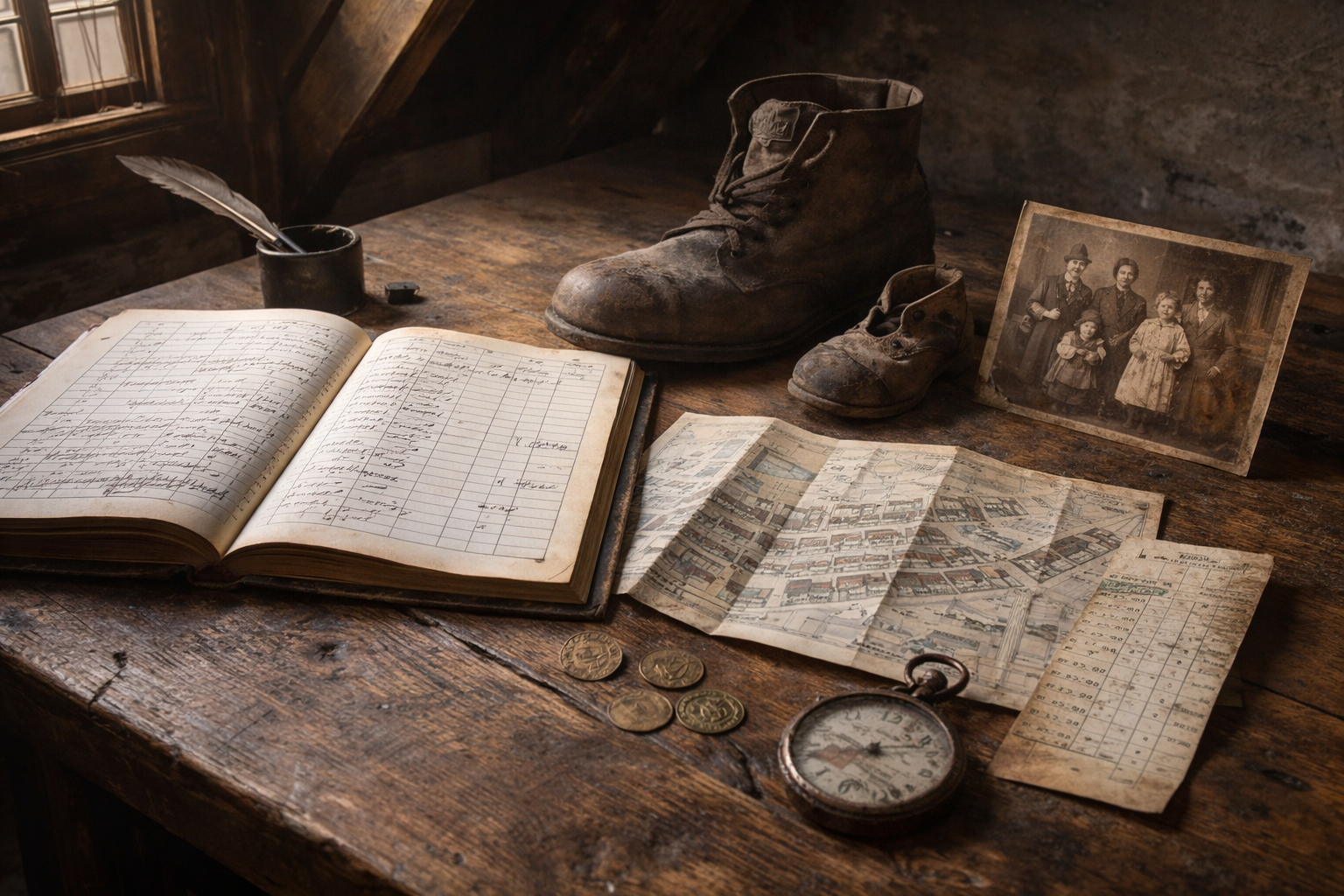
Everyday Lives in Early Industrial Towns Revealed

Industrial towns transformed landscapes and daily rhythms in profound ways.
Workers, families, and small business owners adjusted to new schedules and demands.
Understanding their routines illuminates broader social and economic change.
This article surveys work, housing, and communal life to show how people navigated that era.
Primary sources and archaeology bring personal details into sharper focus and meaningful social context.

Work and Daily Routine

Factory labor imposed strict timetables and shifted the pace of life from seasonal to clock-bound.
Many people moved from agriculture or cottage industries into repetitive tasks that emphasized speed and efficiency.
Gendered divisions persisted, with women often juggling paid work and unpaid household responsibilities.
Child labor and long hours shaped family decisions and spurred early labor organizing.
Skilled artisans sometimes retained autonomy by organizing piecework or independent shops.

Oral histories and records reveal how workers adapted tactics to cope with monotony and danger.
Such adaptations included informal networks, shared meals, and mutual aid.
These sources help historians trace subtle shifts in daily priorities.

Housing and Community Life

Rapid urbanization created crowded tenements and purpose-built rows that prioritized proximity over privacy.
Sanitation, ventilation, and access to water varied widely, influencing health outcomes and municipal reform efforts.
Neighbors relied on one another for childcare, food, and information, forming tight-knit support systems.
Religious institutions, pubs, and marketplaces served as hubs for social interaction and identity formation.
Landlords and industrialists often influenced neighborhood layouts and amenity provision.

Community leaders mediated disputes and organized improvements, often contesting employer control.
Collective action around housing became a cornerstone of wider civic engagement.
Grassroots campaigns pressured local officials to improve living standards.

Culture, Leisure, and Resistance

Despite grueling work, people found ways to create leisure, from music halls to weekend fairs and sporting clubs.
Popular culture reflected both optimism and critique, with newspapers, pamphlets, and theatre addressing everyday concerns.
Labor strikes, petitions, and cooperative movements demonstrate how communities contested economic power.
Education and mutual aid societies also promoted upward mobility and political awareness.
Newspapers and songs circulated ideas quickly, connecting local struggles to wider movements.

These forms of resistance shaped policy changes and helped build political identities tied to workplace experience.
Memory of these struggles contributed to later reforms and social protections.
These memories inform contemporary debates about work and welfare.

Conclusion

Exploring daily life in early industrial towns reveals the human response to rapid change.
It shows how work patterns, housing, and culture intertwined to produce new social orders.
Studying these dynamics offers lessons for understanding urban transformation today.

Previous Post

From Events to Narrative: Structuring Historical Timelines

Next Post

Craft Guilds, Neighborhood Networks, and Urban Identity

Related Posts

How the Crystal Palace Turned Glass and Iron into a Modern Stage
History

How the Crystal Palace Turned Glass and Iron into a Modern Stage

September 15, 2026
Anne Bonny: The Pirate Who Broke Rules and Expectations
History

Anne Bonny: The Pirate Who Broke Rules and Expectations

September 15, 2026
Mary Anning and the Coast That Revealed Lost Worlds
History

Mary Anning and the Coast That Revealed Lost Worlds

September 15, 2026
When Mount Pelée Erased Saint-Pierre, 1902
History

When Mount Pelée Erased Saint-Pierre, 1902

September 15, 2026
Next Post
Craft Guilds, Neighborhood Networks, and Urban Identity

Craft Guilds, Neighborhood Networks, and Urban Identity

Search..

No Result
View All Result

Recent Articles

How the Ruhr Became Germany’s Engine and Then Its Archive

How the Ruhr Became Germany’s Engine and Then Its Archive

September 17, 2026
Salt, Walls, and Ships: How Dalmatia Became a Maritime Frontier

Salt, Walls, and Ships: How Dalmatia Became a Maritime Frontier

September 17, 2026
Edo: Japan’s Urban Revolution of Lanterns and Printshops

Edo: Japan’s Urban Revolution of Lanterns and Printshops

September 16, 2026
How the Little Ice Age Changed Everyday Life in Europe

How the Little Ice Age Changed Everyday Life in Europe

September 16, 2026
The Disguise That Broke Chains: Ellen and William Craft

The Disguise That Broke Chains: Ellen and William Craft

September 15, 2026

Subscribe Us

By clicking submit, I authorize History Ours and its affiliated companies to: (1) use, sell, and share my information for marketing purposes, including cross-context behavioral advertising, as described in our Terms of Service and Privacy Policy, (2) supplement the information that I provide with additional information lawfully obtained from other sources, like demographic data from public sources, interests inferred from web page views, or other data relevant to what might interest me, like past purchase or location data, (3) contact me or enable others to contact me by email with offers for goods and services from any category at the email address provided, and (4) retain my information while I am engaging with marketing messages that I receive and for a reasonable amount of time thereafter. I understand I can opt out at any time through an email that I receive, or by clicking here

Subscribe To Our Newsletter

By clicking submit, I authorize History Ours and its affiliated companies to: (1) use, sell, and share my information for marketing purposes, including cross-context behavioral advertising, as described in our Terms of Service and Privacy Policy, (2) supplement the information that I provide with additional information lawfully obtained from other sources, like demographic data from public sources, interests inferred from web page views, or other data relevant to what might interest me, like past purchase or location data, (3) contact me or enable others to contact me by email with offers for goods and services from any category at the email address provided, and (4) retain my information while I am engaging with marketing messages that I receive and for a reasonable amount of time thereafter. I understand I can opt out at any time through an email that I receive, or by clicking here.

© 2026 History Ours | All Rights Reserved

  • Contact Us
  • Privacy Policy
  • Terms of Service
  • Unsubscribe
  • Privacy Choices
  • Contact Us
  • Privacy Policy
  • Terms of Service
  • Unsubscribe
  • Privacy Choices

© 2026 History Ours | All Rights Reserved

No Result
View All Result
  • Home
  • History
  • Biographies
  • Eras
  • Regions
  • Timeline

© 2026 History Ours | All Rights Reserved

Skip to content
Open toolbar Accessibility Tools

Accessibility Tools

  • Increase TextIncrease Text
  • Decrease TextDecrease Text
  • GrayscaleGrayscale
  • High ContrastHigh Contrast
  • Negative ContrastNegative Contrast
  • Light BackgroundLight Background
  • Links UnderlineLinks Underline
  • Readable FontReadable Font
  • Reset Reset