Uncover History’s Secrets with Daily Updates!
Daily News Entertainment
  • Home
  • History
  • Biographies
  • Eras
  • Regions
  • Timeline
No Result
View All Result
History Ours
  • Home
  • History
  • Biographies
  • Eras
  • Regions
  • Timeline
No Result
View All Result
History Ours
No Result
View All Result
Home History

From Spoon to Streetlamp: How Objects Map Everyday Life

in History
From Spoon to Streetlamp: How Objects Map Everyday Life

Everyday objects surround us with quiet persistence and accumulate traces of use.
They carry physical marks of manufacture, habitual handling, and shifting cultural meanings across time.
Studying these items helps historians reconstruct routines, household economies, and evolving social values.
Small changes in form, material, or decoration can therefore reveal large social shifts over decades and generations.

Objects as Social Indicators

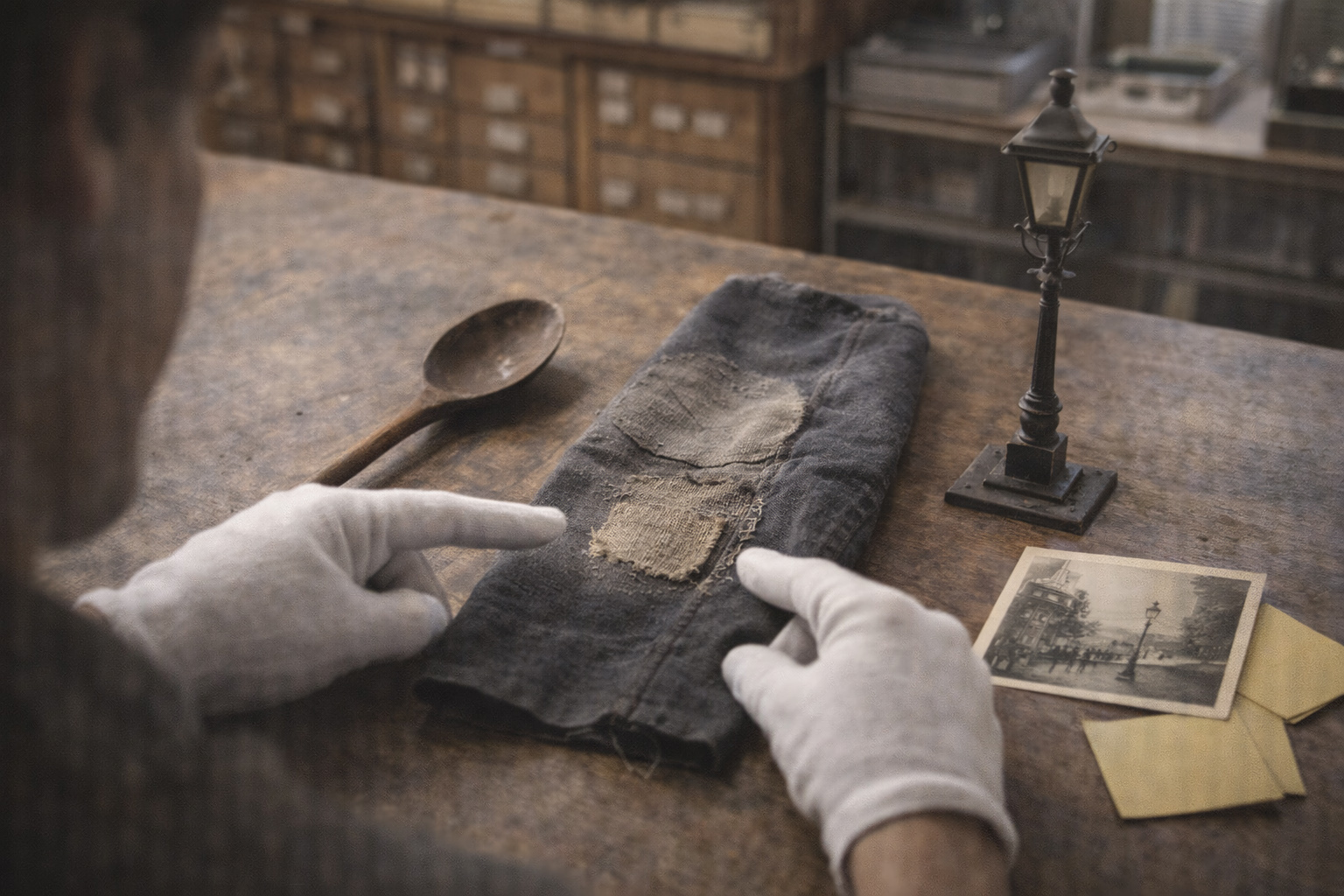
A worn spoon, a patched coat, or a public bench each signals decisions made by individuals and societies about comfort, status, and provision.
Material choices and ornamentation reflect access to resources, trade networks, local tastes, and priorities in care, fashion, and civic design.
Patterns of wear, repair, and discard reveal what users valued, how objects were maintained, and the lifecycle of possessions within households.
Taken together, collections of mundane items from different contexts form statistical and narrative evidence that complements written sources and oral histories.

Interpreting these indicators requires careful attention to context: where, when, how, and by whom an object was used all matter.
Careful comparative analysis, including cross-site comparison and consideration of preservation bias, prevents overgeneralization from singular finds.

Production, Technology and Everyday Change

Manufacturing marks, tool marks, casting flaws, and material composition tell layered stories about technological reach, artisanal skill, and long-distance trade.
The introduction of new alloys, stamped maker’s marks, mechanized production marks, or mass-produced standardized forms can be dated and correlated with economic, legal, and cultural shifts.
Shifts from handcrafted to factory-made goods changed labor organization, urbanization patterns, and consumption habits as people’s daily lives reorganized around new rhythms.
Tracking these transitions across pottery, metalware, textiles, and furniture creates a layered picture of industrialization, market integration, and social adaptation.

Archive records and scientific analysis strengthen these readings by anchoring objects in time and refining chronologies.
Together they bridge the material and documentary record and allow for more nuanced interpretations of change.

Reading Craft, Use, and Value

Close attention to craftsmanship, finishing techniques, and evidence of repair opens a window into everyday priorities, apprenticeship networks, and skill transmission across generations.
Marks of reuse, improvised fixes, personalization, and the choice to keep or discard items show how owners adapted to scarcity, asserted identity, or negotiated social expectations.
Museums, local archives, and community collections often preserve these intimate stories, turning private adaptations into public heritage and interpretive narratives.

Public engagement with ordinary objects helps people see continuity between past and present and recognize shared human practices.
This democratizes history by valuing lived experience and material lives alongside grand narratives.

Conclusion

Ordinary objects provide rich, concrete evidence for understanding social life.
When analyzed with care they reveal production, practice, and values otherwise absent from texts.
Preserving and studying everyday items enlarges historical inquiry and connects people to their past.

Previous Post

Designing Effective Chronologies for Online History Projects

Next Post

Hidden Histories: What Daily Items Reveal About Communities

Related Posts

How the Crystal Palace Turned Glass and Iron into a Modern Stage
History

How the Crystal Palace Turned Glass and Iron into a Modern Stage

September 15, 2026
Anne Bonny: The Pirate Who Broke Rules and Expectations
History

Anne Bonny: The Pirate Who Broke Rules and Expectations

September 15, 2026
Mary Anning and the Coast That Revealed Lost Worlds
History

Mary Anning and the Coast That Revealed Lost Worlds

September 15, 2026
When Mount Pelée Erased Saint-Pierre, 1902
History

When Mount Pelée Erased Saint-Pierre, 1902

September 15, 2026
Next Post
Hidden Histories: What Daily Items Reveal About Communities

Hidden Histories: What Daily Items Reveal About Communities

Search..

No Result
View All Result

Recent Articles

The Disguise That Broke Chains: Ellen and William Craft

The Disguise That Broke Chains: Ellen and William Craft

September 15, 2026
Bass Reeves: The Marshal Who Hunted Outlaws in Indian Territory

Bass Reeves: The Marshal Who Hunted Outlaws in Indian Territory

September 15, 2026
How the Crystal Palace Turned Glass and Iron into a Modern Stage

How the Crystal Palace Turned Glass and Iron into a Modern Stage

September 15, 2026
Anne Bonny: The Pirate Who Broke Rules and Expectations

Anne Bonny: The Pirate Who Broke Rules and Expectations

September 15, 2026
How Haiti Broke Its Chains: A 1791–1804 Timeline

How Haiti Broke Its Chains: A 1791–1804 Timeline

September 15, 2026

Subscribe Us

By clicking submit, I authorize History Ours and its affiliated companies to: (1) use, sell, and share my information for marketing purposes, including cross-context behavioral advertising, as described in our Terms of Service and Privacy Policy, (2) supplement the information that I provide with additional information lawfully obtained from other sources, like demographic data from public sources, interests inferred from web page views, or other data relevant to what might interest me, like past purchase or location data, (3) contact me or enable others to contact me by email with offers for goods and services from any category at the email address provided, and (4) retain my information while I am engaging with marketing messages that I receive and for a reasonable amount of time thereafter. I understand I can opt out at any time through an email that I receive, or by clicking here

Subscribe To Our Newsletter

By clicking submit, I authorize History Ours and its affiliated companies to: (1) use, sell, and share my information for marketing purposes, including cross-context behavioral advertising, as described in our Terms of Service and Privacy Policy, (2) supplement the information that I provide with additional information lawfully obtained from other sources, like demographic data from public sources, interests inferred from web page views, or other data relevant to what might interest me, like past purchase or location data, (3) contact me or enable others to contact me by email with offers for goods and services from any category at the email address provided, and (4) retain my information while I am engaging with marketing messages that I receive and for a reasonable amount of time thereafter. I understand I can opt out at any time through an email that I receive, or by clicking here.

© 2026 History Ours | All Rights Reserved

  • Contact Us
  • Privacy Policy
  • Terms of Service
  • Unsubscribe
  • Privacy Choices
  • Contact Us
  • Privacy Policy
  • Terms of Service
  • Unsubscribe
  • Privacy Choices

© 2026 History Ours | All Rights Reserved

No Result
View All Result
  • Home
  • History
  • Biographies
  • Eras
  • Regions
  • Timeline

© 2026 History Ours | All Rights Reserved

Skip to content
Open toolbar Accessibility Tools

Accessibility Tools

  • Increase TextIncrease Text
  • Decrease TextDecrease Text
  • GrayscaleGrayscale
  • High ContrastHigh Contrast
  • Negative ContrastNegative Contrast
  • Light BackgroundLight Background
  • Links UnderlineLinks Underline
  • Readable FontReadable Font
  • Reset Reset