
Uncover History’s Secrets with Daily Updates!
Daily News Entertainment
  • Home
  • History
  • Biographies
  • Eras
  • Regions
  • Timeline
No Result
View All Result
History Ours
  • Home
  • History
  • Biographies
  • Eras
  • Regions
  • Timeline
No Result
View All Result
History Ours
No Result
View All Result

Bahis vergilendirmesi Türkiye’de devlet kontrolündedir, ancak yeni açılan casino siteleri gibi uluslararası sitelerde oyuncular kendi kazançlarını yönetir.

Home History

Hidden Infrastructure of Market Towns and Everyday Life

in History
Hidden Infrastructure of Market Towns and Everyday Life

Market towns were not just centers of trade; they were hubs of layered infrastructure that shaped daily life. Streets, water sources, and marketplaces formed a network that determined who met whom, when, and how often. These material systems influenced routines, social relations, and the visible character of neighborhoods. Understanding them helps explain patterns of mobility, work, and communal ritual in past towns.

Streets, Water, and Public Services

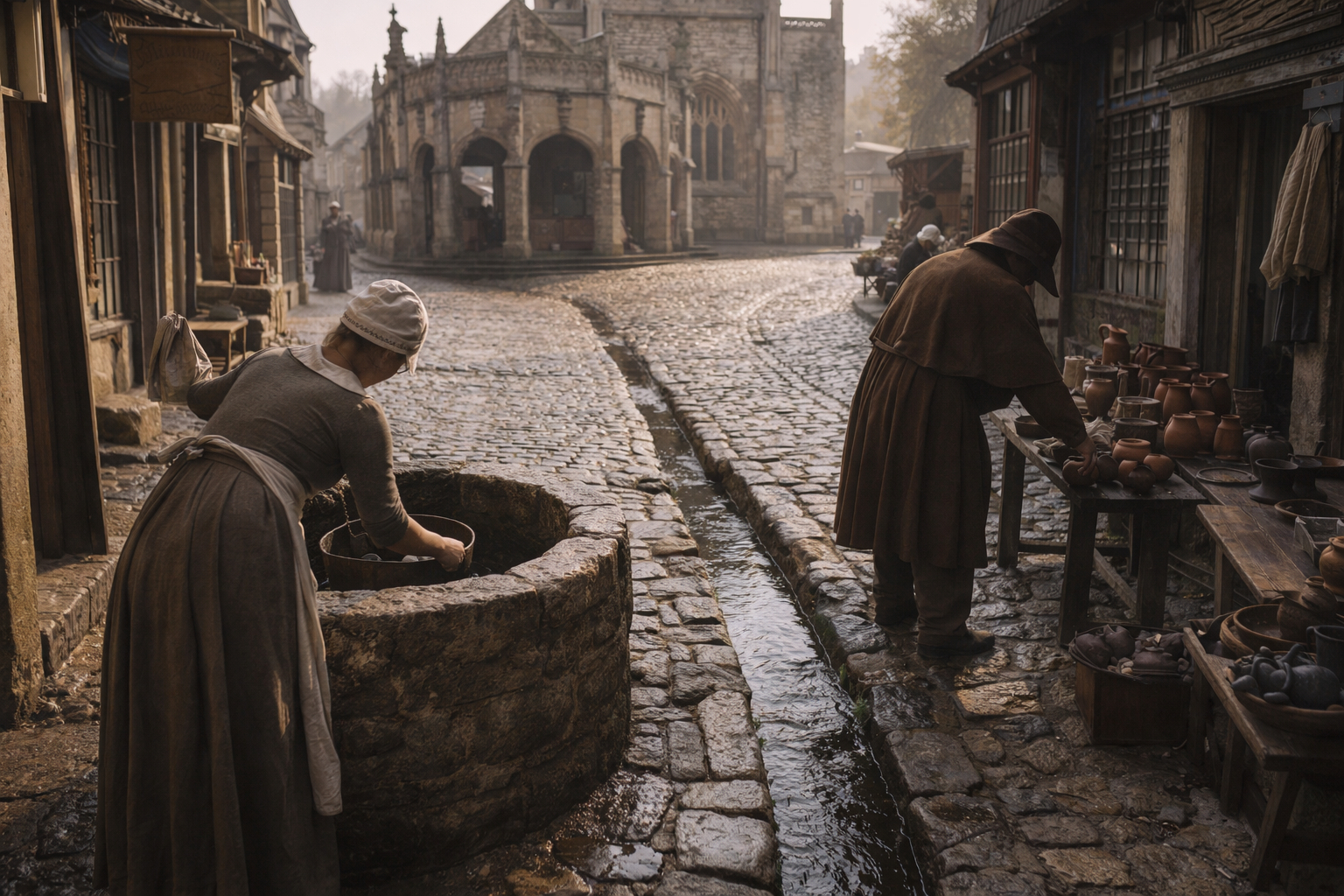
The physical layout of streets and the provision of water and refuse services guided economic possibilities and social encounters. Narrow lanes concentrated foot traffic and street vendors while broad marketways hosted fairs and civic gatherings, creating different zones of visibility and control. Access to wells, streams, or piped supplies affected household labor, hygiene practices, and daily schedules, especially for those balancing domestic work and market obligations. Such arrangements also affected informal economies and the visibility of marginal trades.

These services also reflected local governance choices and private initiative. Patterns of maintenance and neglect reveal much about social priorities and inequalities. They illustrate how infrastructure and power intermingled.

Work, Markets, and Mobility

Tradespeople and artisans organized around fixed workshops and itinerant stalls, producing a rhythm of activity that structured neighborhood life. Market days accelerated travel from surrounding villages and reshaped weekdays into cycles of supply and demand, influencing who traveled and why. Transport links — whether carts, pack animals, or waterways — determined the reach of local economies and the composition of urban consumers. Seasonal variations further complicated these mobilities, as harvests and festivals shifted demand.

Consequently, mobility patterns reinforced social ties and economic hierarchies. Movement became a marker of opportunity and constraint. This helps explain local strategies of resilience and exclusion.

Public Spaces, Memory, and Material Culture

Squares, guildhalls, and religious sites accumulated memory through ceremonies, signage, and monuments that anchored communal identity. The material culture of shops, signage, and household goods supported reputations and transmitted information between generations. Visible markers signaled status, occupation, and affiliation, shaping everyday interactions and long-term narratives about neighborhoods. Everyday objects and display practices communicated values as much as economic information.

  • Signage and shopfronts as social signals.
  • Monuments and ritual spaces that mark civic pride.

Over time, these elements both preserved continuity and allowed adaptation as towns grew and changed. They offer historians rich evidence of how communities narrated themselves. Material traces left by these practices are often recoverable in archaeological and archival sources.

Conclusion

Attention to infrastructure reveals the everyday mechanisms that organized market town life and social relations. Material systems shaped rhythms, mobility, and memory in ways that textual records alone cannot fully capture. Studying these layers offers a more textured picture of past communal experience.

Previous Post

Market Streets and Social Worlds of Small Towns

Next Post

Biographical Practice: Ethical Research and Narrative Techniques

Related Posts

Market Streets and Social Worlds of Small Towns
History

Market Streets and Social Worlds of Small Towns

March 23, 2026
Waterways, Mills, and the Pulse of Market Town Economies
History

Waterways, Mills, and the Pulse of Market Town Economies

March 18, 2026
Seasonal Festivals and Economic Rhythms in Small Towns
History

Seasonal Festivals and Economic Rhythms in Small Towns

March 18, 2026
Lighting, Sanitation, and Civic Order in Historic Towns
History

Lighting, Sanitation, and Civic Order in Historic Towns

March 13, 2026
Next Post
Biographical Practice: Ethical Research and Narrative Techniques

Biographical Practice: Ethical Research and Narrative Techniques

Search..

No Result
View All Result

Recent Articles

Guiding Audiences Through Complex Historical Timelines

Guiding Audiences Through Complex Historical Timelines

March 27, 2026
Organizing Temporal Narratives for Clear Public Timelines

Organizing Temporal Narratives for Clear Public Timelines

March 27, 2026
Bordered Landscapes: Local Practices and Regional Memory

Bordered Landscapes: Local Practices and Regional Memory

March 26, 2026
Patchwork Regions: How Communities Build Shared Local Pasts

Patchwork Regions: How Communities Build Shared Local Pasts

March 26, 2026
Boundaries and Contexts: Making Sense of Historical Eras

Boundaries and Contexts: Making Sense of Historical Eras

March 25, 2026

Subscribe Us

By clicking submit, I authorize History Ours and its affiliated companies to: (1) use, sell, and share my information for marketing purposes, including cross-context behavioral advertising, as described in our Terms of Service and Privacy Policy, (2) supplement the information that I provide with additional information lawfully obtained from other sources, like demographic data from public sources, interests inferred from web page views, or other data relevant to what might interest me, like past purchase or location data, (3) contact me or enable others to contact me by email with offers for goods and services from any category at the email address provided, and (4) retain my information while I am engaging with marketing messages that I receive and for a reasonable amount of time thereafter. I understand I can opt out at any time through an email that I receive, or by clicking here

Subscribe To Our Newsletter

By clicking submit, I authorize History Ours and its affiliated companies to: (1) use, sell, and share my information for marketing purposes, including cross-context behavioral advertising, as described in our Terms of Service and Privacy Policy, (2) supplement the information that I provide with additional information lawfully obtained from other sources, like demographic data from public sources, interests inferred from web page views, or other data relevant to what might interest me, like past purchase or location data, (3) contact me or enable others to contact me by email with offers for goods and services from any category at the email address provided, and (4) retain my information while I am engaging with marketing messages that I receive and for a reasonable amount of time thereafter. I understand I can opt out at any time through an email that I receive, or by clicking here.

© 2026 History Ours | All Rights Reserved

  • Contact Us
  • Privacy Policy
  • Terms of Service
  • Unsubscribe
  • Privacy Choices
  • Contact Us
  • Privacy Policy
  • Terms of Service
  • Unsubscribe
  • Privacy Choices

© 2026 History Ours | All Rights Reserved

No Result
View All Result
  • Home
  • History
  • Biographies
  • Eras
  • Regions
  • Timeline

© 2026 History Ours | All Rights Reserved

Skip to content
Open toolbar Accessibility Tools

Accessibility Tools

  • Increase TextIncrease Text
  • Decrease TextDecrease Text
  • GrayscaleGrayscale
  • High ContrastHigh Contrast
  • Negative ContrastNegative Contrast
  • Light BackgroundLight Background
  • Links UnderlineLinks Underline
  • Readable FontReadable Font
  • Reset Reset