
Uncover History’s Secrets with Daily Updates!
Daily News Entertainment
  • Home
  • History
  • Biographies
  • Eras
  • Regions
  • Timeline
No Result
View All Result
History Ours
  • Home
  • History
  • Biographies
  • Eras
  • Regions
  • Timeline
No Result
View All Result
History Ours
No Result
View All Result
Home Regions

Patchwork Regions: How Communities Build Shared Local Pasts

in Regions
Patchwork Regions: How Communities Build Shared Local Pasts

Regional identity forms not from a single story but from many lived practices layered over time. Everyday routines, seasonal rituals, and local economies all feed how communities remember and belong. Studying these patterns reveals how places keep continuity while adapting to new pressures. This piece outlines methods for reading local pasts and how small acts accumulate regional meaning.

Everyday Anchors of Regional Identity

Daily rhythms—markets, work patterns, family celebrations—anchor people to place and create habitual landscapes of meaning. These activities often leave material traces: buildings, field patterns, and itineraries that guide memory and belonging. Oral histories and household objects can illuminate routines that official records ignore. Paying attention to ordinary life shifts the focus from dramatic events to sustained practices that shape a region.

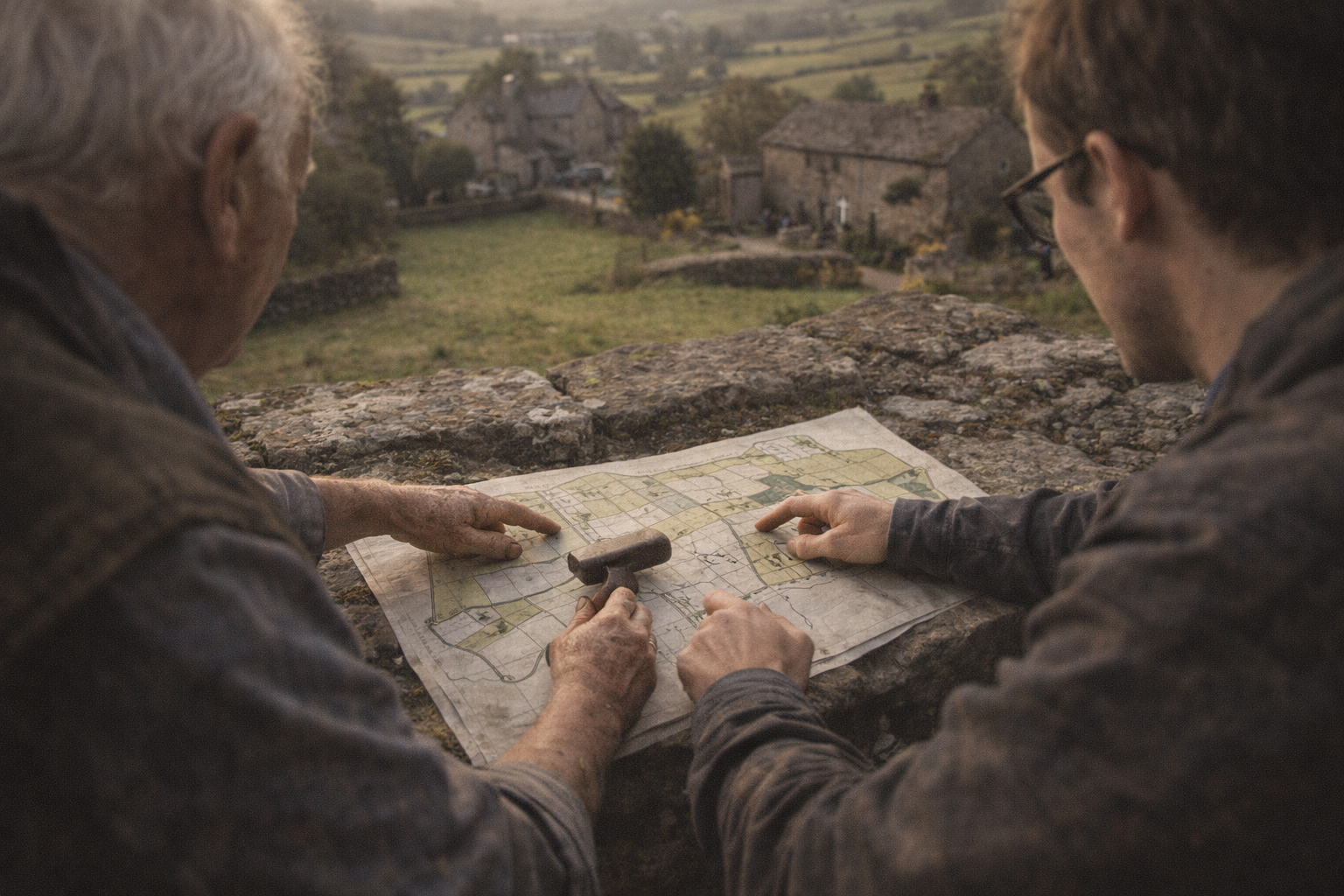
Researchers can document these anchors through interviews, mapping, and close observation. Such methods foreground continuity and reveal how communities negotiate change at ground level.

Reading the Landscape as Community Archive

Fields, roads, and vernacular architecture act as open archives of social choices and environmental adaptation. Patterns of land use show past economies and migration routes, while reused structures point to changing needs and values. Landscape reading combines maps, archaeology, and local testimony to reconstruct fragmented histories. This approach emphasizes material evidence without privileging formal documents alone.

Interpreting landscapes requires interdisciplinary tools and respect for local knowledge. Complementing archival research with lived experience produces more textured regional narratives.

Practices, Memory, and Regional Change

Memory practices—anniversaries, storytelling, and monuments—mediate how a community understands its past and imagines the future. These practices are selective and contested, highlighting some histories while obscuring others. Inclusive regional history practices aim to surface marginalized voices and reconcile differing memories. Attention to power dynamics helps explain why certain narratives dominate public spaces.

Engaging multiple perspectives creates richer histories that support civic dialogue and planning. By valuing diverse memories, regions can craft more resilient identities in the face of economic and environmental shifts.

Methodological Notes for Regional Research

Working at regional scale requires combining qualitative and quantitative evidence to capture complexity. Local archives, census records, and GIS mapping each offer different windows onto long-term change. Collaborative projects that involve residents as co-researchers often yield richer data and encourage stewardship. Ethical attention to consent and representation is essential when elevating personal memories into public histories.

Clear research questions and flexible methods allow scholars to respond to discoveries in the field. Iterative analysis helps trace connections between material traces, practices, and narratives.

Conclusion

Small acts, material traces, and competing memories together make regional history legible. Prioritizing everyday life and landscape evidence produces balanced accounts of place. Such approaches empower communities to steward their pasts and plan with historical insight.
Previous Post

Boundaries and Contexts: Making Sense of Historical Eras

Next Post

Bordered Landscapes: Local Practices and Regional Memory

Related Posts

Trieste: A Port at the Edge of Empires
Regions

Trieste: A Port at the Edge of Empires

September 15, 2026
Svalbard: How a Frozen Archipelago Became an International Outpost
Regions

Svalbard: How a Frozen Archipelago Became an International Outpost

September 15, 2026
Orkney: Where Norse Law and Scottish Life Intertwined
Regions

Orkney: Where Norse Law and Scottish Life Intertwined

September 15, 2026
Inside the Covered Streets: The Grand Bazaar and Istanbul’s Life
Regions

Inside the Covered Streets: The Grand Bazaar and Istanbul’s Life

September 15, 2026
Next Post
Bordered Landscapes: Local Practices and Regional Memory

Bordered Landscapes: Local Practices and Regional Memory

Search..

No Result
View All Result

Recent Articles

The Disguise That Broke Chains: Ellen and William Craft

The Disguise That Broke Chains: Ellen and William Craft

September 15, 2026
Bass Reeves: The Marshal Who Hunted Outlaws in Indian Territory

Bass Reeves: The Marshal Who Hunted Outlaws in Indian Territory

September 15, 2026
How the Crystal Palace Turned Glass and Iron into a Modern Stage

How the Crystal Palace Turned Glass and Iron into a Modern Stage

September 15, 2026
Anne Bonny: The Pirate Who Broke Rules and Expectations

Anne Bonny: The Pirate Who Broke Rules and Expectations

September 15, 2026
How Haiti Broke Its Chains: A 1791–1804 Timeline

How Haiti Broke Its Chains: A 1791–1804 Timeline

September 15, 2026

Subscribe Us

By clicking submit, I authorize History Ours and its affiliated companies to: (1) use, sell, and share my information for marketing purposes, including cross-context behavioral advertising, as described in our Terms of Service and Privacy Policy, (2) supplement the information that I provide with additional information lawfully obtained from other sources, like demographic data from public sources, interests inferred from web page views, or other data relevant to what might interest me, like past purchase or location data, (3) contact me or enable others to contact me by email with offers for goods and services from any category at the email address provided, and (4) retain my information while I am engaging with marketing messages that I receive and for a reasonable amount of time thereafter. I understand I can opt out at any time through an email that I receive, or by clicking here

Subscribe To Our Newsletter

By clicking submit, I authorize History Ours and its affiliated companies to: (1) use, sell, and share my information for marketing purposes, including cross-context behavioral advertising, as described in our Terms of Service and Privacy Policy, (2) supplement the information that I provide with additional information lawfully obtained from other sources, like demographic data from public sources, interests inferred from web page views, or other data relevant to what might interest me, like past purchase or location data, (3) contact me or enable others to contact me by email with offers for goods and services from any category at the email address provided, and (4) retain my information while I am engaging with marketing messages that I receive and for a reasonable amount of time thereafter. I understand I can opt out at any time through an email that I receive, or by clicking here.

© 2026 History Ours | All Rights Reserved

  • Contact Us
  • Privacy Policy
  • Terms of Service
  • Unsubscribe
  • Privacy Choices
  • Contact Us
  • Privacy Policy
  • Terms of Service
  • Unsubscribe
  • Privacy Choices

© 2026 History Ours | All Rights Reserved

No Result
View All Result
  • Home
  • History
  • Biographies
  • Eras
  • Regions
  • Timeline

© 2026 History Ours | All Rights Reserved

Skip to content
Open toolbar Accessibility Tools

Accessibility Tools

  • Increase TextIncrease Text
  • Decrease TextDecrease Text
  • GrayscaleGrayscale
  • High ContrastHigh Contrast
  • Negative ContrastNegative Contrast
  • Light BackgroundLight Background
  • Links UnderlineLinks Underline
  • Readable FontReadable Font
  • Reset Reset