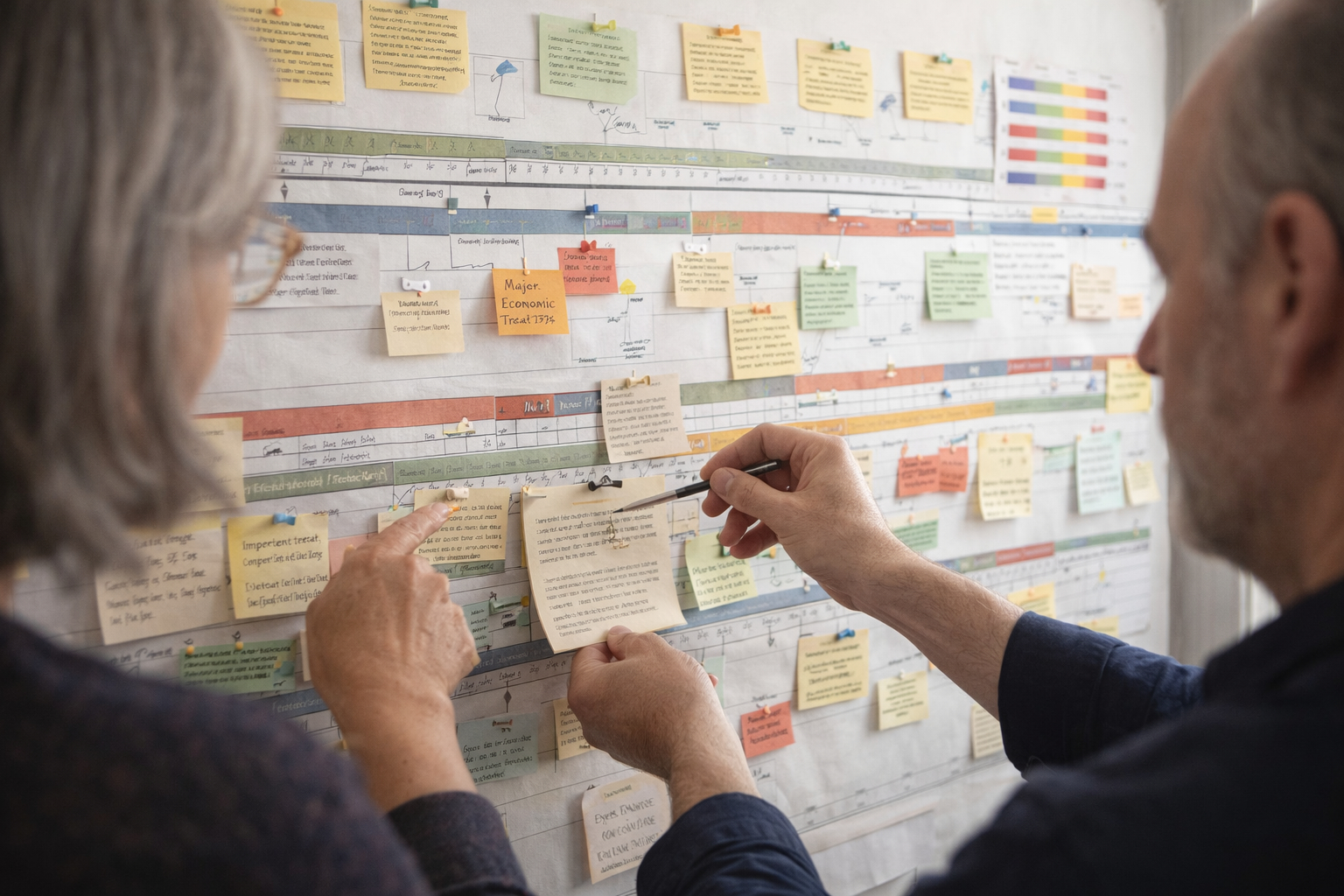
Historical timelines are more than lists of dates; they are interpretive tools that orient readers within complex sequences. A successful timeline balances depth with clarity so that multiple audiences can extract meaning at a glance. Planning begins by defining the narrative purpose and the level of granularity needed for intended users. Early decisions about scope and scale simplify later choices about layout, labels, and interactive features.
Clarify Purpose and Audience
Start by asking who will use the timeline and why: educators might need thematic threads, while general visitors may benefit from a clear overview. Identify the primary questions the timeline should answer and prioritize events that directly support those answers. Establish time spans and resolution rules—for example, when to aggregate decades versus individual years. Doing this up front prevents scope creep and keeps the project manageable.
- Students and teachers seeking themes
- General visitors needing a clear narrative
- Researchers requiring detailed records
Document these choices in a concise project brief that guides contributors and stakeholders. Revisit the brief when new research or feedback suggests changes to scope or emphasis.
Designing Layers and Scales
Layering information lets different users explore at their own depth without overwhelming anyone. Design at least two scales: a high-level overview showing major phases, and a detailed track for events, sources, or biographies. Use consistent visual cues—color bands, iconography, and line weight—to mark different layers and temporal overlaps. Test legibility across devices and print so layer distinctions remain clear to all audiences.
- Overview timeline for orientation
- Detailed event track for depth
- Media or source layer for primary materials
Plan interactions that reveal more information on demand rather than displaying everything at once. Progressive disclosure keeps the surface clean while encouraging exploration.
Visual Rules, Metadata, and Maintenance
Set visual rules that map data types to consistent graphical elements so readers quickly learn the timeline’s language. Include brief human-readable labels and machine-readable metadata to support search, filtering, and future reuse. Prefer short event descriptions with links to fuller records rather than long in-line text blocks. Maintain a legend and orientation text to help first-time visitors interpret symbols, colors, and scales.
- Export formats (CSV/JSON) for reuse
- Accessibility checks for contrast and keyboard navigation
- Regular content audits and versioning
User testing reveals assumptions designers miss, so observe how visitors scan and which filters they use most. Small, regular maintenance cycles reduce technical debt and keep the timeline trustworthy and current.
Conclusion
A thoughtful timeline foregrounds purpose, audience, and a readable structure while accommodating layered complexity. Clear visual rules, good metadata, and routine testing make timelines both engaging and reliable. Planning with maintenance and accessibility in mind ensures the resource remains useful over time.