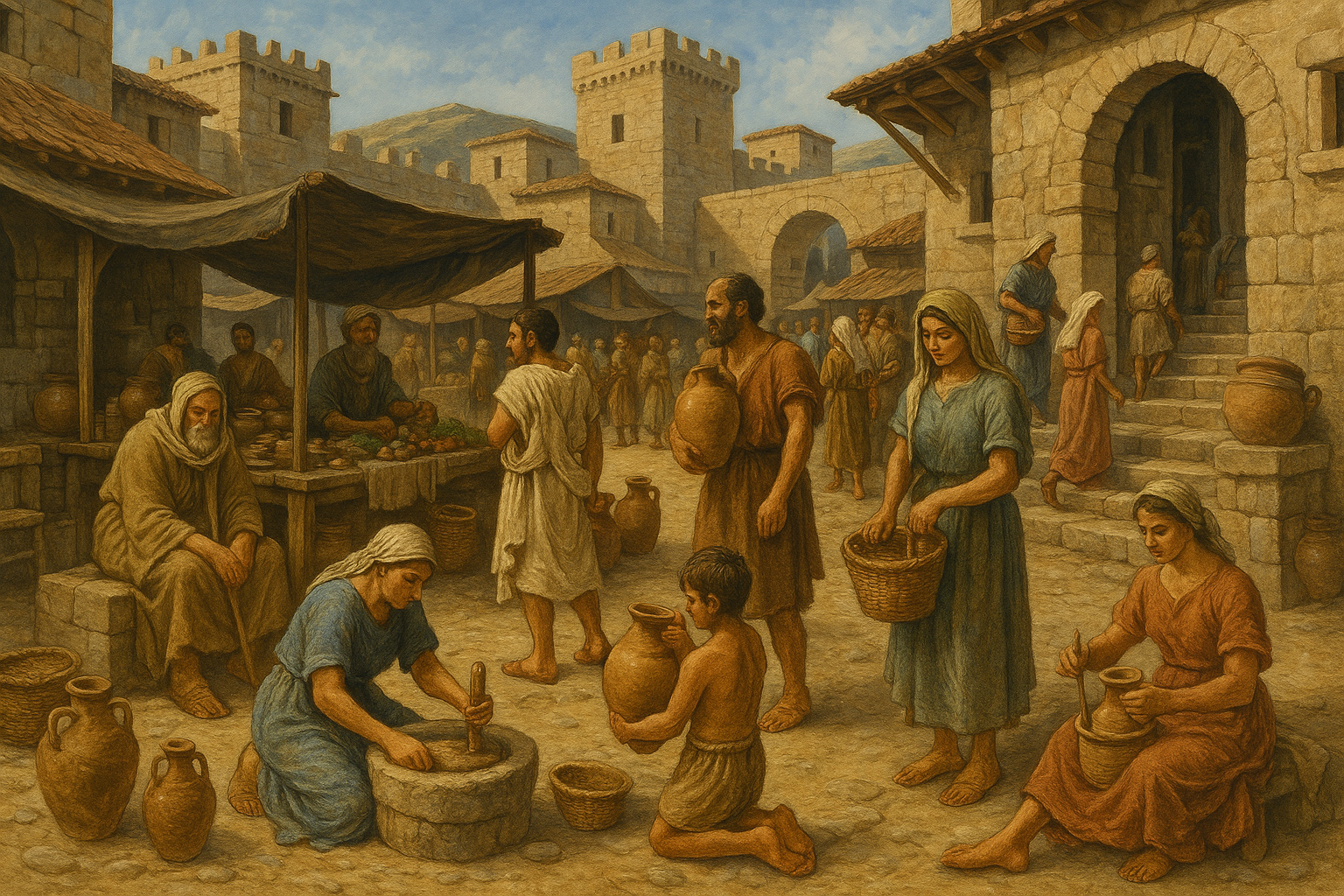
Everyday life in ancient times was shaped by community, survival, and tradition. While the world looked very different, many daily habits—work, family, food, and social rituals—feel surprisingly familiar today. Ancient civilizations built routines that reflected their environments, beliefs, and available resources. Understanding how ordinary people lived helps us see history not as distant, but as a shared human story filled with creativity, resilience, and connection.
Daily life may have moved more slowly, but it was rich with meaning and woven tightly into cultural identity.
Homes and Family Life
Ancient homes were simple but functional, made from mud brick, stone, or wood depending on the region. Families often lived in one or two-room dwellings that centered around shared meals and daily chores. Cooking was done over open fires, and furniture was minimal. Despite the simplicity, family bonds were strong. Children learned skills by watching adults, while elders guided traditions and community customs.
Work and Community Roles
Most people in ancient times worked close to home. Farmers rose with the sun to tend crops, artisans crafted pottery or tools, and merchants traveled local markets to trade goods. Work was communal villagers helped one another plant, harvest, and build. Each role, whether hunter, weaver, or healer, contributed to the group’s survival. Honor and responsibility shaped every task, making work an essential part of identity.
Food, Clothing, and Daily Comforts
Meals were built around what was local and seasonal. Grains, vegetables, fruits, and occasionally meat formed the foundation of ancient diets. Clothing was handmade from wool, linen, or leather, often dyed with natural pigments. While comforts were few compared to modern standards, people found joy in simple routines—baking bread, gathering at markets, storytelling, and music.
Social Rituals and Community Gatherings
Religion and tradition played major roles in everyday life. Festivals, ceremonies, and public gatherings brought communities together. People honored deities, celebrated harvests, and participated in rites of passage. These rituals created unity and provided structure in a world shaped by nature and uncertainty.
Conclusion
Everyday life in ancient times was grounded in community, craftsmanship, and the rhythms of nature. Though their world differed from ours, ancient people shared the same desire for connection, security, and purpose. By exploring their routines, we gain insight into the foundations of human culture and the timeless patterns that still shape our lives today.