
Uncover History’s Secrets with Daily Updates!
Daily News Entertainment
  • Home
  • History
  • Biographies
  • Eras
  • Regions
  • Timeline
No Result
View All Result
History Ours
  • Home
  • History
  • Biographies
  • Eras
  • Regions
  • Timeline
No Result
View All Result
History Ours
No Result
View All Result
Home History

Maritime Gateways: The Role of Harbors in History

in History
Guilds and Craft Networks: Shaping Preindustrial Urban Economies

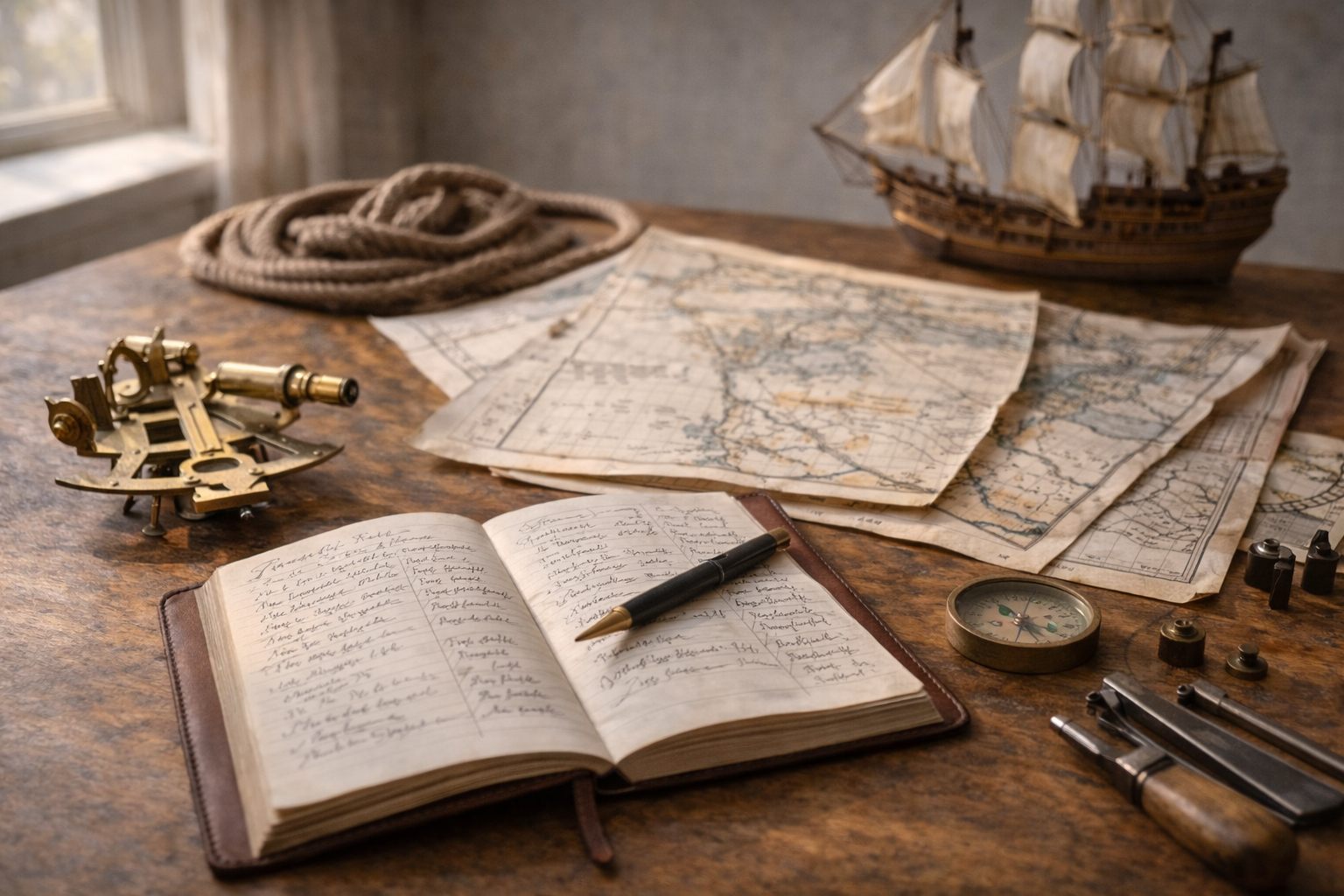
Harbors have been central to human development for millennia, serving as the physical and symbolic gateways between land and sea.
From modest fishing coves to sprawling maritime hubs, these places concentrated goods, people, and ideas.
Their influence extends beyond trade, shaping social structures, urban forms, and cultural identities.
Understanding their role offers insight into how connectivity transformed past societies and landscapes.

Early Economic Engines
Harbors concentrated economic activity by providing safe anchorage and facilitating the transfer of goods between ships and inland routes. Merchants, craftsmen, and laborers gathered around quays, creating markets and specialized services that did not exist in purely agrarian zones. The proximity of sea and land reduced transportation costs, encouraging the exchange of high-value items such as textiles, metals, and luxury goods. Over time, some harbors evolved into complex commercial institutions with warehouses, customs offices, and credit networks.
– Safe anchorage and efficient transfer between sea and land supported seasonal and long-distance trade.
– Local industries and specialized services clustered near quays, from rope-makers to cooperages.
– Warehouses, customs procedures, and credit systems organized commerce on a larger scale.
These economic concentrations often catalyzed regional development, drawing investment and migration. As nodes in wider trade networks, harbors amplified local resources into broader economic influence.

Cultural Exchange and Urban Growth
Harbors were crossroads where language, religion, culinary practices, and crafts mixed. Sailors and traders brought new ideas and technologies that were adopted, adapted, or resisted by local communities, producing hybrid cultures. Urban growth often followed maritime success: ports attracted administrators, religious institutions, and patrons who invested in public works. Over generations, these settlements developed distinct identities shaped by ongoing intercultural contact.
– Port festivals and marketplaces served as arenas for cultural mixing and social negotiation.
– Multilingual neighborhoods and shared institutions emerged, reflecting diverse connections.
Such cultural dynamism left visible traces in architecture, place names, and social customs. The legacy of these exchanges can be traced in museum collections and archaeological evidence.

Strategic and Technological Influence
Control of harbors conferred strategic advantages in warfare, diplomacy, and resource distribution. Fortifications, signal systems, and harbor infrastructure became focal points in contests between polities, and their design often reflected contemporary military thinking. Technological innovations—improvements in shipbuilding, navigational instruments, and cargo handling—frequently emerged to meet the practical demands of busy ports. These advances reshaped maritime practices and, by extension, terrestrial economies.
– Fortifications and controlled access points protected vital supply lines and political interests.
– Lighthouses, beacons, and signaling techniques improved coastal safety and coordination.
– Shipyards and repair facilities became hubs for technical knowledge and skilled labor.
The interplay between strategic needs and technological progress made harbors sites of continuous adaptation. Their physical and institutional investments reflected wider political priorities.

Conclusion
Harbors were more than transit points; they were dynamic centers of economy, culture, and power that shaped historical trajectories.
By concentrating exchange and innovation, they linked distant regions and nurtured urban life.
Studying them reveals how connectivity drove change across societies.

Previous Post

Chronicle of Messaging: How Methods of Exchange Evolved

Next Post

Guilds and Craft Networks: Shaping Preindustrial Urban Economies

Related Posts

How the Crystal Palace Turned Glass and Iron into a Modern Stage
History

How the Crystal Palace Turned Glass and Iron into a Modern Stage

September 15, 2026
Anne Bonny: The Pirate Who Broke Rules and Expectations
History

Anne Bonny: The Pirate Who Broke Rules and Expectations

September 15, 2026
Mary Anning and the Coast That Revealed Lost Worlds
History

Mary Anning and the Coast That Revealed Lost Worlds

September 15, 2026
When Mount Pelée Erased Saint-Pierre, 1902
History

When Mount Pelée Erased Saint-Pierre, 1902

September 15, 2026
Next Post
Guilds and Craft Networks: Shaping Preindustrial Urban Economies

Guilds and Craft Networks: Shaping Preindustrial Urban Economies

Search..

No Result
View All Result

Recent Articles

The Disguise That Broke Chains: Ellen and William Craft

The Disguise That Broke Chains: Ellen and William Craft

September 15, 2026
Bass Reeves: The Marshal Who Hunted Outlaws in Indian Territory

Bass Reeves: The Marshal Who Hunted Outlaws in Indian Territory

September 15, 2026
How the Crystal Palace Turned Glass and Iron into a Modern Stage

How the Crystal Palace Turned Glass and Iron into a Modern Stage

September 15, 2026
Anne Bonny: The Pirate Who Broke Rules and Expectations

Anne Bonny: The Pirate Who Broke Rules and Expectations

September 15, 2026
How Haiti Broke Its Chains: A 1791–1804 Timeline

How Haiti Broke Its Chains: A 1791–1804 Timeline

September 15, 2026

Subscribe Us

By clicking submit, I authorize History Ours and its affiliated companies to: (1) use, sell, and share my information for marketing purposes, including cross-context behavioral advertising, as described in our Terms of Service and Privacy Policy, (2) supplement the information that I provide with additional information lawfully obtained from other sources, like demographic data from public sources, interests inferred from web page views, or other data relevant to what might interest me, like past purchase or location data, (3) contact me or enable others to contact me by email with offers for goods and services from any category at the email address provided, and (4) retain my information while I am engaging with marketing messages that I receive and for a reasonable amount of time thereafter. I understand I can opt out at any time through an email that I receive, or by clicking here

Subscribe To Our Newsletter

By clicking submit, I authorize History Ours and its affiliated companies to: (1) use, sell, and share my information for marketing purposes, including cross-context behavioral advertising, as described in our Terms of Service and Privacy Policy, (2) supplement the information that I provide with additional information lawfully obtained from other sources, like demographic data from public sources, interests inferred from web page views, or other data relevant to what might interest me, like past purchase or location data, (3) contact me or enable others to contact me by email with offers for goods and services from any category at the email address provided, and (4) retain my information while I am engaging with marketing messages that I receive and for a reasonable amount of time thereafter. I understand I can opt out at any time through an email that I receive, or by clicking here.

© 2026 History Ours | All Rights Reserved

  • Contact Us
  • Privacy Policy
  • Terms of Service
  • Unsubscribe
  • Privacy Choices
  • Contact Us
  • Privacy Policy
  • Terms of Service
  • Unsubscribe
  • Privacy Choices

© 2026 History Ours | All Rights Reserved

No Result
View All Result
  • Home
  • History
  • Biographies
  • Eras
  • Regions
  • Timeline

© 2026 History Ours | All Rights Reserved

Skip to content
Open toolbar Accessibility Tools

Accessibility Tools

  • Increase TextIncrease Text
  • Decrease TextDecrease Text
  • GrayscaleGrayscale
  • High ContrastHigh Contrast
  • Negative ContrastNegative Contrast
  • Light BackgroundLight Background
  • Links UnderlineLinks Underline
  • Readable FontReadable Font
  • Reset Reset