

Uncover History’s Secrets with Daily Updates!
Daily News Entertainment
  • Home
  • History
  • Biographies
  • Eras
  • Regions
  • Timeline
No Result
View All Result
History Ours
  • Home
  • History
  • Biographies
  • Eras
  • Regions
  • Timeline
No Result
View All Result
History Ours
No Result
View All Result
Home History

Neighborhood Routines and Material Culture in Market Towns

in History
Neighborhood Routines and Material Culture in Market Towns

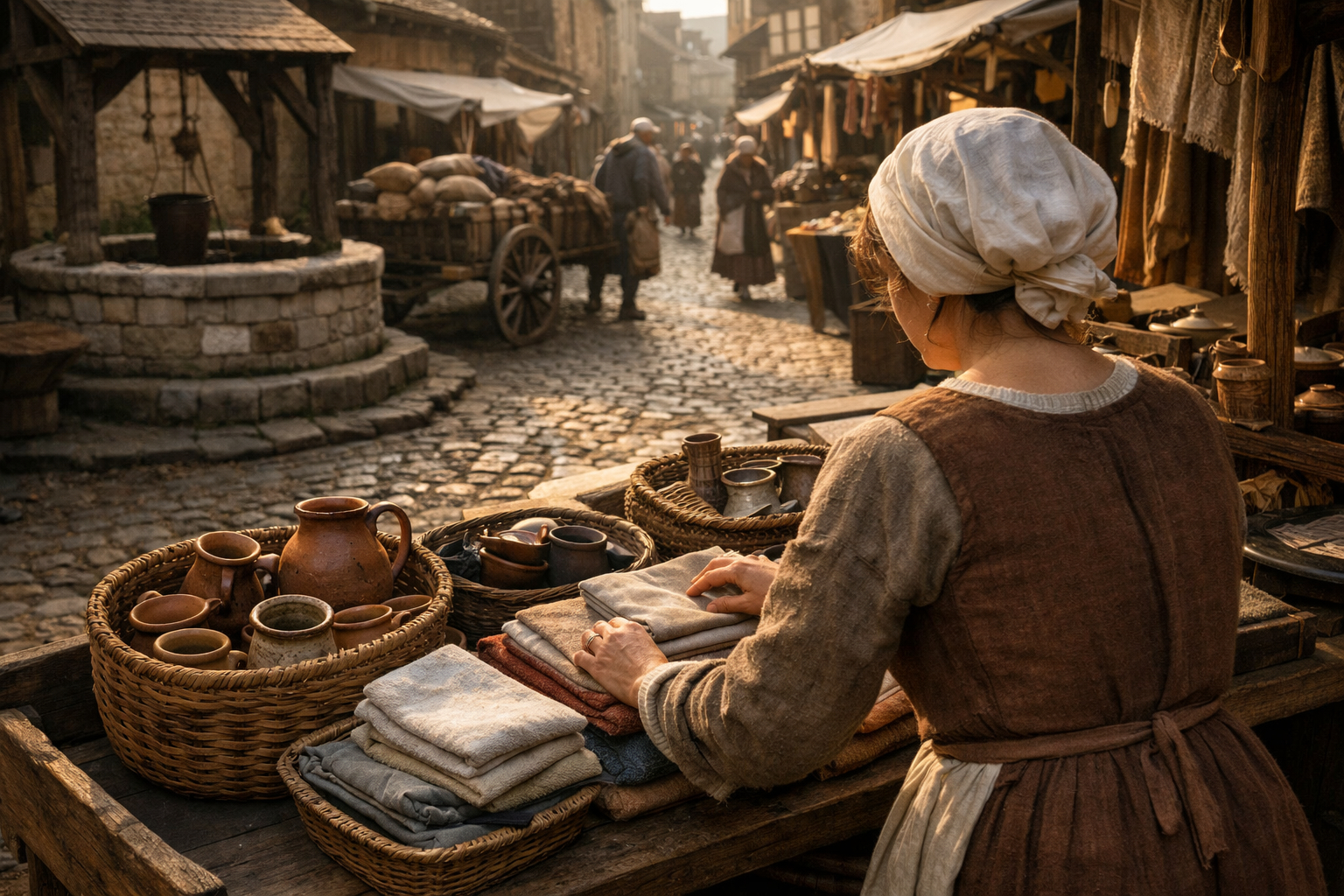
Historic market towns organized everyday life around overlapping public and domestic spaces. Streets, alleys, courtyards and stalls structured movement, work and social encounters for most residents. Material objects—from transport carts to household textiles—mediated how people used time and negotiated space. Understanding routines and objects together reveals how communities adapted to economic change and seasonal rhythms.

Spatial Layout and Daily Movement

The physical layout of a town determined patterns of circulation and the visibility of activities. Narrow lanes concentrated foot traffic near workshops while wider thoroughfares hosted carts, markets and public announcements. Proximity to the market influenced door-to-door selling, household labor scheduling and childcare arrangements. Over time residents adjusted passageways, adding thresholds, signs or temporary stalls to manage flows.

These adjustments were pragmatic responses to everyday needs and seasonal pressures. They left material traces that archaeologists and historians can still read in building plans and inventories.

Markets, Work, and Domestic Space

Markets blurred the boundary between home and work as households often combined production and sale under one roof. Craftspeople displayed tools and wares in windows or forecourts, turning private thresholds into economic interfaces. Gendered divisions of labor shaped which objects were visible in public and which remained within domestic confines. Seasonal fairs and harvest cycles further reordered domestic priorities, redistributing labor and storage needs across the town.

Material culture thus reveals both livelihood strategies and social values embedded in ordinary settings. Examining inventories, shop signs and household goods offers insight into how townspeople balanced commerce with family life.

Social Networks, Rituals, and Everyday Objects

Objects circulated through gift, loan and repair networks, strengthening ties across neighborhoods and classes. Ritual items used in public processions or household ceremonies anchored communal memories in material form. Shared resources like communal ovens, wells and carts structured cooperation and fostered mutual obligations. Even small changes, such as a new kiln or cart design, could ripple through social practices and reputations.

Paying attention to these mundane exchanges highlights the social life embedded in objects. It also shows how material adaptations addressed practical problems while reinforcing local norms. Historians can map these networks to better understand resilience and change in historic towns.

Conclusion

Reading the built environment and everyday possessions together reveals the rhythm of town life. Material culture offers a lens for interpreting economic choices, social relations and seasonal routines. Integrating spatial analysis with artifact studies enriches our picture of how communities lived and adapted.


Previous Post

Balancing Detail and Clarity in Historical Timeline Design

Next Post

Markets, Memory, and Mobility in Small Historic Towns

Related Posts

Anne Bonny: The Pirate Who Broke Rules and Expectations
History

Anne Bonny: The Pirate Who Broke Rules and Expectations

September 15, 2026
How the Crystal Palace Turned Glass and Iron into a Modern Stage
History

How the Crystal Palace Turned Glass and Iron into a Modern Stage

September 15, 2026
Mary Anning and the Coast That Revealed Lost Worlds
History

Mary Anning and the Coast That Revealed Lost Worlds

September 15, 2026
When Mount Pelée Erased Saint-Pierre, 1902
History

When Mount Pelée Erased Saint-Pierre, 1902

September 15, 2026
Next Post
Markets, Memory, and Mobility in Small Historic Towns

Markets, Memory, and Mobility in Small Historic Towns

Search..

No Result
View All Result

Recent Articles

The Disguise That Broke Chains: Ellen and William Craft

The Disguise That Broke Chains: Ellen and William Craft

September 15, 2026
Bass Reeves: The Marshal Who Hunted Outlaws in Indian Territory

Bass Reeves: The Marshal Who Hunted Outlaws in Indian Territory

September 15, 2026
How the Crystal Palace Turned Glass and Iron into a Modern Stage

How the Crystal Palace Turned Glass and Iron into a Modern Stage

September 15, 2026
Anne Bonny: The Pirate Who Broke Rules and Expectations

Anne Bonny: The Pirate Who Broke Rules and Expectations

September 15, 2026
How Haiti Broke Its Chains: A 1791–1804 Timeline

How Haiti Broke Its Chains: A 1791–1804 Timeline

September 15, 2026

Subscribe Us

By clicking submit, I authorize History Ours and its affiliated companies to: (1) use, sell, and share my information for marketing purposes, including cross-context behavioral advertising, as described in our Terms of Service and Privacy Policy, (2) supplement the information that I provide with additional information lawfully obtained from other sources, like demographic data from public sources, interests inferred from web page views, or other data relevant to what might interest me, like past purchase or location data, (3) contact me or enable others to contact me by email with offers for goods and services from any category at the email address provided, and (4) retain my information while I am engaging with marketing messages that I receive and for a reasonable amount of time thereafter. I understand I can opt out at any time through an email that I receive, or by clicking here

Subscribe To Our Newsletter

By clicking submit, I authorize History Ours and its affiliated companies to: (1) use, sell, and share my information for marketing purposes, including cross-context behavioral advertising, as described in our Terms of Service and Privacy Policy, (2) supplement the information that I provide with additional information lawfully obtained from other sources, like demographic data from public sources, interests inferred from web page views, or other data relevant to what might interest me, like past purchase or location data, (3) contact me or enable others to contact me by email with offers for goods and services from any category at the email address provided, and (4) retain my information while I am engaging with marketing messages that I receive and for a reasonable amount of time thereafter. I understand I can opt out at any time through an email that I receive, or by clicking here.

© 2026 History Ours | All Rights Reserved

  • Contact Us
  • Privacy Policy
  • Terms of Service
  • Unsubscribe
  • Privacy Choices
  • Contact Us
  • Privacy Policy
  • Terms of Service
  • Unsubscribe
  • Privacy Choices

© 2026 History Ours | All Rights Reserved

No Result
View All Result
  • Home
  • History
  • Biographies
  • Eras
  • Regions
  • Timeline

© 2026 History Ours | All Rights Reserved

Skip to content
Open toolbar Accessibility Tools

Accessibility Tools

  • Increase TextIncrease Text
  • Decrease TextDecrease Text
  • GrayscaleGrayscale
  • High ContrastHigh Contrast
  • Negative ContrastNegative Contrast
  • Light BackgroundLight Background
  • Links UnderlineLinks Underline
  • Readable FontReadable Font
  • Reset Reset