

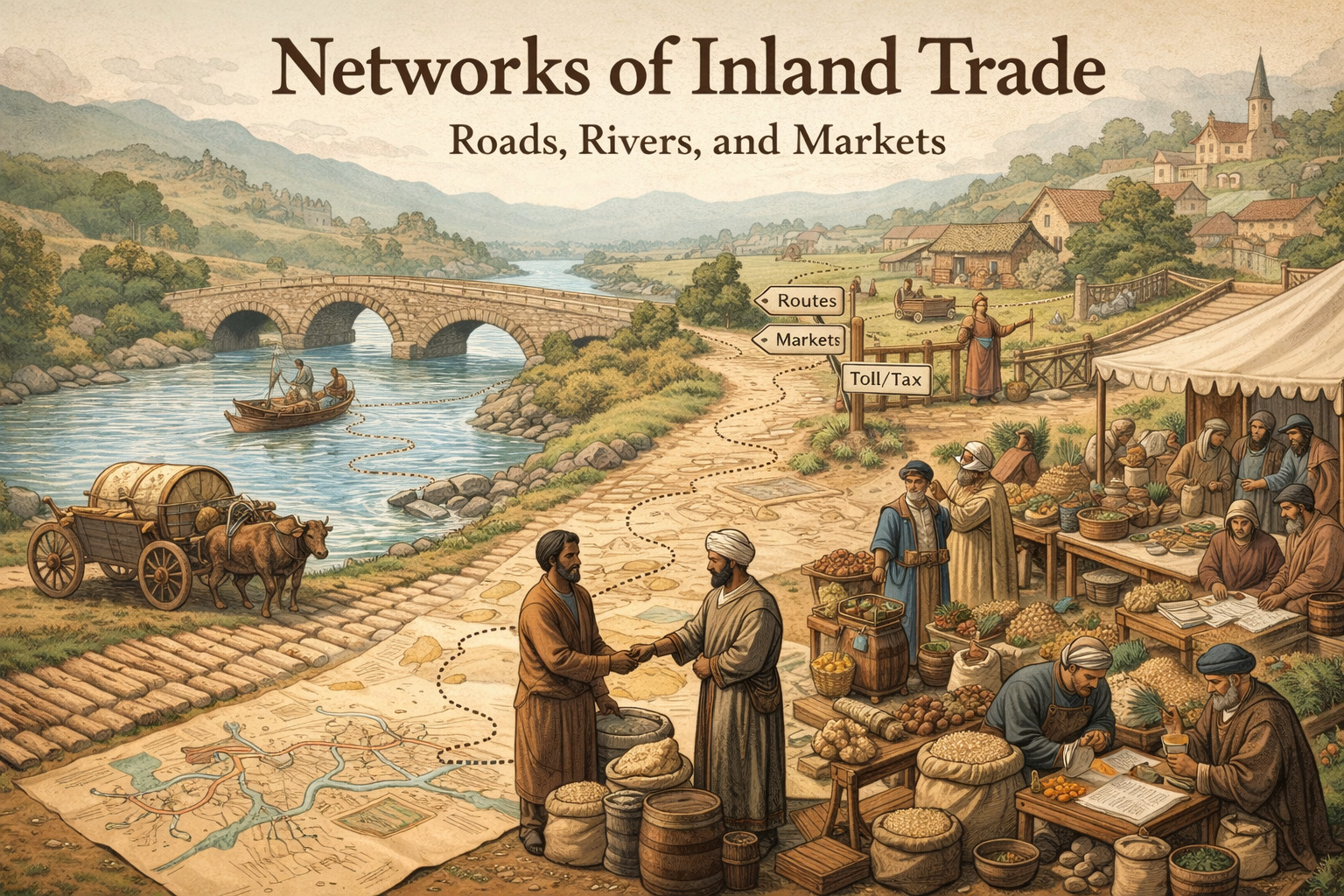
Networks of inland trade created the connective tissue between settlements long before modern transport systems emerged. They combined engineered roads, navigable rivers, and seasonal tracks that responded to local terrain and climate. Merchants, carriers, and municipal authorities negotiated rights, tolls, and safe passage to keep goods moving. Studying these pathways helps explain how modest exchanges scaled into regional economies and social systems.
Routes and infrastructure
Early trade routes were pragmatic adaptations to geography, using river corridors where possible and improving overland tracks with simple engineering. Communities invested in bridges, causeways, and waystations to reduce travel time and risk, often relying on local labor and materials. Corduroy roads, packed gravel, and maintained river channels show a spectrum of low-cost interventions that mattered to everyday users. The continuity of a route depended as much on maintenance and local cooperation as on initial construction.
Marketplaces and social exchange
Markets acted as predictable nodes where producers and consumers met, and they shaped settlement patterns and seasonal rhythms. These marketplaces were venues for price formation, credit arrangements, and the exchange of news and customs, not just merchandise. Many towns developed legal frameworks around weekly markets and annual fairs to regulate weights, to resolve disputes, and to attract long-distance trade. Over time, markets fostered specialization and encouraged artisans and providers to cluster near trade nodes.
– Markets often followed agricultural cycles and pilgrimage routes, maximizing attendance.
– Local authorities collected tolls or fees that funded infrastructure and security.
– Merchant networks used informal credit and reputation systems before formal banking arose.
These practical arrangements reinforced trust while smoothing transactions across linguistic and cultural boundaries. Even modest market towns could amplify regional production by linking smallholders to broader demand.
Statecraft, technology, and regulation
States and authorities shaped inland trade through road-building programs, river control works, and tariff policies that incentivized or restricted movement. Technological shifts, such as improved cart design or better boat hulls, reduced transport costs and extended market reach. Regulation ranged from standardizing measures to policing routes against banditry, and effective enforcement often determined a corridor’s viability. The interplay of innovation, investment, and governance produced durable advantages for regions that coordinated these elements well.
Conclusion
Inland trade networks reflect choices about infrastructure, markets, and governance that accumulate over generations. Small investments in roads, riverworks, and marketplaces produced outsized economic and social returns across regions. Understanding these networks gives a clearer view of how everyday exchange shaped historical development.