Uncover History’s Secrets with Daily Updates!
Daily News Entertainment
  • Home
  • History
  • Biographies
  • Eras
  • Regions
  • Timeline
No Result
View All Result
History Ours
  • Home
  • History
  • Biographies
  • Eras
  • Regions
  • Timeline
No Result
View All Result
History Ours
No Result
View All Result
Home History

Street Corners, Thresholds, and Everyday Urban Exchange

in History
Street Corners, Thresholds, and Everyday Urban Exchange

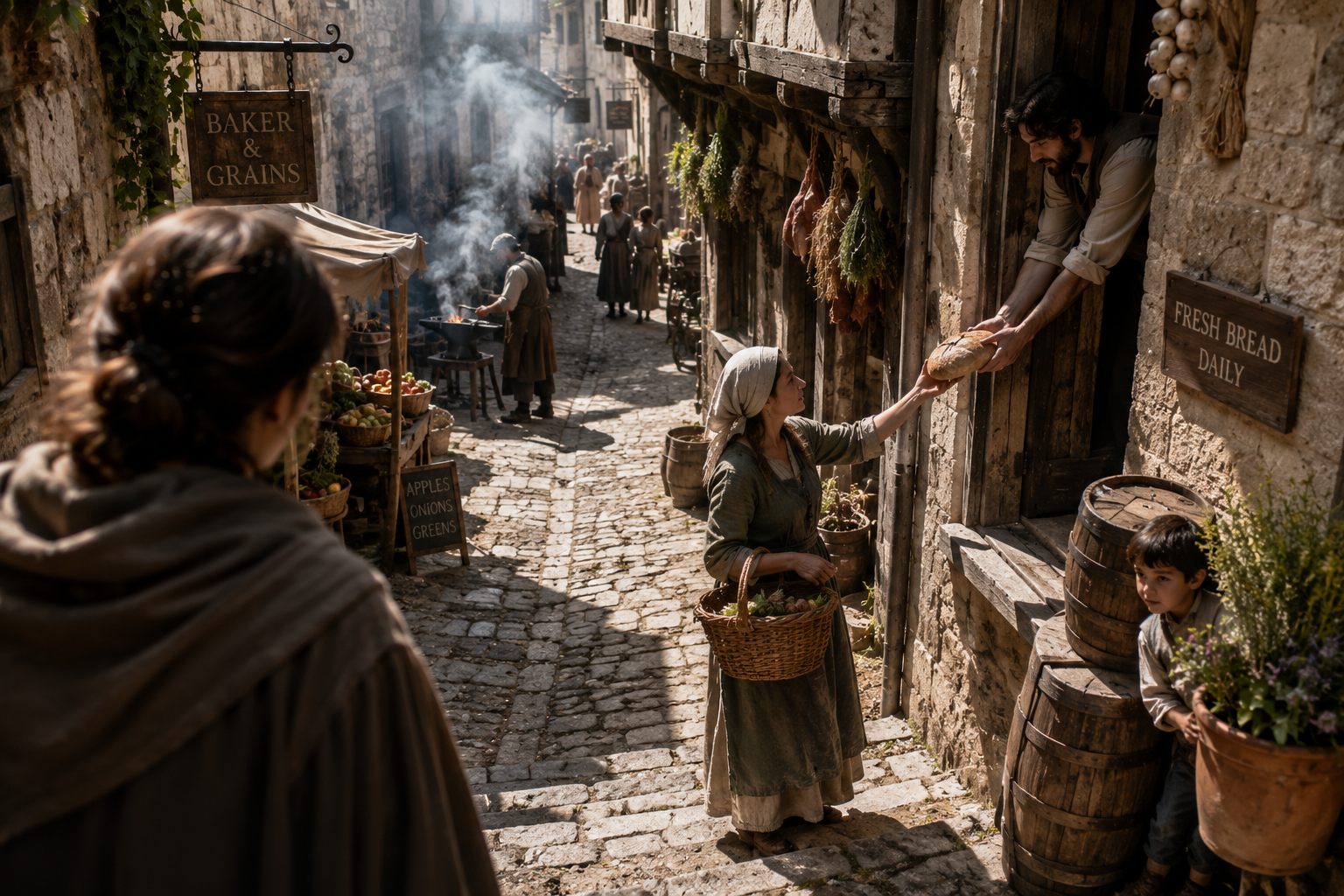
Market streets were more than places of trade; they shaped how people moved, met, and belonged in historic towns. Daily routines threaded together shops, doorways, and public crossings into a living social map. Understanding those patterns helps explain not only economic transactions but also the rhythms of community life. This article explores how spatial features and sensory practices organized everyday interaction on market streets.

Design and Movement on Market Streets

The layout of streets, alleys, and squares influenced where vendors set up stalls and where neighbors lingered. Narrow passages concentrated foot traffic and encouraged incidental encounters, while broader market thoroughfares supported larger assemblies and fairs. Merchants adapted their stalls and shopfronts to these flows, orienting goods toward the most visible angles of passage. Such physical arrangements created predictable routes that structured labor and leisure across the town.

By directing movement, street design also affected social hierarchies and access to resources. Prime locations conferred advantages on certain traders, and marginalized sellers often found niches at thresholds or side lanes. These spatial inequalities shaped daily negotiations over space and reputation in public life.

Thresholds and Domestic-Commercial Overlap

Doorways and shop thresholds operated as porous boundaries between private homes and public commerce. Many families ran small-scale production or sales from ground-floor rooms, so thresholds became sites of exchange and surveillance. The immediate adjacency of domestic space to market activity blurred distinctions between work and household, informing routines of care and occupation. Thresholds thus mediated social relations by turning intimate spaces into visible parts of urban economy.

Such overlaps encouraged reciprocal obligations and mutual assistance among neighbors. Visitors and customers could become sources of news, credit, or seasonal labor, reinforcing local interdependence around these liminal spots.

Sensory Life: Sound, Smell, and Street Practices

The sensory environment of market streets—vendors’ calls, the clatter of carts, aromas of food—directed attention and helped people navigate commercial life. Sounds signaled bargains or approaching services, while smells marked specialty trades and seasonal goods. These cues allowed residents to identify places and rhythms without formal signage, creating an embodied knowledge of the town’s offerings. Over time, sensory markers became part of local identity and memory.

  • Vendors used distinctive calls to advertise wares.
  • Smells indicated bakeries, tanners, and smithies nearby.

Collectively, sensory practices supported informal regulation and trust, enabling people to assess quality and reputations at a glance or by ear.

Temporal Rhythms and Seasonal Change

Market life followed daily and seasonal cycles that structured work, leisure, and migration. Market days concentrated activity on fixed dates, while harvest seasons expanded traffic and shifted the balance of goods traded. Timekeeping—by bells, cloth markers, or market gates—coordinated these fluctuations and synchronized townwide rhythms. Such temporal patterns shaped livelihoods and social calendars, from apprenticeships to festival observances.

Understanding these rhythms reveals how towns coped with scarcity and abundance, negotiating social roles through predictable cycles of exchange and celebration.

Conclusion

Historic market streets were complex infrastructures of social life, where design, thresholds, senses, and time intertwined. Paying attention to these everyday dimensions reveals how communities organized exchange and belonging. Studying such patterns enriches our grasp of urban history and the lived experience of town life.


Previous Post

How to Structure Timelines Around Lived Experience

Next Post

Routes, Routines, and Community on Historic Market Streets

Related Posts

John Snow, the Broad Street Pump, and Cholera’s Fall
History

John Snow, the Broad Street Pump, and Cholera’s Fall

October 29, 2026
The Vasa: Sweden’s Giant Ship That Couldn’t Sail
History

The Vasa: Sweden’s Giant Ship That Couldn’t Sail

October 29, 2026
The Ghost Army: How Artists Fooled Hitler’s Front
History

The Ghost Army: How Artists Fooled Hitler’s Front

October 24, 2026
How Iceland’s 1783 Laki Fissure Eruption Chilled an Age
History

How Iceland’s 1783 Laki Fissure Eruption Chilled an Age

October 24, 2026
Next Post
Routes, Routines, and Community on Historic Market Streets

Routes, Routines, and Community on Historic Market Streets

Search..

No Result
View All Result

Recent Articles

How Carrara’s Marble Carved a Peculiar Mountain Region

How Carrara’s Marble Carved a Peculiar Mountain Region

November 1, 2026
The Great Dismal Swamp: Refuge, Labor, and a Hidden Region

The Great Dismal Swamp: Refuge, Labor, and a Hidden Region

November 1, 2026
The Salon Era: How Conversation Shaped the Enlightenment

The Salon Era: How Conversation Shaped the Enlightenment

October 31, 2026
Tenement New York: Life in Vertical Slums, 1870–1910

Tenement New York: Life in Vertical Slums, 1870–1910

October 31, 2026
Mary Seacole: The Jamaican Nurse Who Went to War

Mary Seacole: The Jamaican Nurse Who Went to War

October 30, 2026

Subscribe Us

By clicking submit, I authorize History Ours and its affiliated companies to: (1) use, sell, and share my information for marketing purposes, including cross-context behavioral advertising, as described in our Terms of Service and Privacy Policy, (2) supplement the information that I provide with additional information lawfully obtained from other sources, like demographic data from public sources, interests inferred from web page views, or other data relevant to what might interest me, like past purchase or location data, (3) contact me or enable others to contact me by email with offers for goods and services from any category at the email address provided, and (4) retain my information while I am engaging with marketing messages that I receive and for a reasonable amount of time thereafter. I understand I can opt out at any time through an email that I receive, or by clicking here

Subscribe To Our Newsletter

By clicking submit, I authorize History Ours and its affiliated companies to: (1) use, sell, and share my information for marketing purposes, including cross-context behavioral advertising, as described in our Terms of Service and Privacy Policy, (2) supplement the information that I provide with additional information lawfully obtained from other sources, like demographic data from public sources, interests inferred from web page views, or other data relevant to what might interest me, like past purchase or location data, (3) contact me or enable others to contact me by email with offers for goods and services from any category at the email address provided, and (4) retain my information while I am engaging with marketing messages that I receive and for a reasonable amount of time thereafter. I understand I can opt out at any time through an email that I receive, or by clicking here.

© 2026 History Ours | All Rights Reserved

  • Contact Us
  • Privacy Policy
  • Terms of Service
  • Unsubscribe
  • Privacy Choices
  • Contact Us
  • Privacy Policy
  • Terms of Service
  • Unsubscribe
  • Privacy Choices

© 2026 History Ours | All Rights Reserved

No Result
View All Result
  • Home
  • History
  • Biographies
  • Eras
  • Regions
  • Timeline

© 2026 History Ours | All Rights Reserved

Skip to content
Open toolbar Accessibility Tools

Accessibility Tools

  • Increase TextIncrease Text
  • Decrease TextDecrease Text
  • GrayscaleGrayscale
  • High ContrastHigh Contrast
  • Negative ContrastNegative Contrast
  • Light BackgroundLight Background
  • Links UnderlineLinks Underline
  • Readable FontReadable Font
  • Reset Reset