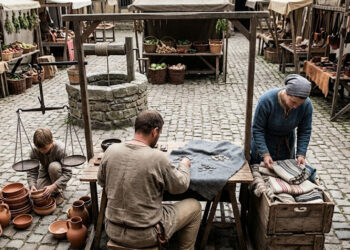

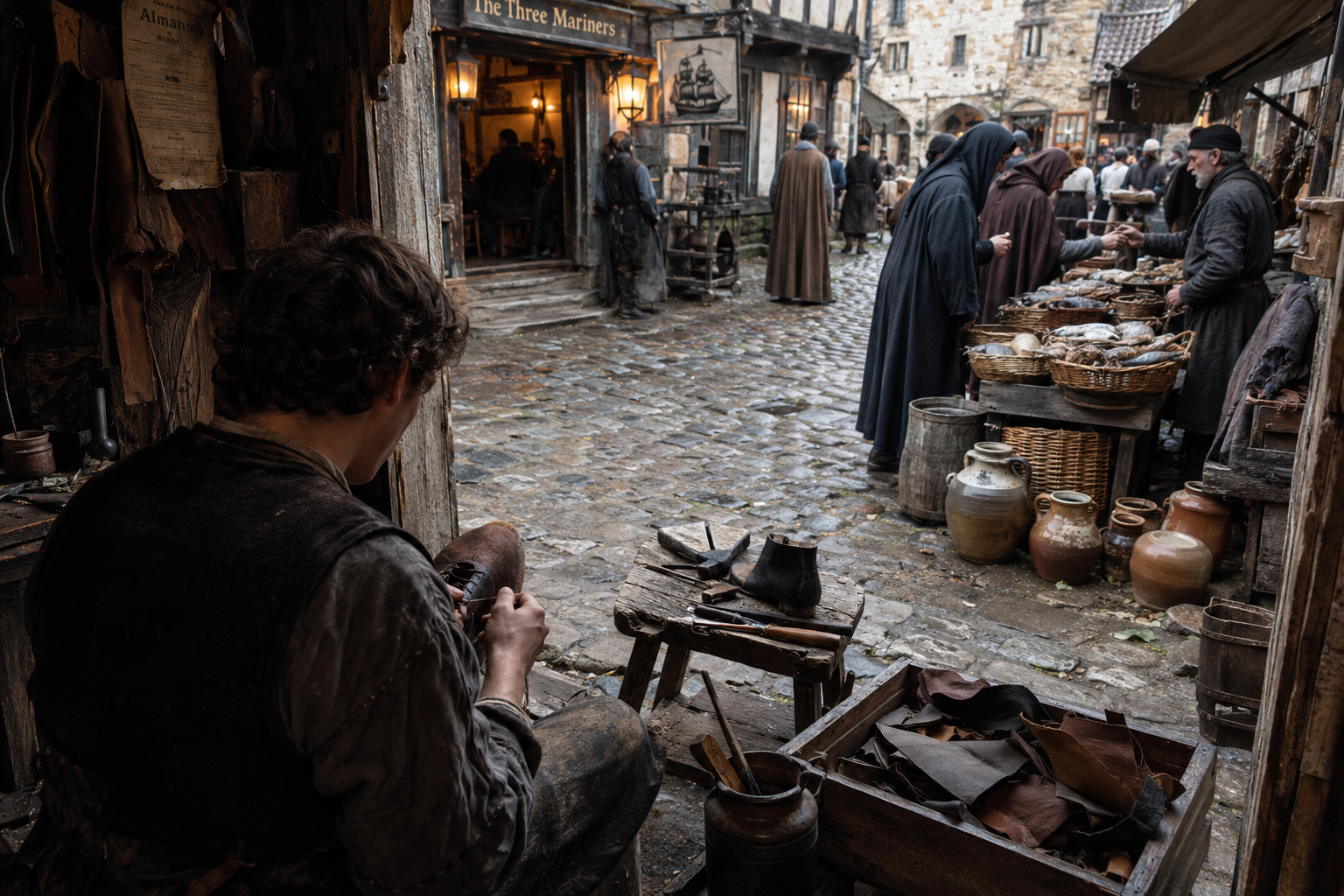
Market streets in early towns were more than sites of commerce; they were the arteries of daily social life. A mix of traders, artisans, and customers created dense routines where economic exchange and personal relationships intertwined. Taverns, stalls, workshops and thresholds framed encounters that shaped reputations and obligations over time. Understanding these interactions reveals how ordinary people navigated work, leisure, and mutual support in urban environments.
Economic Routines and Informal Networks
Daily production and exchange followed predictable rhythms that structured neighborhood life. Artisans balanced workshop schedules with market days, while small-scale traders moved goods between households and public spaces. Credit, favors, and short-term loans circulated through trust networks rather than formal institutions, linking livelihoods to social ties. These practices allowed families to smooth income fluctuations and adapt to seasonal pressures.
Such informal economies fostered reciprocal obligations that regulated behavior and reinforced community bonds. Reputation and repeated transactions mattered as much as price in sustaining trade relationships.
Public Spaces as Sites of Social Negotiation
Streets, squares, and tavern tables functioned as arenas for negotiation, news exchange, and conflict resolution. Public spaces hosted a range of encounters: business bargaining, ritual observances, political talk, and gossip. The visibility of these interactions created informal mechanisms of oversight where reputations could be affirmed or damaged. Access to these spaces shaped participation in civic life and economic opportunity.
By observing who spoke, who traded, and where goods were displayed, residents read social hierarchies and negotiated their own place within them. Public space thus acted as both marketplace and courtroom of everyday life.
Material Culture and Household Economies
Households supplied goods, labor, and services that linked private life to market economies. Kitchens, workshops, and storage rooms were sites of production for sale or exchange, blurring lines between domestic and commercial spheres. Common objects—tools, containers, textiles—travelled between home and street, embedding material culture in patterns of work and social identity. These items carried meaning as markers of skill, status, and kinship.
- Examples included small manufactured goods, preserved foods, and repair services offered from doorways.
- Shared resources and cooperative practices helped households meet needs across economic cycles.
Material practices reinforced social networks by making economic cooperation visible and repeatable. The circulation of objects sustained mutual obligations that underpinned neighborhood resilience.
Conclusion
Early towns depended on dense interactions across trade, public spaces, and households to function. Everyday routines knitted economic necessity to social life, producing resilient local networks. Studying these intersections illuminates how ordinary people shaped urban communities over time.