
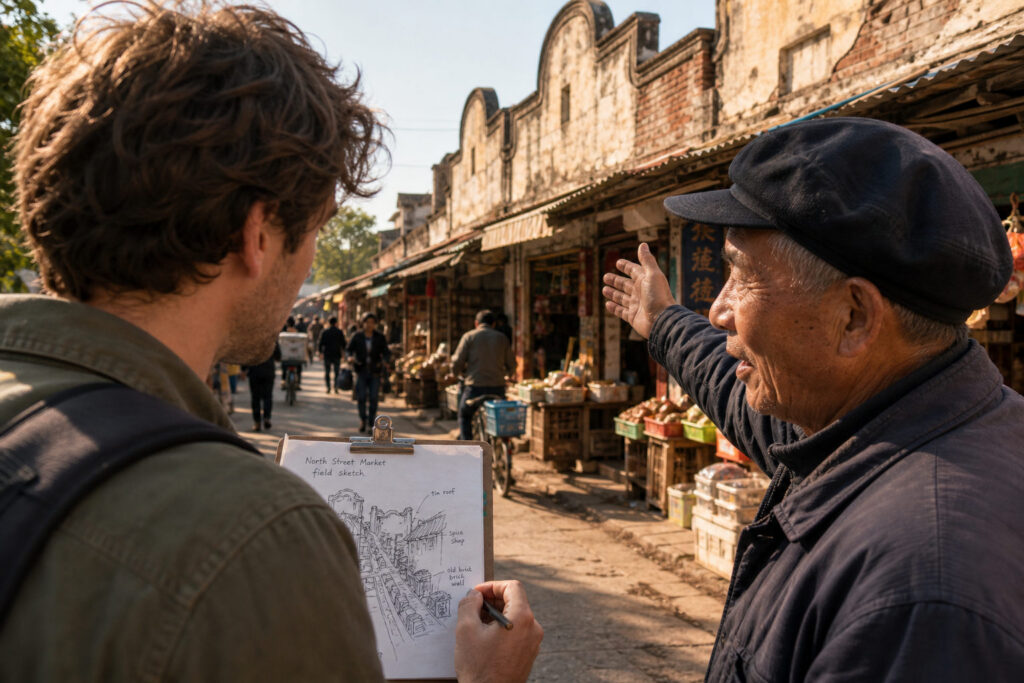
Regional identity is often thought of in terms of grand narratives, political borders, or heroic events. Yet much of what makes a region recognisable to residents and visitors emerges from ordinary places: markets, crossroads, work sites, and neighbourhood streets. These sites accumulate practices, memories, and material traces that persist across generations and subtly orient social life. Tracing how everyday infrastructures and routines shape long-run identity requires combining close observation with historical sources. This approach foregrounds continuity and change in lived experience rather than only formal institutions.
Everyday Places as Memory Anchors
Everyday places host recurring activities that embed meaning in the landscape. Markets, shrines, and communal wells become reference points for stories about belonging and difference. Over time, routine use inscribes expectations about who belongs and how people move through space. These sites also anchor rituals of belonging that renew communal ties. Oral histories, maps, and photographs help reveal those invisible inscriptions.
Looking for these anchors redirects attention from official monuments to lived routines. It shows how memory is distributed across settings rather than concentrated in single sites. Researchers can map these features to trace continuities across decades.
Networks of Movement and Exchange
Movement patterns—seasonal labour routes, trade pathways, religious processions—connect disparate locales into coherent regions. These networks transmit goods, ideas, and practices that shape shared norms and material culture. Patterns of migration imprint local dialects, cuisine, and craft repertoires across communities. Equally important are the thresholds where networks intersect: stations, ports, and market squares that facilitate encounters and negotiation. Archaeological remains, transport records, and household inventories can make these flows visible to researchers.
Studying flows highlights relational dimensions of regional identity. It helps explain cultural similarities that cross political lines and persistent local adaptations. Quantitative and qualitative methods together reveal these layered connections.
Material Practices and Visible Traces
Material practices—craft techniques, agricultural regimes, building styles—leave durable traces in the landscape and built environment. Rooflines, field patterns, and workshop layouts carry information about resource use, social organization, and aesthetic choices. Even discarded objects and industrial detritus can tell stories about labour and resource flows. When combined with documentary sources, these visible signs reveal processes of standardisation, innovation, and cultural exchange. Conservation of everyday architecture thus becomes a form of historical evidence.
Recognising material practices shifts heritage priorities toward ordinary technologies and skills. It also offers tangible entry points for community-based research and preservation. Such evidence supports inclusive narratives that value everyday labour and creativity.
Conclusion
Regions are shaped as much by routine places and practices as by formal institutions. Paying attention to everyday landscapes opens new pathways for interpreting long-term continuity and change. This perspective invites collaborative research that honours local knowledge and material history.