
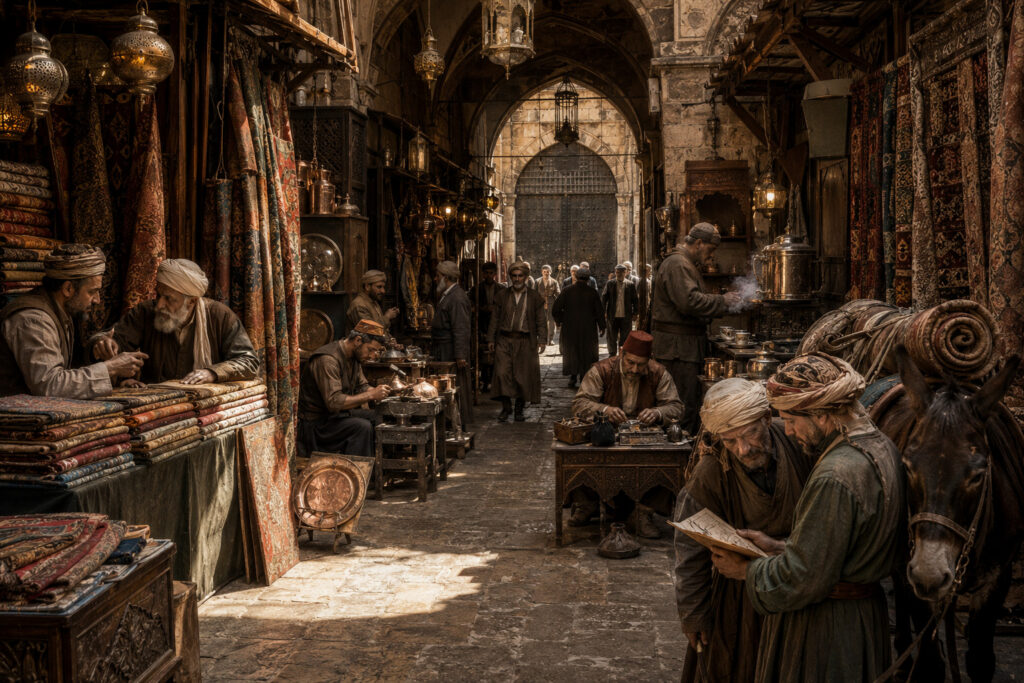
Walk into the Grand Bazaar and you step into a compressed map of Istanbul’s past. The market grew up after the Ottomans took the city, not as a single plan but as a patchwork: stone bedestens where precious goods were locked away, wooden alleys where cloth and copper were traded, and covered streets that kept commerce moving through rain and sun. Over centuries it folded merchants from the Mediterranean, the Balkans and the lands beyond the Black Sea into one place, making the bazaar less a shop district than a living node of regional connections.
Daily rhythms in narrow lanes
The bazaar’s impact went far beyond what was bought or sold. Its hours set the tempo for neighborhoods nearby: when the bazaar opened, tea shops filled with porters and muleteers, caravan leaders consulted price lists, and women from adjoining quarters picked up household goods or household news. The covered streets amplified sound — calls of metalworkers, the scrape of cloth, the measured bargaining voice. Those noises told a resident more about price shifts and political rumor than any town crier.
Goods themselves traced routes of taste and habit. Textiles arriving from Anatolia and beyond shaped what people wore; coffee and spices refined how the city ate and socialized; silks and silver signaled status at court and in village weddings alike. The bazaar concentrated specialists — jewelers, leatherworkers, bookbinders — so a single errand often turned into a string of encounters that knitted customers into long-term relationships with specific shops.
Guilds, security, and public life
Inside the market, institutions mattered. Guilds regulated quality, settled disputes, and trained apprentices; the stone bedesten provided a secure vault for merchants’ most valuable stock and a visible sign that trade was anchored to law and custom. Money changers and caravan organizers made the bazaar a financial center as well as a retail one. That combination—commerce, law, and social ritual—meant the bazaar could sway local politics. When prices rose or Ottoman coinage shifted, some of the loudest public reactions surfaced first among these streets.
Conclusion
To think of the Grand Bazaar as merely a tourist attraction is to miss how it shaped the contours of daily life. It defined where people worked, how they spent, and how rumors and regulations spread across Istanbul’s neighborhoods. Even now, beneath gilded lamps and rows of handwoven carpets, the market keeps functioning as a compressed history: the layered traces of merchants, customers, and institutions that made a city out of a crossroads.