Long before modern nations rose, the Persian Empire stood as one of the greatest civilizations in history. Known for its architectural marvels, efficient administration, and cultural inclusivity, Persia’s influence stretched from the Indus Valley to the Mediterranean. Founded by Cyrus the Great, it became a model for governance and tolerance that shaped the future of empires around the world.
1. The Rise of a Global Power
The Persian Empire began in the 6th century BCE under Cyrus II, also known as Cyrus the Great. Through visionary leadership and strategic conquest, he united vast lands—from modern-day Iran to Egypt and parts of Greece—into a single, organized empire.
Unlike conquerors who ruled by fear, Cyrus embraced diplomacy and respect for local customs. His Cyrus Cylinder, often regarded as the first declaration of human rights, highlighted his belief in religious and cultural freedom.
2. The Great Builders of Antiquity
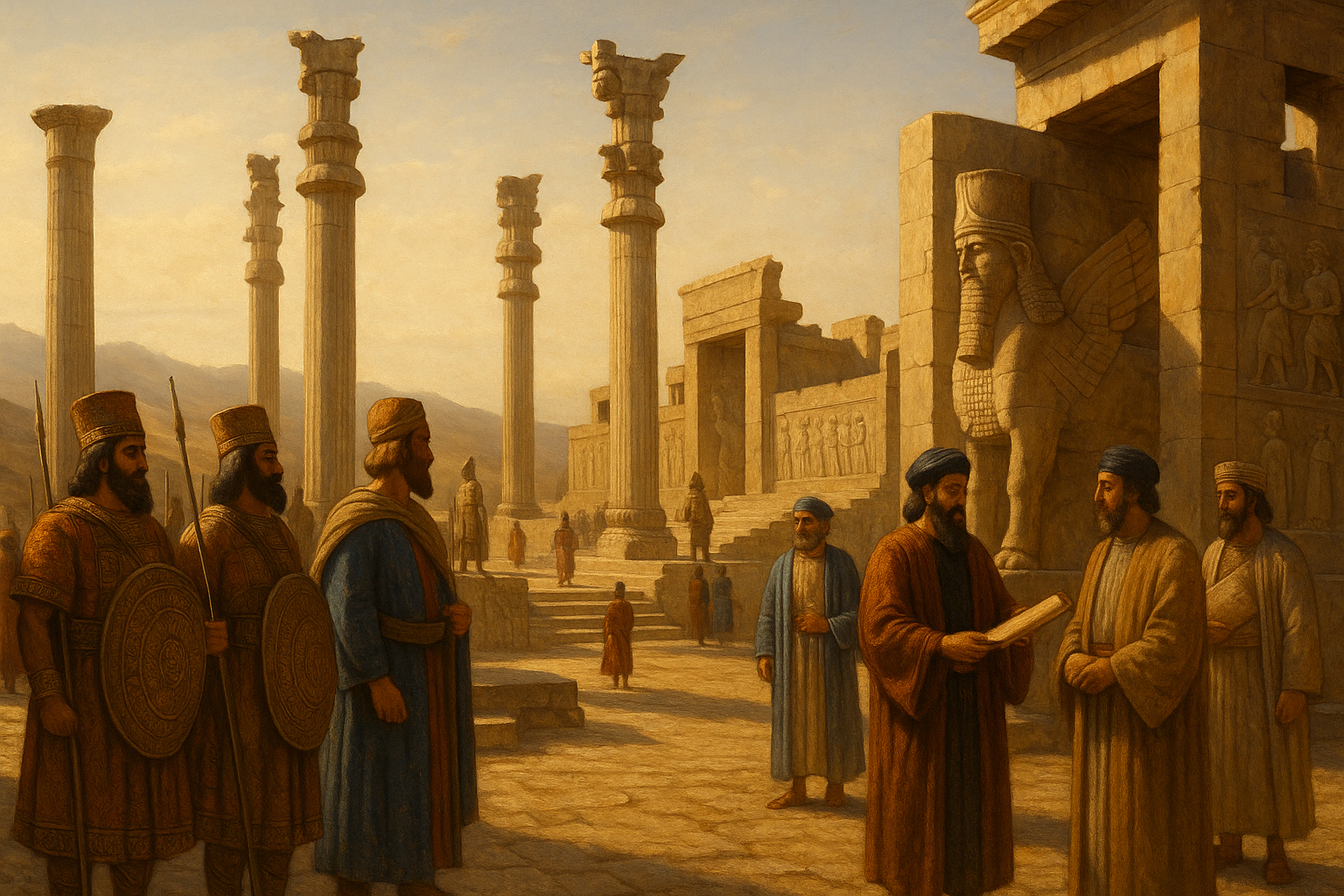
Persia’s architectural achievements remain legendary. The royal city of Persepolis, with its grand terraces, intricate reliefs, and monumental columns, symbolized imperial power and artistic mastery. The Royal Road, spanning over 2,700 kilometers, connected cities across the empire, enabling trade, communication, and military efficiency.
Their innovations in engineering—such as underground canals known as qanats—demonstrated advanced understanding of irrigation and sustainability in arid landscapes.
3. Governance and Administration Ahead of Its Time
The Persian system of governance was remarkably modern for its era. Darius I divided the empire into provinces called satrapies, each overseen by a governor or “satrap.” This decentralized system balanced local autonomy with central control, allowing the empire to manage diverse peoples and cultures effectively.
A uniform system of taxation, weights, and measures fostered economic stability, while royal couriers ensured swift communication across vast distances—an ancient precursor to today’s postal systems.
4. Cultural Harmony and Lasting Influence
The Persian Empire thrived on cultural exchange. Zoroastrianism, its dominant faith, emphasized morality and justice, influencing later Abrahamic religions. Persian art, language, and governance practices left a lasting mark on Greek, Roman, and Islamic civilizations.
Even after its fall to Alexander the Great in 330 BCE, the Persian spirit of innovation and unity continued to inspire generations of leaders and thinkers.
Conclusion
The Persian Empire was not just a kingdom of conquest—it was a civilization of builders, thinkers, and unifiers. Its legacy of tolerance, architectural brilliance, and administrative genius continues to shape how societies envision governance and cultural coexistence. In many ways, Persia laid the foundation for the modern idea of empire—a realm built not only on power, but on progress.