
Uncover History’s Secrets with Daily Updates!
Daily News Entertainment
  • Home
  • History
  • Biographies
  • Eras
  • Regions
  • Timeline
No Result
View All Result
History Ours
  • Home
  • History
  • Biographies
  • Eras
  • Regions
  • Timeline
No Result
View All Result
History Ours
No Result
View All Result
Home Regions

The Persian Empire: Builders of the Ancient World

in Regions
The Persian Empire: Builders of the Ancient World

Long before modern nations rose, the Persian Empire stood as one of the greatest civilizations in history. Known for its architectural marvels, efficient administration, and cultural inclusivity, Persia’s influence stretched from the Indus Valley to the Mediterranean. Founded by Cyrus the Great, it became a model for governance and tolerance that shaped the future of empires around the world.

1. The Rise of a Global Power

The Persian Empire began in the 6th century BCE under Cyrus II, also known as Cyrus the Great. Through visionary leadership and strategic conquest, he united vast lands—from modern-day Iran to Egypt and parts of Greece—into a single, organized empire.

Unlike conquerors who ruled by fear, Cyrus embraced diplomacy and respect for local customs. His Cyrus Cylinder, often regarded as the first declaration of human rights, highlighted his belief in religious and cultural freedom.

2. The Great Builders of Antiquity

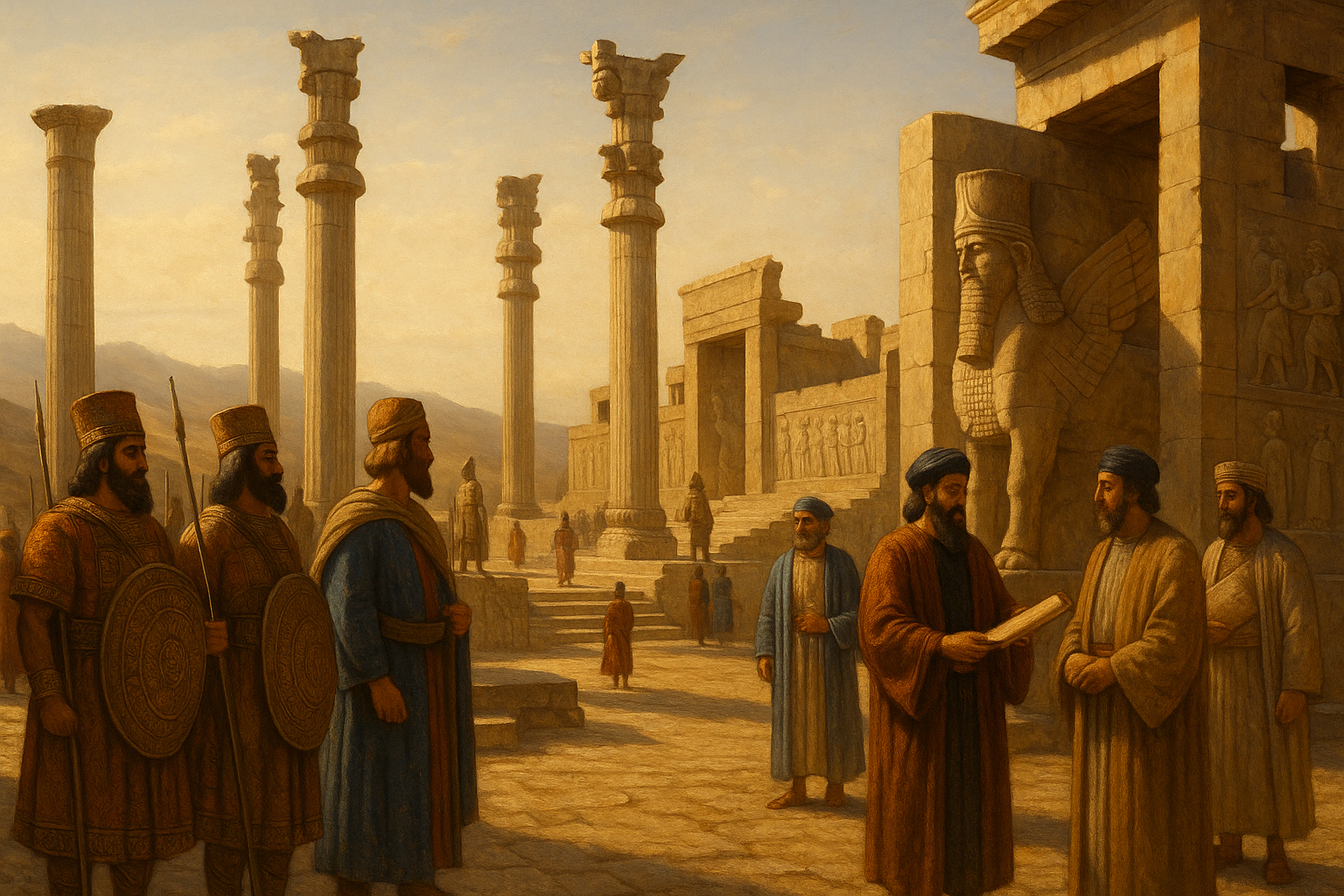
Persia’s architectural achievements remain legendary. The royal city of Persepolis, with its grand terraces, intricate reliefs, and monumental columns, symbolized imperial power and artistic mastery. The Royal Road, spanning over 2,700 kilometers, connected cities across the empire, enabling trade, communication, and military efficiency.

Their innovations in engineering—such as underground canals known as qanats—demonstrated advanced understanding of irrigation and sustainability in arid landscapes.

3. Governance and Administration Ahead of Its Time

The Persian system of governance was remarkably modern for its era. Darius I divided the empire into provinces called satrapies, each overseen by a governor or “satrap.” This decentralized system balanced local autonomy with central control, allowing the empire to manage diverse peoples and cultures effectively.

A uniform system of taxation, weights, and measures fostered economic stability, while royal couriers ensured swift communication across vast distances—an ancient precursor to today’s postal systems.

4. Cultural Harmony and Lasting Influence

The Persian Empire thrived on cultural exchange. Zoroastrianism, its dominant faith, emphasized morality and justice, influencing later Abrahamic religions. Persian art, language, and governance practices left a lasting mark on Greek, Roman, and Islamic civilizations.

Even after its fall to Alexander the Great in 330 BCE, the Persian spirit of innovation and unity continued to inspire generations of leaders and thinkers.

Conclusion

The Persian Empire was not just a kingdom of conquest—it was a civilization of builders, thinkers, and unifiers. Its legacy of tolerance, architectural brilliance, and administrative genius continues to shape how societies envision governance and cultural coexistence. In many ways, Persia laid the foundation for the modern idea of empire—a realm built not only on power, but on progress.

Previous Post

The Enlightenment Era: When Knowledge Conquered Fear

Next Post

The Americas Before Columbus: Lost Cultures and Legends

Related Posts

Trieste: A Port at the Edge of Empires
Regions

Trieste: A Port at the Edge of Empires

September 15, 2026
Svalbard: How a Frozen Archipelago Became an International Outpost
Regions

Svalbard: How a Frozen Archipelago Became an International Outpost

September 15, 2026
Orkney: Where Norse Law and Scottish Life Intertwined
Regions

Orkney: Where Norse Law and Scottish Life Intertwined

September 15, 2026
Inside the Covered Streets: The Grand Bazaar and Istanbul’s Life
Regions

Inside the Covered Streets: The Grand Bazaar and Istanbul’s Life

September 15, 2026
Next Post
The Americas Before Columbus: Lost Cultures and Legends

The Americas Before Columbus: Lost Cultures and Legends

Search..

No Result
View All Result

Recent Articles

The Disguise That Broke Chains: Ellen and William Craft

The Disguise That Broke Chains: Ellen and William Craft

September 15, 2026
Bass Reeves: The Marshal Who Hunted Outlaws in Indian Territory

Bass Reeves: The Marshal Who Hunted Outlaws in Indian Territory

September 15, 2026
How the Crystal Palace Turned Glass and Iron into a Modern Stage

How the Crystal Palace Turned Glass and Iron into a Modern Stage

September 15, 2026
Anne Bonny: The Pirate Who Broke Rules and Expectations

Anne Bonny: The Pirate Who Broke Rules and Expectations

September 15, 2026
How Haiti Broke Its Chains: A 1791–1804 Timeline

How Haiti Broke Its Chains: A 1791–1804 Timeline

September 15, 2026

Subscribe Us

By clicking submit, I authorize History Ours and its affiliated companies to: (1) use, sell, and share my information for marketing purposes, including cross-context behavioral advertising, as described in our Terms of Service and Privacy Policy, (2) supplement the information that I provide with additional information lawfully obtained from other sources, like demographic data from public sources, interests inferred from web page views, or other data relevant to what might interest me, like past purchase or location data, (3) contact me or enable others to contact me by email with offers for goods and services from any category at the email address provided, and (4) retain my information while I am engaging with marketing messages that I receive and for a reasonable amount of time thereafter. I understand I can opt out at any time through an email that I receive, or by clicking here

Subscribe To Our Newsletter

By clicking submit, I authorize History Ours and its affiliated companies to: (1) use, sell, and share my information for marketing purposes, including cross-context behavioral advertising, as described in our Terms of Service and Privacy Policy, (2) supplement the information that I provide with additional information lawfully obtained from other sources, like demographic data from public sources, interests inferred from web page views, or other data relevant to what might interest me, like past purchase or location data, (3) contact me or enable others to contact me by email with offers for goods and services from any category at the email address provided, and (4) retain my information while I am engaging with marketing messages that I receive and for a reasonable amount of time thereafter. I understand I can opt out at any time through an email that I receive, or by clicking here.

© 2026 History Ours | All Rights Reserved

  • Contact Us
  • Privacy Policy
  • Terms of Service
  • Unsubscribe
  • Privacy Choices
  • Contact Us
  • Privacy Policy
  • Terms of Service
  • Unsubscribe
  • Privacy Choices

© 2026 History Ours | All Rights Reserved

No Result
View All Result
  • Home
  • History
  • Biographies
  • Eras
  • Regions
  • Timeline

© 2026 History Ours | All Rights Reserved

Skip to content
Open toolbar Accessibility Tools

Accessibility Tools

  • Increase TextIncrease Text
  • Decrease TextDecrease Text
  • GrayscaleGrayscale
  • High ContrastHigh Contrast
  • Negative ContrastNegative Contrast
  • Light BackgroundLight Background
  • Links UnderlineLinks Underline
  • Readable FontReadable Font
  • Reset Reset