
Uncover History’s Secrets with Daily Updates!
Daily News Entertainment
  • Home
  • History
  • Biographies
  • Eras
  • Regions
  • Timeline
No Result
View All Result
History Ours
  • Home
  • History
  • Biographies
  • Eras
  • Regions
  • Timeline
No Result
View All Result
History Ours
No Result
View All Result
Home Timeline

A Short Timeline of the 1918 Influenza: Waves, Closures, and Aftermath

in Timeline
A Short Timeline of the 1918 Influenza: Waves, Closures, and Aftermath

Spring 1918: First signs in camps and towns

The influenza that would become known as the 1918 pandemic first showed up in small bursts in the spring of 1918. Doctors in crowded military training camps and industrial towns reported an unusually severe flu that often knocked healthy young adults to their knees. Because the world was at war, movement of troops and materials helped seed outbreaks across continents. Local health officials recorded high absenteeism from workplaces and schools, but the full scale of the illness was still not recognized—and wartime censorship limited reporting in many countries.

Autumn 1918: The devastating second wave

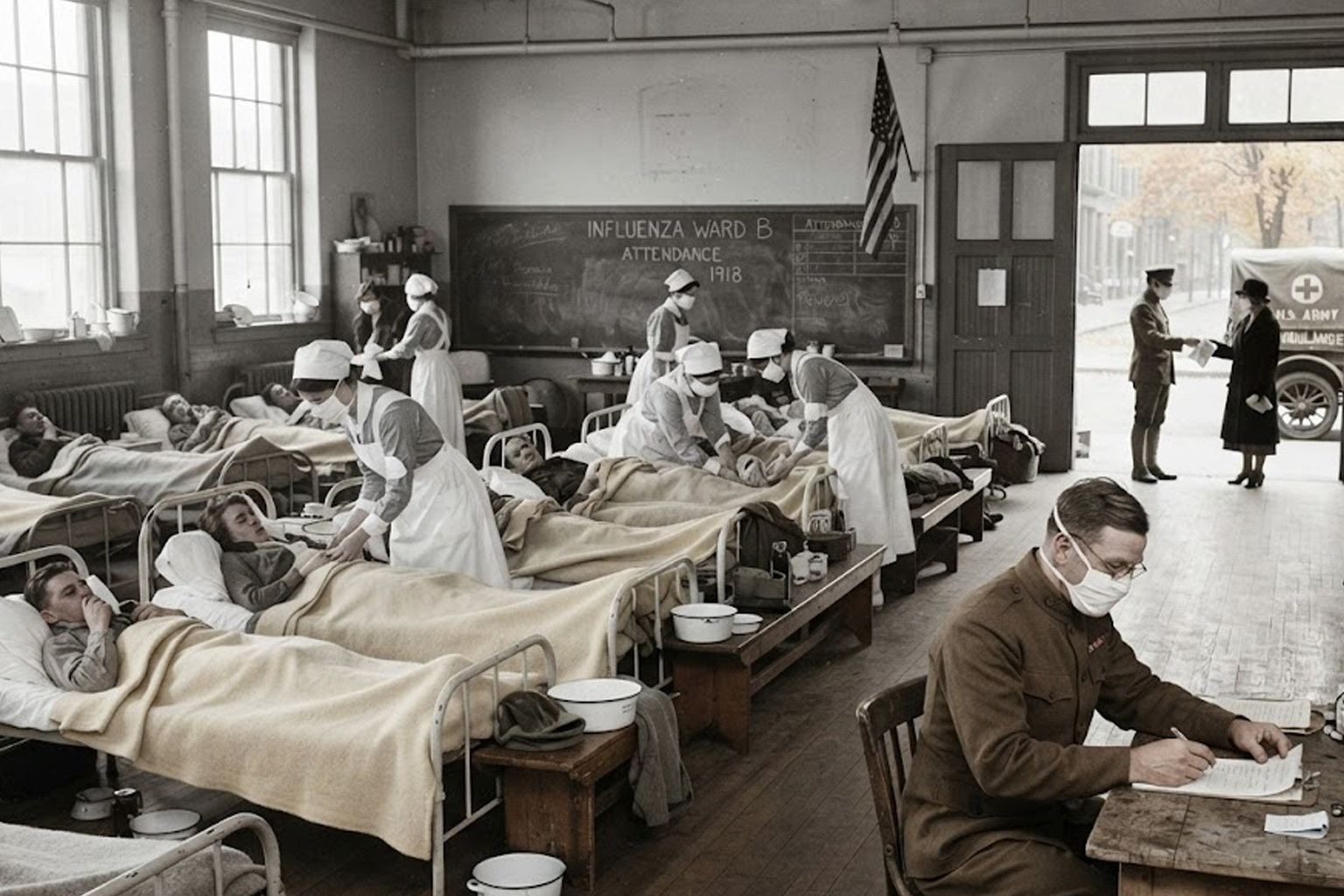
That summer’s lull was deceptive. In the autumn of 1918 the disease returned with far greater ferocity. Cities that had coped with earlier cases were overwhelmed by a swift-onset pneumonia that frequently followed influenza. Hospitals filled, makeshift wards were erected in schools and halls, and corpses accumulated faster than burial services could manage in some places. Authorities tried a range of responses: closing theaters and churches, banning public gatherings, and ordering masks for the public. Responses varied widely—some cities, like St. Louis, enforced strict closures and saw lower death rates than cities that delayed interventions.

1919–1920: Waning waves, lasting consequences

After a catastrophic autumn and winter, the virus produced further waves into 1919 and pockets of activity into 1920, but the ferocity gradually faded as populations acquired some immunity and the most vulnerable had already suffered the worst. The death toll remains an estimate—scholars often point to tens of millions worldwide, with many countries lacking precise records. The pandemic reshaped public health: influenza surveillance systems expanded, municipal health departments gained experience in mass prevention, and the idea of non-pharmaceutical interventions—closures, masks, quarantine—entered public practice, even if enforcement was inconsistent.

Conclusion

The 1918 influenza moved fast and left deep social marks. It exposed how globalized transport and war can accelerate disease spread, tested the capacity of civic institutions, and changed how communities responded to sudden mass illness. While the virus itself receded, the public-health responses and hard lessons about communication, preparedness, and the unequal toll of disease persisted—and they still inform how societies think about pandemics today.
Previous Post

How the Ruhr Became Germany’s Engine and Then Its Archive

Next Post

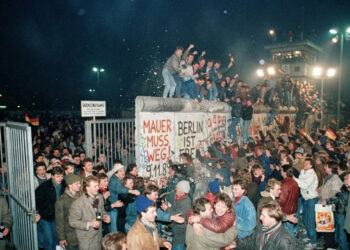
Timeline: The Berlin Wall — Rise, Life, and Collapse

Related Posts

Timeline: The Berlin Wall — Rise, Life, and Collapse
Timeline

Timeline: The Berlin Wall — Rise, Life, and Collapse

September 18, 2026
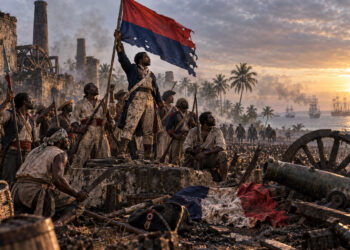
How Haiti Broke Its Chains: A 1791–1804 Timeline
Timeline

How Haiti Broke Its Chains: A 1791–1804 Timeline

September 15, 2026
From Horses to Wires: How the Pony Express Met the Telegraph
Timeline

From Horses to Wires: How the Pony Express Met the Telegraph

September 15, 2026
From Swamps to Shortcut: A Timeline of the Panama Canal
Timeline

From Swamps to Shortcut: A Timeline of the Panama Canal

September 15, 2026
Next Post
Timeline: The Berlin Wall — Rise, Life, and Collapse

Timeline: The Berlin Wall — Rise, Life, and Collapse

Search..

No Result
View All Result

Recent Articles

Timeline: The Berlin Wall — Rise, Life, and Collapse

Timeline: The Berlin Wall — Rise, Life, and Collapse

September 18, 2026
A Short Timeline of the 1918 Influenza: Waves, Closures, and Aftermath

A Short Timeline of the 1918 Influenza: Waves, Closures, and Aftermath

September 18, 2026
How the Ruhr Became Germany’s Engine and Then Its Archive

How the Ruhr Became Germany’s Engine and Then Its Archive

September 17, 2026
Salt, Walls, and Ships: How Dalmatia Became a Maritime Frontier

Salt, Walls, and Ships: How Dalmatia Became a Maritime Frontier

September 17, 2026
Edo: Japan’s Urban Revolution of Lanterns and Printshops

Edo: Japan’s Urban Revolution of Lanterns and Printshops

September 16, 2026

Subscribe Us

By clicking submit, I authorize History Ours and its affiliated companies to: (1) use, sell, and share my information for marketing purposes, including cross-context behavioral advertising, as described in our Terms of Service and Privacy Policy, (2) supplement the information that I provide with additional information lawfully obtained from other sources, like demographic data from public sources, interests inferred from web page views, or other data relevant to what might interest me, like past purchase or location data, (3) contact me or enable others to contact me by email with offers for goods and services from any category at the email address provided, and (4) retain my information while I am engaging with marketing messages that I receive and for a reasonable amount of time thereafter. I understand I can opt out at any time through an email that I receive, or by clicking here

Subscribe To Our Newsletter

By clicking submit, I authorize History Ours and its affiliated companies to: (1) use, sell, and share my information for marketing purposes, including cross-context behavioral advertising, as described in our Terms of Service and Privacy Policy, (2) supplement the information that I provide with additional information lawfully obtained from other sources, like demographic data from public sources, interests inferred from web page views, or other data relevant to what might interest me, like past purchase or location data, (3) contact me or enable others to contact me by email with offers for goods and services from any category at the email address provided, and (4) retain my information while I am engaging with marketing messages that I receive and for a reasonable amount of time thereafter. I understand I can opt out at any time through an email that I receive, or by clicking here.

© 2026 History Ours | All Rights Reserved

  • Contact Us
  • Privacy Policy
  • Terms of Service
  • Unsubscribe
  • Privacy Choices
  • Contact Us
  • Privacy Policy
  • Terms of Service
  • Unsubscribe
  • Privacy Choices

© 2026 History Ours | All Rights Reserved

No Result
View All Result
  • Home
  • History
  • Biographies
  • Eras
  • Regions
  • Timeline

© 2026 History Ours | All Rights Reserved

Skip to content
Open toolbar Accessibility Tools

Accessibility Tools

  • Increase TextIncrease Text
  • Decrease TextDecrease Text
  • GrayscaleGrayscale
  • High ContrastHigh Contrast
  • Negative ContrastNegative Contrast
  • Light BackgroundLight Background
  • Links UnderlineLinks Underline
  • Readable FontReadable Font
  • Reset Reset