
Choosing which events to include in a public history timeline shapes how visitors understand the past. This requires clear goals about audience, space, and the story the timeline must tell. Prioritization balances significance, representativeness, and interpretive purpose. The following guidance helps teams make defensible, transparent decisions about what to place on a timeline.
Clarify Purpose and Audience
Begin by defining the timeline’s primary purpose and the audience you intend to reach. Is the goal to illustrate local development, highlight social change, or provide context for a collection? When the purpose is explicit, criteria for inclusion become clearer and easier to defend. Include stakeholders early to surface different perspectives and priorities that might affect selection.
Establishing purpose reduces arbitrary choices and helps prioritize events that align with interpretive goals. It also guides format decisions such as length and level of detail. Regularly revisit purpose as research or feedback changes the project.
Set Transparent Inclusion Criteria
Create a short list of measurable criteria to evaluate candidate events, such as impact, representativeness, chronological significance, and source quality. Weighting these criteria helps resolve ties when many events seem important. Recording why an item was included or excluded improves transparency and supports educational use. Good criteria also make it easier to update the timeline as new information emerges.
Documenting decisions builds trust with the public and future curators. It further allows the timeline to serve as an interpretive tool rather than a simple chronology. Transparency ensures the timeline can be critiqued and improved over time.
Design for Layering and Accessibility
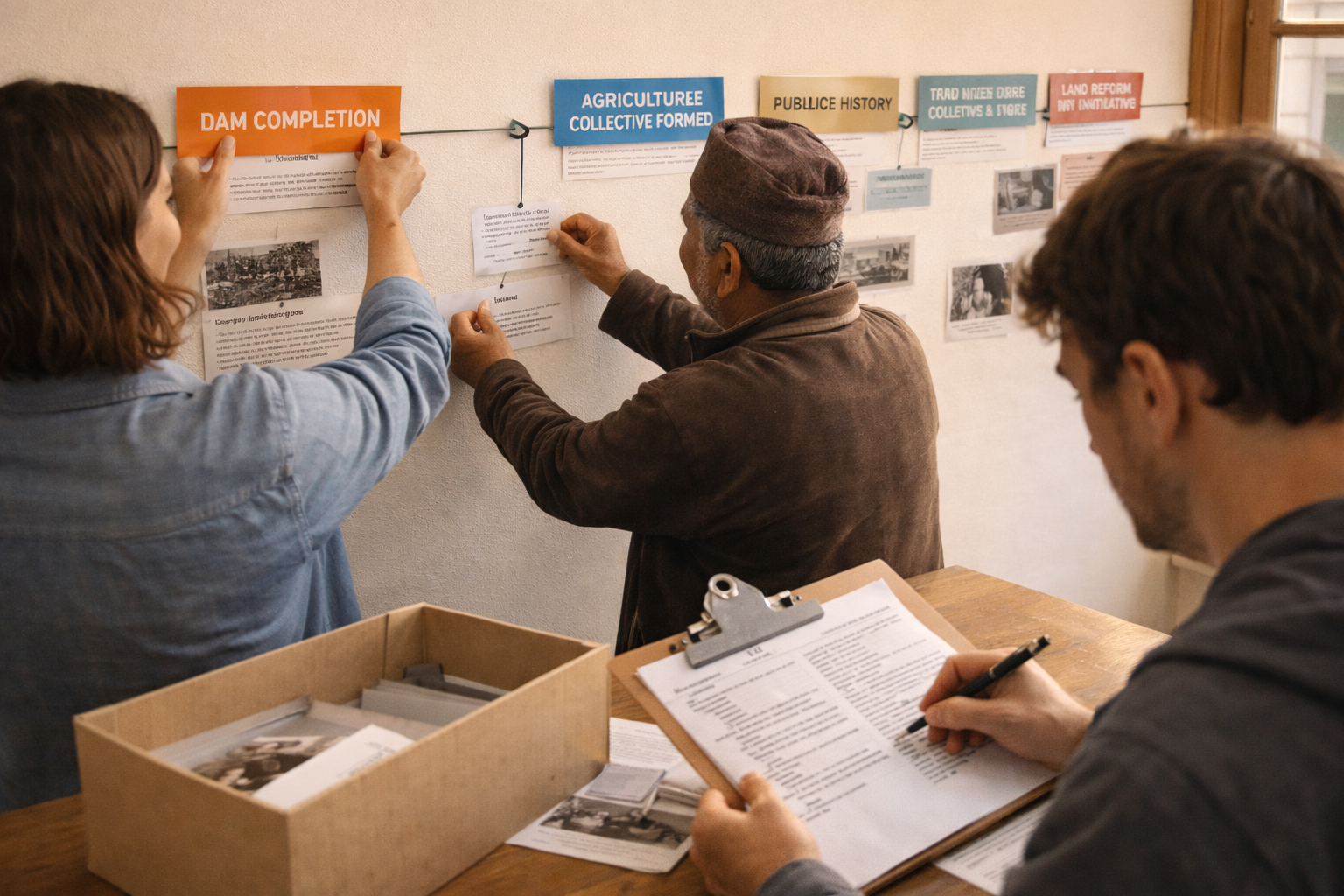
Prioritize events that work across layers: headline items for a broad sweep, and supporting entries for depth. Use a visual hierarchy so visitors can scan major turning points quickly and explore detailed entries as desired. Consider accessibility by avoiding dense text and offering alternate formats or linked resources. These design choices influence which events are necessary at the primary level and which belong in supplemental layers.
- Headline layer: essential, high-impact events.
- Context layer: supporting events, voices, and sources.
Layering lets you include many stories without overwhelming audiences. It also creates pathways for further research and classroom use.
Conclusion
Prioritizing events combines goals, criteria, and design choices to create meaningful timelines.
Document decisions for transparency and future revision.
Aim for layers that invite both quick understanding and deeper exploration.