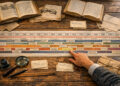
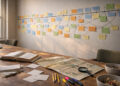
Timelines help readers see cause and effect across eras.
They condense complex histories into readable sequences.
Good timelines highlight turning points and patterns without oversimplifying nuance.
This article outlines practical steps to design a timeline that informs and engages.
Define the Scope and Purpose
Begin by deciding the temporal span and the narrative focus of your timeline. Is it meant to trace technological development, political shifts, cultural change, or another theme? Narrowing the scope makes selection manageable and ensures each entry supports your central argument. A clear purpose also guides the choice of granularity, whether decade-by-decade markers or specific dates.
Establishing scope early helps maintain coherence as you gather content. It prevents overload and keeps the final product useful for readers and researchers alike.
Select Events and Verify Sources
Choose events that illustrate causal relationships and turning points rather than every notable occurrence. Prioritize primary sources where possible and corroborate facts across reputable secondary accounts to avoid distortion. Balance breadth and depth by including representative moments alongside a few detailed entries that offer context. When in doubt, opt for entries that directly support your timeline’s thesis.
- Include dates, brief descriptions, and a citation.
- Flag contested events and note differing interpretations.
Careful selection and verification increase the timeline’s reliability. Transparent sourcing also allows readers to explore the original materials if they wish.
Design for Clarity and Narrative Flow
Arrange events so that patterns and progressions become visible at a glance, using spacing and grouping to indicate eras or phases. Use concise labels and consistent formatting to reduce cognitive load; readers should be able to skim and still grasp the sequence. Visual elements, such as color bands or icons, can reinforce categories without overwhelming text. Consider accessibility by ensuring contrast and legibility for all users.
Good design complements the scholarship, making interpretation easier rather than substituting for it. Aim for a balance where aesthetics serve understanding.
Conclusion
Thoughtful timelines combine clear purpose, verified content, and intentional design.
They transform chronological data into an interpretive narrative that invites inquiry.
A well-crafted timeline becomes a durable tool for learning and reflection.