
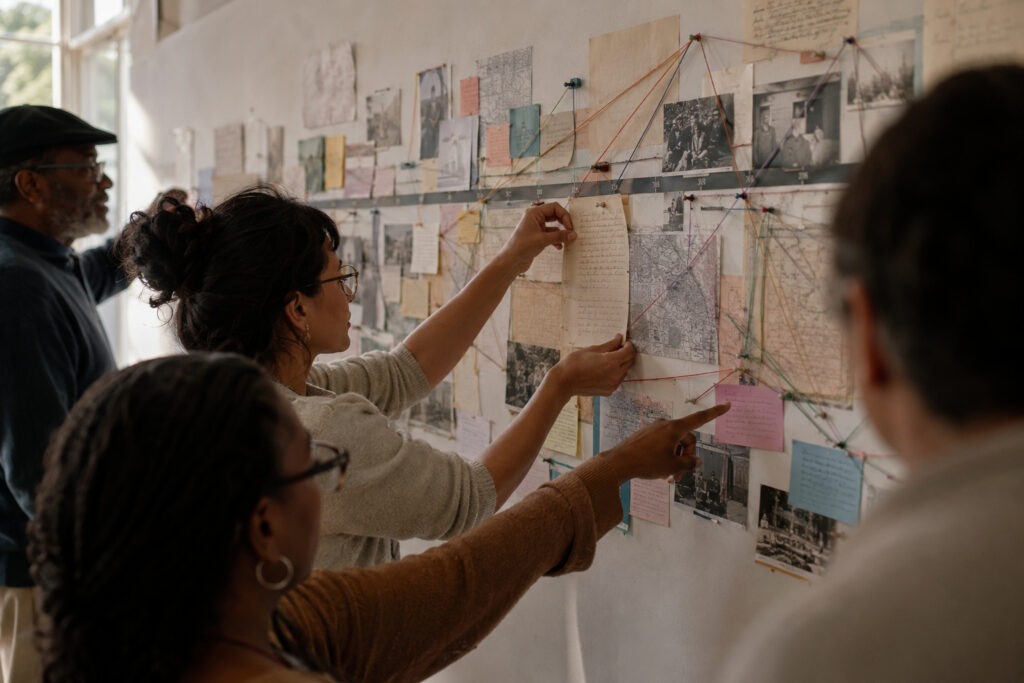
Timelines are more than lists of dates; they can foreground how people experienced change. Designing around lived experience helps visitors connect events to everyday decisions, movements, and feelings. Thoughtful sequencing and labeling make abstract spans of time feel tangible and relevant. This approach supports empathy and deeper inquiry without sacrificing historical accuracy.
Clarify whose experiences are in view
Begin by defining the communities, groups, or individuals whose perspectives the timeline will emphasize. Identify representative voices and recurring themes that surface across sources, such as personal letters, oral histories, or material culture. Explicitly state selection criteria so audiences understand why certain threads appear and others do not. This transparency builds trust and invites critical reading.
Make choices visible on the timeline itself through consistent visual cues or short explanatory notes. When visitors can see who is centered, they can better assess gaps and silences in the record. That clarity encourages follow-up exploration and questioning.
Select scales and focal anchors
Choose temporal scales that suit lived experience: daily rhythms, generational arcs, or crisis moments will each tell different stories. Pair broad spans with focal anchors—detailed entries that act as touchstones for interpretation. Anchors might be a family diary entry, a legislative change, or a widely observed local event that illuminates larger patterns. Combining zoomed-in anchors with broader lines helps audiences move between personal and structural views of change.
- Micro-scale: diaries, neighborhood maps, short-term repertoires of action.
- Meso-scale: community institutions, economic cycles, migration patterns.
- Macro-scale: long-term policy shifts, demographic change, technological adoption.
Layer these scales visually so users can opt into the level of detail they need. Clear legend elements and toggles reduce confusion while preserving complexity.
Design entry points and interpretive cues
Create multiple ways for visitors to enter the timeline: thematic threads, personal stories, or question prompts can guide exploration. Use concise labels and tooltips to define jargon and contextualize events without overwhelming the main flow. Visual hierarchy—size, color, and spacing—directs attention to pivotal moments and lived narratives. Provide pathways that invite curiosity rather than prescribing a single reading.
Offer interpretive prompts that encourage comparison and reflection, such as asking how daily life changed across a decade. These cues transform the timeline from a reference into a learning experience.
Manage complexity and show sources
Respect complexity by allowing overlapping events and competing perspectives to coexist on the timeline. Rather than hiding contradiction, label contested entries and link to source summaries so users can evaluate evidence. Consider modular design elements that expand or collapse layers of detail according to user interest. This keeps the main narrative readable while preserving research depth for those who seek it.
Annotate entries with short source attributions and provide pathways to full documentation. Doing so strengthens credibility and invites responsible engagement with the past.
Conclusion
Centering lived experience makes timelines more humane and accessible.
Clear scales, anchors, and cues guide exploration without erasing complexity.
Transparent sourcing and visible choices support trust and further inquiry.