Uncover History’s Secrets with Daily Updates!
Daily News Entertainment
  • Home
  • History
  • Biographies
  • Eras
  • Regions
  • Timeline
No Result
View All Result
History Ours
  • Home
  • History
  • Biographies
  • Eras
  • Regions
  • Timeline
No Result
View All Result
History Ours
No Result
View All Result
Home Timeline

How to Structure Timelines Around Lived Experience

in Timeline
How to Structure Timelines Around Lived Experience

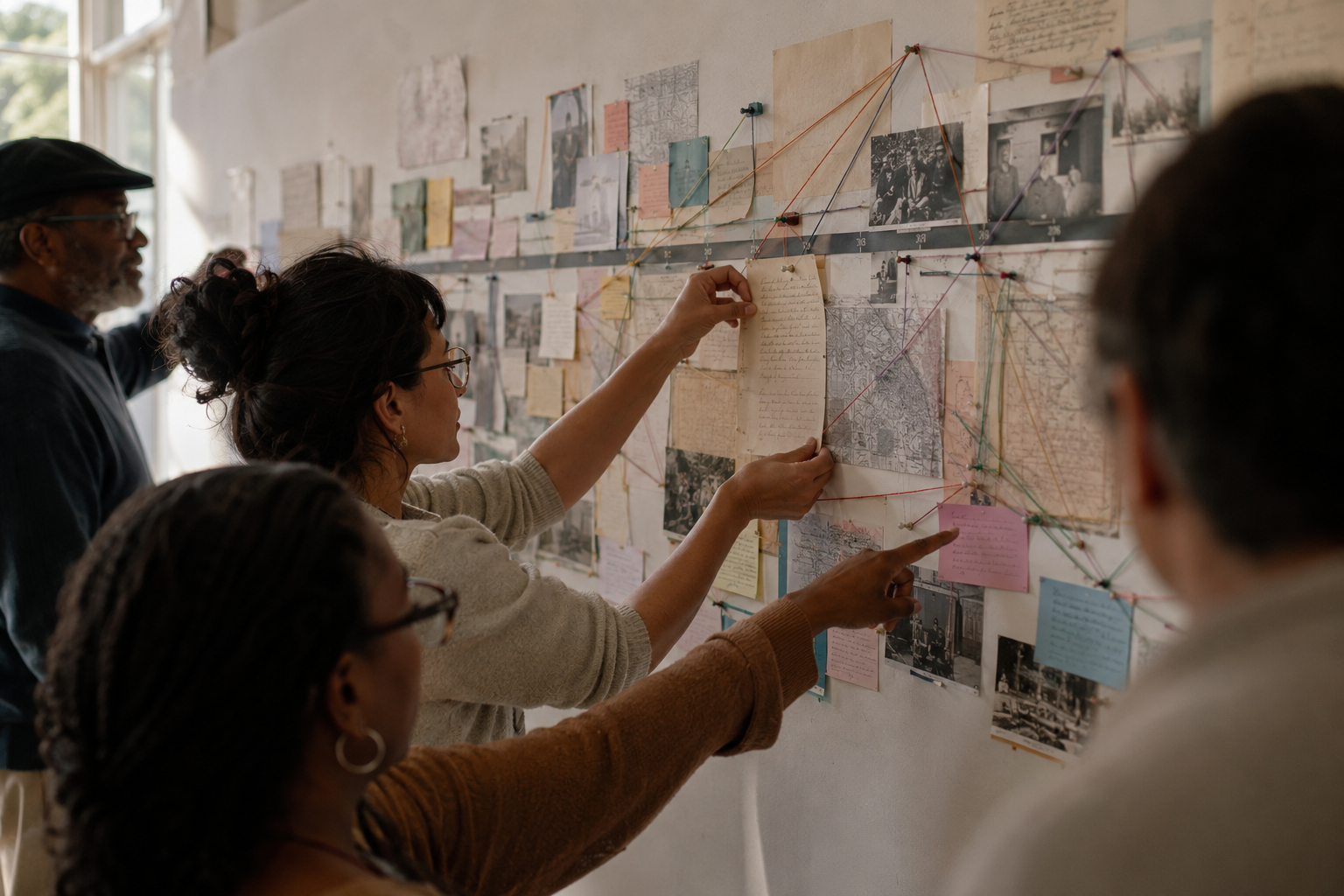
Timelines are more than lists of dates; they can foreground how people experienced change. Designing around lived experience helps visitors connect events to everyday decisions, movements, and feelings. Thoughtful sequencing and labeling make abstract spans of time feel tangible and relevant. This approach supports empathy and deeper inquiry without sacrificing historical accuracy.

Clarify whose experiences are in view

Begin by defining the communities, groups, or individuals whose perspectives the timeline will emphasize. Identify representative voices and recurring themes that surface across sources, such as personal letters, oral histories, or material culture. Explicitly state selection criteria so audiences understand why certain threads appear and others do not. This transparency builds trust and invites critical reading.

Make choices visible on the timeline itself through consistent visual cues or short explanatory notes. When visitors can see who is centered, they can better assess gaps and silences in the record. That clarity encourages follow-up exploration and questioning.

Select scales and focal anchors

Choose temporal scales that suit lived experience: daily rhythms, generational arcs, or crisis moments will each tell different stories. Pair broad spans with focal anchors—detailed entries that act as touchstones for interpretation. Anchors might be a family diary entry, a legislative change, or a widely observed local event that illuminates larger patterns. Combining zoomed-in anchors with broader lines helps audiences move between personal and structural views of change.

  • Micro-scale: diaries, neighborhood maps, short-term repertoires of action.
  • Meso-scale: community institutions, economic cycles, migration patterns.
  • Macro-scale: long-term policy shifts, demographic change, technological adoption.

Layer these scales visually so users can opt into the level of detail they need. Clear legend elements and toggles reduce confusion while preserving complexity.

Design entry points and interpretive cues

Create multiple ways for visitors to enter the timeline: thematic threads, personal stories, or question prompts can guide exploration. Use concise labels and tooltips to define jargon and contextualize events without overwhelming the main flow. Visual hierarchy—size, color, and spacing—directs attention to pivotal moments and lived narratives. Provide pathways that invite curiosity rather than prescribing a single reading.

Offer interpretive prompts that encourage comparison and reflection, such as asking how daily life changed across a decade. These cues transform the timeline from a reference into a learning experience.

Manage complexity and show sources

Respect complexity by allowing overlapping events and competing perspectives to coexist on the timeline. Rather than hiding contradiction, label contested entries and link to source summaries so users can evaluate evidence. Consider modular design elements that expand or collapse layers of detail according to user interest. This keeps the main narrative readable while preserving research depth for those who seek it.

Annotate entries with short source attributions and provide pathways to full documentation. Doing so strengthens credibility and invites responsible engagement with the past.

Conclusion

Centering lived experience makes timelines more humane and accessible.
Clear scales, anchors, and cues guide exploration without erasing complexity.
Transparent sourcing and visible choices support trust and further inquiry.


Previous Post

How to Frame Time for Public History Displays

Next Post

Street Corners, Thresholds, and Everyday Urban Exchange

Related Posts

How the Black Death Spread Across Europe, 1347–1351
Timeline

How the Black Death Spread Across Europe, 1347–1351

October 28, 2026
The Great Stink of 1858: How London Smell Rebuilt Itself
Timeline

The Great Stink of 1858: How London Smell Rebuilt Itself

October 28, 2026
A Timeline of the Dutch Golden Age and the VOC
Timeline

A Timeline of the Dutch Golden Age and the VOC

October 23, 2026
The Printing Press: A Timeline from Gutenberg to Mass Media
Timeline

The Printing Press: A Timeline from Gutenberg to Mass Media

October 23, 2026
Next Post
Street Corners, Thresholds, and Everyday Urban Exchange

Street Corners, Thresholds, and Everyday Urban Exchange

Search..

No Result
View All Result

Recent Articles

How Carrara’s Marble Carved a Peculiar Mountain Region

How Carrara’s Marble Carved a Peculiar Mountain Region

November 1, 2026
The Great Dismal Swamp: Refuge, Labor, and a Hidden Region

The Great Dismal Swamp: Refuge, Labor, and a Hidden Region

November 1, 2026
The Salon Era: How Conversation Shaped the Enlightenment

The Salon Era: How Conversation Shaped the Enlightenment

October 31, 2026
Tenement New York: Life in Vertical Slums, 1870–1910

Tenement New York: Life in Vertical Slums, 1870–1910

October 31, 2026
Mary Seacole: The Jamaican Nurse Who Went to War

Mary Seacole: The Jamaican Nurse Who Went to War

October 30, 2026

Subscribe Us

By clicking submit, I authorize History Ours and its affiliated companies to: (1) use, sell, and share my information for marketing purposes, including cross-context behavioral advertising, as described in our Terms of Service and Privacy Policy, (2) supplement the information that I provide with additional information lawfully obtained from other sources, like demographic data from public sources, interests inferred from web page views, or other data relevant to what might interest me, like past purchase or location data, (3) contact me or enable others to contact me by email with offers for goods and services from any category at the email address provided, and (4) retain my information while I am engaging with marketing messages that I receive and for a reasonable amount of time thereafter. I understand I can opt out at any time through an email that I receive, or by clicking here

Subscribe To Our Newsletter

By clicking submit, I authorize History Ours and its affiliated companies to: (1) use, sell, and share my information for marketing purposes, including cross-context behavioral advertising, as described in our Terms of Service and Privacy Policy, (2) supplement the information that I provide with additional information lawfully obtained from other sources, like demographic data from public sources, interests inferred from web page views, or other data relevant to what might interest me, like past purchase or location data, (3) contact me or enable others to contact me by email with offers for goods and services from any category at the email address provided, and (4) retain my information while I am engaging with marketing messages that I receive and for a reasonable amount of time thereafter. I understand I can opt out at any time through an email that I receive, or by clicking here.

© 2026 History Ours | All Rights Reserved

  • Contact Us
  • Privacy Policy
  • Terms of Service
  • Unsubscribe
  • Privacy Choices
  • Contact Us
  • Privacy Policy
  • Terms of Service
  • Unsubscribe
  • Privacy Choices

© 2026 History Ours | All Rights Reserved

No Result
View All Result
  • Home
  • History
  • Biographies
  • Eras
  • Regions
  • Timeline

© 2026 History Ours | All Rights Reserved

Skip to content
Open toolbar Accessibility Tools

Accessibility Tools

  • Increase TextIncrease Text
  • Decrease TextDecrease Text
  • GrayscaleGrayscale
  • High ContrastHigh Contrast
  • Negative ContrastNegative Contrast
  • Light BackgroundLight Background
  • Links UnderlineLinks Underline
  • Readable FontReadable Font
  • Reset Reset