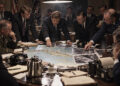

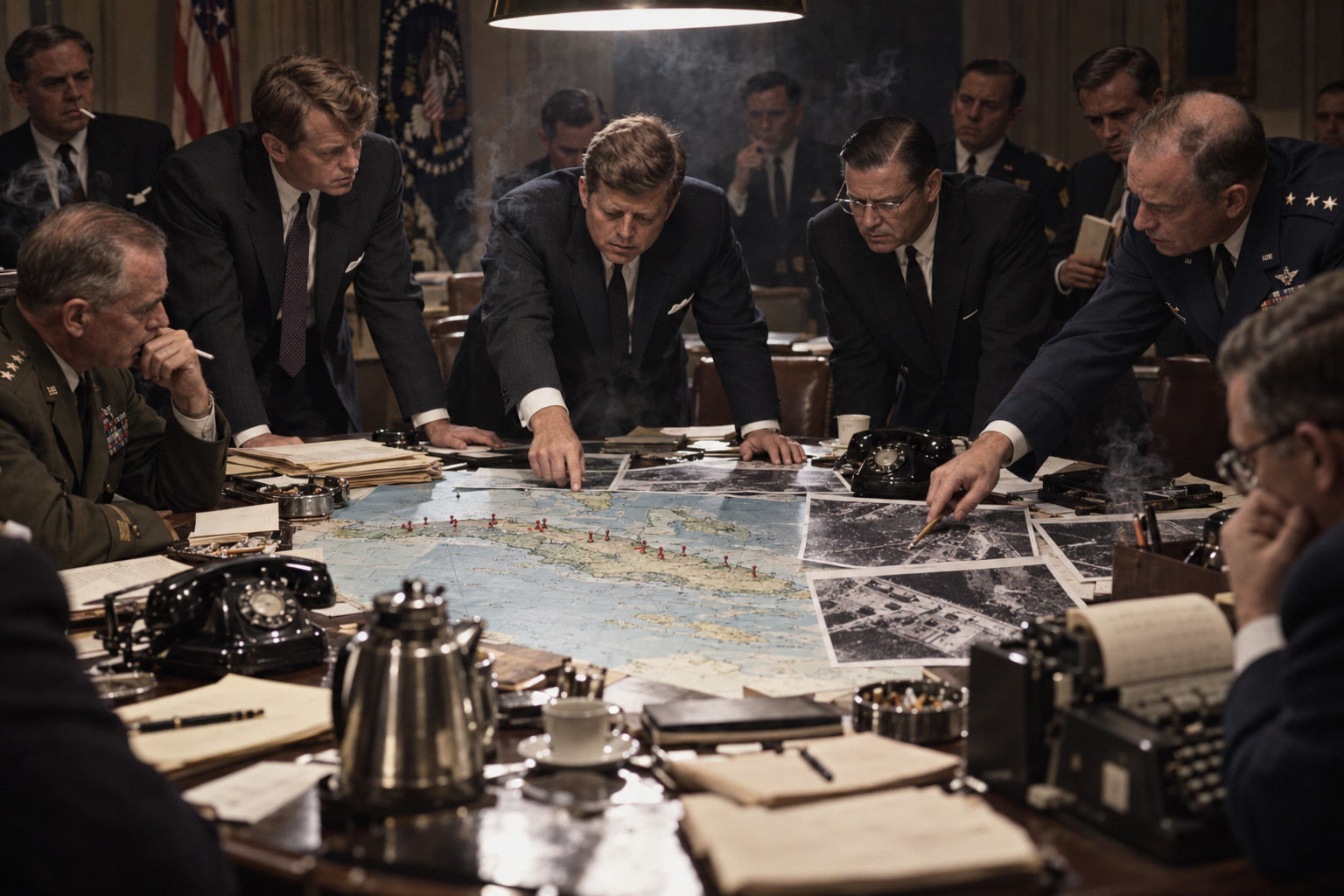
On October 14, 1962, a U‑2 reconnaissance flight over Cuba returned with pictures that stopped a nation. The photographs showed Soviet medium‑range ballistic missiles being installed—concrete pads, erector cranes, and unmistakable warheads. By October 16 President John F. Kennedy had assembled his inner circle, creating the Executive Committee of the National Security Council (ExComm) to weigh alternatives: air strikes, a full invasion, or a naval quarantine. The choice mattered beyond military strategy. It would set the tone of a standoff with the Soviet Union that could tip into nuclear exchange.
Public Reveal and the Naval Quarantine (Oct 22–24)
On October 22 Kennedy took the risk of going public. In a televised address he described the missiles and announced a “quarantine” of Cuba—a carefully chosen term to avoid the legal connotations of a blockade. He demanded the removal of the offensive weapons and warned that any nuclear attack from Cuba would be met by retaliatory strikes on the Soviet Union. The U.S. Navy established a line in the Atlantic to stop and inspect ships bound for Cuba. For several days, Soviet freighters steamed toward the island amid tense radio traffic; some slowed or turned back as the two navies shadowed each other.
Escalation, Accidents, and Back Channels (Oct 25–27)
Those were the days when small errors could become catastrophic. On October 24 one Soviet ship reportedly turned away; on October 25 U.S. fighters intercepted more reconnaissance flights. By October 27, dubbed “Black Saturday,” the crisis reached its most perilous peak: a U‑2 was shot down over Cuba, killing the pilot, and surface‑to‑air missile units in Cuba were on alert. At the same time, military commanders on both sides increased alert levels—U.S. forces climbed toward DEFCON 2, the closest the United States has come to nuclear war. Yet behind the public posturing, secret diplomacy moved in parallel: Attorney General Robert Kennedy and Soviet Ambassador Anatoly Dobrynin exchanged proposals, and a private offer emerged involving removal of U.S. Jupiter missiles in Turkey as a concession.
Resolution and Aftermath (Oct 28–Late November)
On October 28 Nikita Khrushchev announced that the Soviet Union would dismantle the missile sites and return the weapons to the USSR—if the United States promised not to invade Cuba. The public face of the deal focused on that non‑invasion pledge; the removal of U.S. missiles from Turkey was settled quietly in a secret agreement in the weeks that followed. Dismantling began almost immediately, but the nervous watch did not end at once: verification, inspections, and political fallout stretched into November. The crisis left a clearer hotline between Washington and Moscow and a renewed public awareness of how close nuclear brinkmanship had come to catastrophe.
Conclusion
The Cuban Missile Crisis compressed superpower rivalry into thirteen days of high‑risk choices, near‑misses, and urgent diplomacy. It was a lesson in how reconnaissance, careful language, and back‑channel bargaining can pull the world back from the edge—an episode whose details still startle when you think how small decisions ruled the fate of millions.